Alibaba Seeks to Raise Over $21 Billion in Record US Tech IPO
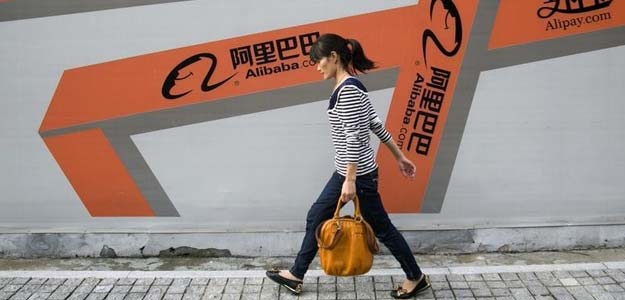
Alibaba Group Holding Ltd seeks to raise more than $21 billion (Rs 1.26 lakh crore at 1 dollar = 60 rupees) in an initial public offering (IPO) that will value the Chinese e-commerce giant at up to $163 billion and rank as the largest-ever technology debut in the United States.
Alibaba expects to price its IPO between $60 and $66 per American depository share (ADS), valuing the company at about $162.69 billion (Rs 9.76 lakh crore) at the top end of the range and raising a maximum of $21.1 billion.
The company, founded by former English schoolteacher Jack Ma, will decide on its final price after a globe-spanning roadshow that will kick off in New York on Monday, and is expected to stop in cities from Hong Kong to San Francisco.
If all goes well, Alibaba may ring the opening bell on the New York Stock Exchange in as little as two weeks.
Industry analysts had expected Alibaba to try for a valuation in excess of $200 billion, ranking the Chinese company among the 20 largest publicly traded companies in the United States. It may eventually price above the initial range, should it deem investor demand sufficient.
Many investors are eager to buy a piece of a Chinese company that handles more e-commerce than Amazon.com Inc and eBay combined.
"This number may seem enormous, but when you look at the value compared with the company's fundamentals, it's not as rich as we might expect," said Brian Hamilton, chairman of private company analysis firm Sageworks.
Caution now
But some investors remain cautious about the potential conflicts of interest between Ma's role as a steward of the company, and his investment interests elsewhere.
The company has also attracted its share of controversy in the past, as when it hived off its lucrative payments unit Alipay, triggering objections from major shareholders Yahoo and Softbank.
The company said in its latest prospectus that it has racked up almost $16 million in IPO-related legal fees, unusually high for an IPO and an indication of the effort that Alibaba and its advisers have undertaken to prepare a complicated prospectus.
"When an internet company of our scale that originated from China enters the global scene, you should expect that it will encounter scepticism from different directions due to differences in cultural perspectives, values and even geopolitical positioning," Ma said in a letter to investors reminiscent of the "founder's letters" that accompanied the debuts of Facebook and Google.
"While it may be difficult for a public Alibaba to side-step controversy, we hope that controversies generate constructive debate and add fresh perspectives to the dialogue on globalisation."
Some investors say the company's fundamentals outweigh the risk of investing in a company with an unfamiliar governance structure.
Alibaba accounts for about 80 per cent of all online retail sales in China, where rising internet usage and an expanding middle-class helped the company generate gross merchandise volume of $296 billion in the 12 months ended June 30.
The Chinese e-commerce giant's revenue accelerated in the April-to-June quarter on strong gains in its mobile business, providing investors with what may be the final glimpse of the company's financials before its expected landmark market debut.
Revenue in the June quarter increased 46 per cent year-on-year to $2.54 billion, a faster pace than the 38.7 per cent growth in the previous quarter.
Alibaba is selling 123.1 million of the 320.1 million ADSs slated for the IPO. Shareholders including Yahoo, Ma and executive vice chairman Joe Tsai are offering the remainder.
CitiGroup has been appointed to the depositary receipt role for Alibaba, which means it will hold the underlying shares and issue ADRs to shareholders, according to a source familiar with the matter.
In other key banking roles, Morgan Stanley MS.N and Credit Suisse CS.N will manage the so-called "lockup" agreement that dictates when pre-IPO shareholders will be able to sell once the stock starts trading, a person familiar with the matter told Reuters. Goldman Sachs will act as the "stabilization agent", overseeing the stock's early trading.
Credit Suisse will also oversee the "friends and family program", formally known as a directed share program, the person familiar with the matter said.
"Listen, it's a very successful company. The market needs a company like this," said Akram Yosri at 3i Capital Group. "As an institutional, I would have liked to see around $135 billion. It's up to the syndicate now, I hope they exercise prudence."
Copyright @ Thomson Reuters 2014

-
The Curious Case of Equitas Small Finance Bank And A CEO Who Quit For Stock

PN Vasudevan believes persistent investor concerns over a perceived conflict of interest had become a governance overhang on Equitas Small Finance Bank's stock, even as the lender improved profitability and asset quality.
-
Talking Points This Week: AI Cash Burn, A Tiger Comeback And An India That Still Finds Its Own Path
India is not immune to higher oil or tighter global liquidity, yet its earnings base is broader, its domestic policy levers are still available.
-
Foreign Investors Own Half Of HDFC Bank and ICICI Bank. An LTCG Cut Could Matter Most Here
Foreign portfolio investors have US$115 billion parked in HDFC Bank, ICICI Bank. If the government cuts long-term capital gains tax, Jefferies says returning foreign money could land here first.
-
'Never Seen This Level Of Negativity': Sandeep Tandon Says The Next Rally May Be Closer Than You Think
Veteran investor Sandeep Tandon says foreign selling is easing, large-caps are due a comeback and mid-caps are crowded, while he turns positive on gold, power and pharma this Diwali.
-
Indians Stay With Family, Not In Hotels | The Reason Why
India still lacks enough clean, reliable and affordable hotels for budget-conscious travellers.
-
The Economic Imperative: Analysing The Material Driving Force Behind India-Canada Strategic Reset
This economic complementarity is further reinforced by deep institutional investment ties and talent mobility, which form the bedrock of the bilateral framework.
-
Medicine Pricing: Where Must Profit Stop?
India must confront excessive margins, hidden incentives and regulatory gaps that threaten the integrity of medicine.
-
Why Amazon And Flipkart Are Struggling To Beat Meesho In India's Smaller Cities
With 274 million users and lowest-cost logistics, Meesho is defending its value commerce crown against giants like Amazon and Flipkart.
-
High US Salaries, No Green Card Certainty: The Financial Calculation Facing Indian H-1B Families
The suspension of PERM processing at eight technology employers does not cancel existing H-1B visas. What it does is force a question many Indian families have been avoiding: is the US salary worth tying your career and family plans to one employer?
-
Swiggy vs Eternal: Food Delivery's Two Rivals Are No Longer In The Same Race
Eternal is building a private AI assistant, dark.ai. Swiggy is still working out how to make Instamart pay, with an operating loss of Rs 895 crore in the July-September quarter while Blinkit stayed profitable.










