Alibaba Revenue Misses Estimates In A Blow To Revival Effort
Alibaba Group Holding Ltd. posted a disappointing 4% rise in revenue, after aggressive promotions failed to drive spending in an anemic Chinese consumer environment.
Its shares slid more than 4% in pre-market trading in New York, as the core domestic commerce business shrank in the June quarter. Coupled with a 27% plunge in net income, the weak results likely unnerved investors worried about faltering consumer spending, yet hoping for a turnaround at the company that pioneered Chinese e-commerce.
Chief Executive Officer Eddie Wu is spearheading an overhaul at an iconic firm that since the big tech crackdown of 2020 has struggled to consistently deliver on growth and innovation. Wu, who replaced Daniel Zhang at the helm about a year ago, is focused on enhancing its twin businesses of commerce and the cloud, while making bets on AI technology for the longer term.
On Thursday, the domestic e-commerce leader reported revenue of 243.2 billion yuan ($34 billion) in the June quarter, versus the average projection for about 249.9 billion yuan. Revenue from Taobao and Tmall — Alibaba's core platforms — dropped a surprise 1%.
Investors worry that Alibaba's drive to win market share back from PDD Holdings Inc. and JD.com in China will compress margins. In the three years before its report Thursday, the company has posted a loss or decline in net income for the majority of its quarterly results. Last week, PDD founder Colin Huang became China's richest man, a potent symbol of his company's ascent at Alibaba's expense.
Net income fell about 27% to 24.3 billion yuan, reflecting the heavy cost of attracting and retaining shoppers. In contrast, smaller rival JD.com Inc. reported results that beat expectations, though sales climbed just 1.2%.
Click here for a live blog on Alibaba's numbers.
The three-way battle shows signs of intensifying. Alibaba and its rivals pulled out the stops during the annual “618” shopping festival, using deep discounts and A-list celebrities to try and move products from cosmetics to cake. Alibaba promised billions in cash rewards and experimented with novel approaches such as a streaming section exclusively for company CEOs.
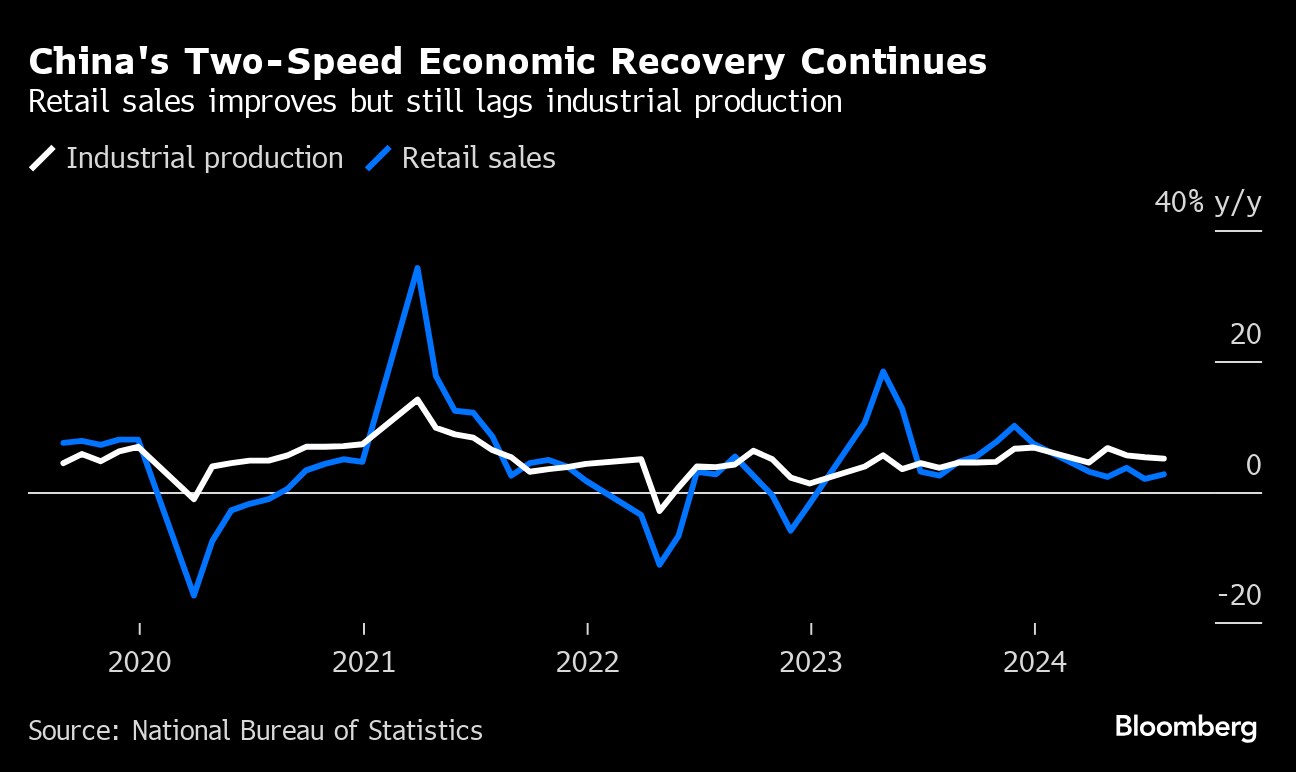
Compounding its issues is the uncertainty shrouding the world's No. 2 economy. Data released Thursday showed China's economy failed to pick up after its worst stretch in five quarters, with an uneven recovery in July held back by consumer spending still lagging industrial activity and investment.
On Wednesday, bigger rival Tencent Holdings Ltd. posted better-than-anticipated earnings but warned that flagging consumption was hitting the giant fintech and cloud division that houses its payments and lending businesses.
Overseas, Alibaba's Singapore-based Lazada arm is waging a pitched battle with a resurgent Sea Ltd. and even ByteDance Ltd., which recently expanded its footprint in Asia by swallowing Indonesia's Tokopedia. While Alibaba's international division remains one of the fastest-growing businesses, analysts say losses there will persist.
To counter the market gloom, Alibaba has stepped up share repurchases — most recently tacking on $25 billion to an already record buyback program for the company.
What Bloomberg Intelligence Says
Alibaba's fiscal 1Q adjusted Ebita probably fell at a steeper rate than the 5% year-on-year decline recorded in the preceding quarter. This would have been led by wider overseas (AIDC) losses as the firm raised expenditure on advertising and user perks to secure more shoppers outside of China. Increased logistics support to back such expansion likely also offset the lift to Cainiao's margins from economies of scale, lowering its 1Q profitability from a year earlier. Alibaba's goal to regain e-commerce market share in China probably reduced Taobao-Tmall's adjusted Ebita for the second straight quarter and contributed to the firm's 1Q profit fall.
The lift to Alibaba's cloud margin, as the revenue contribution from more profitable public cloud services rose, may have offset the profit drag from industry-wide price cuts in 1Q.
- Catherine Lim, analyst
Click here for the research.
As with Tencent, the economic downturn is likely to suppress Alibaba's once fast-growth cloud business, which hosts computing for corporate clients. After years of driving growth across its businesses, the division has managed only single-digit percentage growth in recent quarters as state-backed rivals such as China Telecom Corp. and the likes of Huawei Technologies Co. stepped up.
In response, the company is aggressively cutting prices — slashing prices by as much as 55% on more than 100 services in March, triggering a round of industry discounting. Cloud revenue grew about 6%.
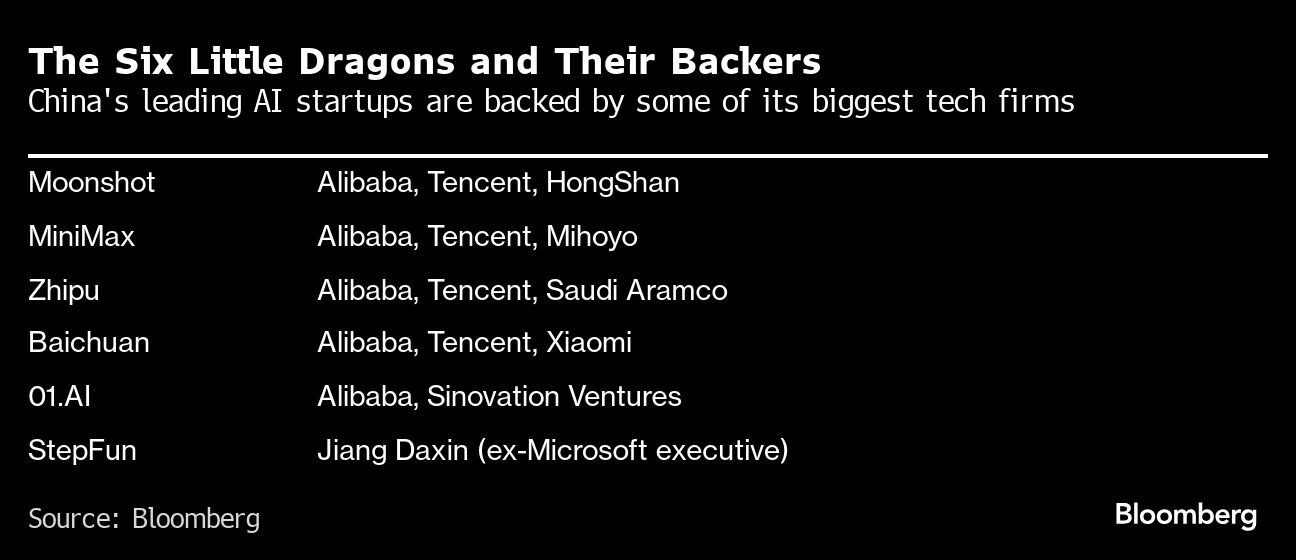
Both Alibaba and Tencent have invested in the majority of China's up-and-coming generative AI startups, fueling a costly battle that could in turn bolster their cloud sales thanks to growing appetite for AI training and inferencing.
--With assistance from Vlad Savov, Yazhou Sun, Peter Elstrom and Henry Ren.
©2024 Bloomberg L.P.

-
Gold Is Rs 22,000 Cheaper Than A Month Ago. Should You Buy Amid The Wedding Season?

Gold's potential slide to $3,500 could save around Rs 4,700 per 10 grams, but a soft inflation print could just as easily push prices back up. One way to split the risk is to buy in parts, some now and the rest after the Fed's Dec. 9 decision.
-
AI Agents Are Gaining Power. Who Governs Them?
Artificial intelligence agents promise to transform productivity by moving machines from assisting decisions to executing them. But as organisations delegate greater authority to these AI-agents, they must first establish who controls that authority and who remains accountable when things go wrong.
-
Why Swapping Your Old Gold Can Trigger A Rs 5 Lakh Tax Bill, And How You Can Avoid It Legally
Swapping old gold for new is taxed as a sale and a fresh purchase. Getting your own gold remade can cut most of that bill, though it has its own costs.
-
The AI Trade is Done. The Real Opportunity for Investors Starts in 2027 | Unhedged Position
As pureplay AI stocks plunge and circular, capex-led financing unwinds, 2027 is set to be a year of reckoning for AI companies. Yet the bust clears the way for a better opportunity for investors in 2027 -- shifting the spotlight from AI builders to the companies using AI.
-
Leadership As Mission: Why The Age Of AI Demands More Human Leadership
Debjani Ghosh examines how AI is changing leadership, arguing that its success must be measured by its impact on people and the accountability of those guiding its use.
-
We May Need Another Tukaram Mundhe To Fight Air Pollution | The Reason Why
Developers may install basic measures such as sprinklers and green nets, resume work, and continue violating rules when this equipment stops working.
-
Extracting Value From Battery Scrap Could Be Challenging For India | The Reason Why
A discarded lithium-ion battery still contains valuable materials such as lithium, nickel and cobalt. These can be recovered and reused. When such batteries are crushed and shredded, they produce a dark powder called black mass.
-
One El Nino, India Can Handle. Two Could Break The Granary
India's grain stocks can absorb one bad year, but a second El Nino could drain the buffer in two to three years, economists say.
-
India's Troika Of Good Luck | Joining The Dots
As Jensen Huang's exit drags Nvidia down, a cooling AI trade and resilient earnings have revived investor interest in India. A likely RBI rate hike looms.
-
Talking Points This Week: Leadership Shock At Nvidia, Earnings Strength, And The Fog Over Hormuz
The Anthropic IPO pricing and first trading day, Nvidia's upcoming earnings, and any fresh signals from Iran will set the tone for the following week.









