Alibaba Surges on Massive Demand in Trading Debut
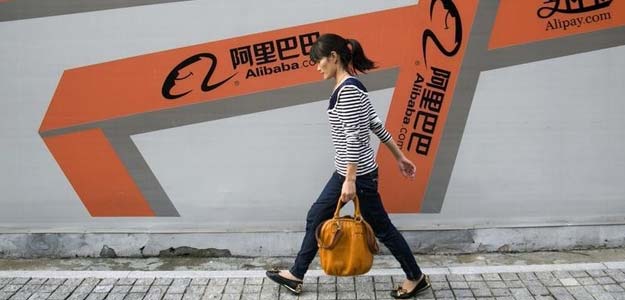
New York: Alibaba Group Holding Ltd's shares surged in their first day of trading on Friday as investors jumped at the chance to get in on what looks likely to be the largest IPO in history and profit from China's growing middle class.
It was an auspicious debut for the company, founded by Jack Ma in his apartment in 1999, which now accounts for 80 per cent of online sales in China.
About a hundred people gathered outside the New York Stock Exchange at Wall and Broad Streets, many of them Chinese tourists with cameras, cheered when Ma exited the building.
The stock opened at $92.70 around 1600 GMT (9:30 p.m. in India) and quickly rose to a high of $99.70 in active trading. More than 100 million shares changed hands in composite trading in the first 10 minutes of trading. As of 12:50 pm ET (10:20 p.m. in India), shares were up 33 per cent at $90.50.
"This is the most anticipated event I've ever seen in my 20-year career on the floor of the NYSE. I think today's move is sustainable: The company is profitable, unlike some of its competitors, and it is a way for traders to tap into the Chinese growth story," said Mark Otto, partner with J. Streicher & Co, who trades on the NYSE floor.
The pricing of the IPO on Thursday initially raised $21.8 billion for the Chinese e-commerce company. Scott Cutler, head of the New York Stock Exchange's global listing business, told a news channel that underwriters would exercise their option for an additional 48 million shares, to bring the IPO's size to about $25 billion, making it the largest initial public offering in history.
Alibaba is nearly unknown to most Americans but is ubiquitous in China, where it is responsible for 80 percent of online sales. The company earned $3.7 billion in the 12 months ended March 31, 2014, up about $2 billion from the prior 12-month period.
The sale values the company at about $168 billion, more than American icons such as Walt Disney Co and Coca-Cola Co. Should the stock close at $90 on its first day, it would be worth about $222 billion, nearly the value of Procter & Gamble Co.
With the big first-day gain, investors hoping for more may be disappointed. At a price of about $90.50 a share, the stock is valued at 38 times its estimated earnings per share for its current fiscal year, which will end in March 2015. That is roughly in line with Facebook's valuation of 39 times forward earnings but nowhere near the lofty valuation of Amazon.com's multiple of 264, according to Thomson Reuters Starmine data.
"The question is if it becomes dead money for the next six months," said one fund manager. "Will it just trade at $93 and stay flat?"
Ma, a former English teacher, boasts a personal fortune of more than $14 billion on paper, vaulting him into the ranks of such tech billionaires as Bill Gates and Jeff Bezos. The deal is also expected to make millionaires out of a substantial chunk of the company's managers, software engineers and other staff.
The rise in the stock exceeds the average gain by new IPOs on US exchanges of late. In the second quarter, the average first-day gain was 9.2 per cent, according to Renaissance Capital IPO Intelligence. Underwriters usually aim for a gain of 10 per cent to 15 per cent on the first day.
Demand was intense among the retail investor crowd. J.J. Kinahan, chief market strategist at retail brokerage TD Ameritrade Holding Corp, said the company received customer orders amounting to about 70 per cent of what it saw for Facebook, and about three times the customer orders it had for Twitter's IPO.
With underwriters electing to sell more shares, the company's initial public offering becomes the largest in history, surpassing Agricultural Bank of China Ltd's $22.1 billion listing in 2010.
Alibaba Group's orange banners were festooned around the exchange, with its logo on NYSE computer screens. Ma watched several long-time customers ring the opening bell.
"I don't want disappointed shareholders, I want to make sure they make money," Ma said of the pricing, on the news channel, adding that he worries most when customers are happy.
NYSE held extensive tests to ensure it would be able to handle heavy trading volume.
"We've had a lot of major IPOs, and when you have one it's always the biggest until the next biggest one comes along," said Ted Weisberg, floor trader with Seaport Securities in New York, who has been a member of the NYSE for 45 years.
The deal allows cornerstone Alibaba investors such as Japan's Softbank Corp and Yahoo Inc to profit from getting in on the ground floor at the company. Yahoo sold some $8 billion worth of shares in the offering, leaving it with a 16.3 per cent stake. Shares of Yahoo were hit on Friday, dropping 6 per cent.
Softbank is not selling for now and will be left with a 32 per cent stake, making it the largest single shareholder.
Copyright @ Thomson Reuters 2014

-
The Curious Case of Equitas Small Finance Bank And A CEO Who Quit For Stock

PN Vasudevan believes persistent investor concerns over a perceived conflict of interest had become a governance overhang on Equitas Small Finance Bank's stock, even as the lender improved profitability and asset quality.
-
Talking Points This Week: AI Cash Burn, A Tiger Comeback And An India That Still Finds Its Own Path
India is not immune to higher oil or tighter global liquidity, yet its earnings base is broader, its domestic policy levers are still available.
-
Foreign Investors Own Half Of HDFC Bank and ICICI Bank. An LTCG Cut Could Matter Most Here
Foreign portfolio investors have US$115 billion parked in HDFC Bank, ICICI Bank. If the government cuts long-term capital gains tax, Jefferies says returning foreign money could land here first.
-
'Never Seen This Level Of Negativity': Sandeep Tandon Says The Next Rally May Be Closer Than You Think
Veteran investor Sandeep Tandon says foreign selling is easing, large-caps are due a comeback and mid-caps are crowded, while he turns positive on gold, power and pharma this Diwali.
-
Indians Stay With Family, Not In Hotels | The Reason Why
India still lacks enough clean, reliable and affordable hotels for budget-conscious travellers.
-
The Economic Imperative: Analysing The Material Driving Force Behind India-Canada Strategic Reset
This economic complementarity is further reinforced by deep institutional investment ties and talent mobility, which form the bedrock of the bilateral framework.
-
Medicine Pricing: Where Must Profit Stop?
India must confront excessive margins, hidden incentives and regulatory gaps that threaten the integrity of medicine.
-
Why Amazon And Flipkart Are Struggling To Beat Meesho In India's Smaller Cities
With 274 million users and lowest-cost logistics, Meesho is defending its value commerce crown against giants like Amazon and Flipkart.
-
High US Salaries, No Green Card Certainty: The Financial Calculation Facing Indian H-1B Families
The suspension of PERM processing at eight technology employers does not cancel existing H-1B visas. What it does is force a question many Indian families have been avoiding: is the US salary worth tying your career and family plans to one employer?
-
Swiggy vs Eternal: Food Delivery's Two Rivals Are No Longer In The Same Race
Eternal is building a private AI assistant, dark.ai. Swiggy is still working out how to make Instamart pay, with an operating loss of Rs 895 crore in the July-September quarter while Blinkit stayed profitable.










