For The World Bank, Public Health Should Be The Priority
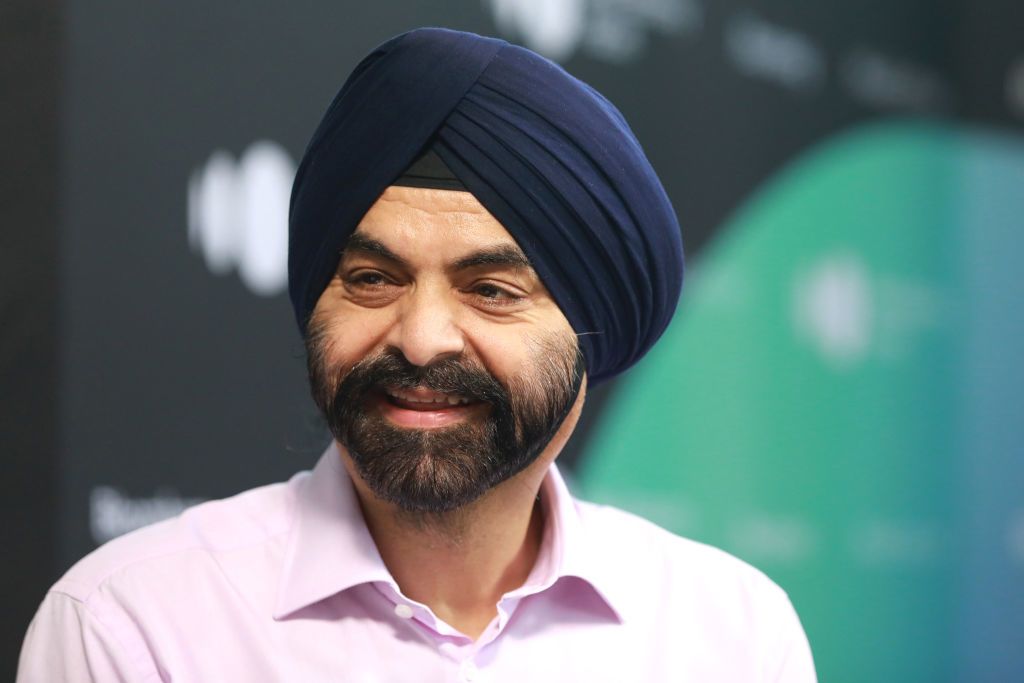
(Bloomberg Opinion) -- Ajay Banga, the former head of Mastercard Inc. who is President Joe Biden's choice to lead the World Bank, will be getting a lot of advice over the next few months as the nomination process unfolds. As the president himself says, the bank is at a “critical moment.” Here are my thoughts on how to restructure the institution for the better.
First, contrary to the prevailing wisdom, the World Bank should not make climate change more of a priority. Climate-change issues are more closely associated with rich and middle-income countries than with the poorest countries. The very poorest countries, because they have small economies, do not as a rule emit much carbon. Indoor air pollution, such as burning wood or fuel for heat or cooking, is usually more of a problem. Those emissions can be toxic, and the World Bank should try to help reduce them. But that won't do much to cut carbon emissions.
The World Health Organization estimates that about seven million people die each year from the direct effects of air pollution. For poorer countries, alleviating that problem should be a greater priority than fighting global climate change.
The reality is that if the World Bank can help elevate some very poor countries into middle-income countries, climate-change problems will become somewhat worse — at least in the short to medium run. “We make climate-change problems worse” is not a marketable slogan. But it is selfish to try to get the World Bank to do more good for the wealthiest nations and less good for the poorest nations, which is essentially what prioritizing climate change would do. And of course the world's wealthier nations are broadly coincidental with the major shareholders of the World Bank.
To be clear: The world as a whole needs to do a lot more to address climate change. But the burden should be on wealthy countries, particularly their R&D expenditures and the structure of their consumption choices. For the poorest countries, at current margins of subsistence, the fight against climate change is very much a luxury.
If there is any area where the World Bank should double down, it is in public-health interventions. Over the last several decades, the successes have been extraordinary. In Africa, for instance, child mortality rates have plummeted, and many public-health indicators have improved considerably, especially outside of major conflict zones. Why not invest more in what is working?
In contrast, global institutions have had much less success in pushing Africa toward solar power or small-scale nuclear plants. The most beneficial and sustainable approach in those areas would be to invest in R&D in wealthy countries, so those technologies are cheap enough for the world's middle-income nations to adopt in a financially sustainable manner. Additional World Bank financing for some new solar-energy facilities won't be enough to significantly move the needle.
Note also that public-health interventions, unlike large infrastructure projects, are usually done at smaller scale and often involve fewer opportunities for large-scale corruption and graft.
Finally, the World Bank should consider taking more risks. Since its inception, the bank has had a top credit rating, and it makes sense to maintain that. But is the bank really close to losing its AAA status? It hardly seems so. If the World Bank somehow found itself in financial difficulty, the wealthier nations could recapitalize it. That would be a political embarrassment, but it's a risk worth taking, at current margins.
From its founding in 1944 to June 2021, capital contributions from the bank's shareholder countries to the main lending arms of the bank have totaled $19.2 billion, and that has funded more than $750 billion in loans plus additional bank services. (Most of its loans are self-financing.) If that is a good investment, why not do more at the margin? There have been no major or even moderate-sized financial crises resulting from the World Bank's portfolio decisions. The case for keeping the World Bank at its current size doesn't make much sense; you should favor either abolishing the bank or expanding it.
A review commissioned by the G-20, conducted by independent experts, concluded that an expansion of lending activity would be a better use of the bank's resources and privileged position. The general reaction from the bank itself was a kind of nervousness, mostly out of fear it would lose some of its status and reputation for financial rectitude. But it's worth asking how these concerns measure against the urgency of the world's problems.
Banga needs to face that question, and these issues, squarely and with courage.
More From Bloomberg Opinion:
- The World Bank Must Take Bolder Action on Climate: Michael R. Bloomberg
- Biden Can Make the World Bank a Leader on Climate Change: Mark Gongloff
- Lessons in Integrity at the IMF and World Bank: The Editors
Want more Bloomberg Opinion? Subscribe to our daily newsletter.
This column does not necessarily reflect the opinion of the editorial board or Bloomberg LP and its owners.
Tyler Cowen is a Bloomberg Opinion columnist. He is a professor of economics at George Mason University and writes for the blog Marginal Revolution. He is coauthor of “Talent: How to Identify Energizers, Creatives, and Winners Around the World.”
More stories like this are available on bloomberg.com/opinion
©2023 Bloomberg L.P.

-
We May Need Another Tukaram Mundhe To Fight Air Pollution | The Reason Why

Developers may install basic measures such as sprinklers and green nets, resume work, and continue violating rules when this equipment stops working.
-
Extracting Value From Battery Scrap Could Be Challenging For India | The Reason Why
A discarded lithium-ion battery still contains valuable materials such as lithium, nickel and cobalt. These can be recovered and reused. When such batteries are crushed and shredded, they produce a dark powder called black mass.
-
One El Nino, India Can Handle. Two Could Break The Granary
India's grain stocks can absorb one bad year, but a second El Nino could drain the buffer in two to three years, economists say.
-
India's Troika Of Good Luck | Joining The Dots
As Jensen Huang's exit drags Nvidia down, a cooling AI trade and resilient earnings have revived investor interest in India. A likely RBI rate hike looms.
-
Talking Points This Week: Leadership Shock At Nvidia, Earnings Strength, And The Fog Over Hormuz
The Anthropic IPO pricing and first trading day, Nvidia's upcoming earnings, and any fresh signals from Iran will set the tone for the following week.
-
Signature Play: The Classic Cocktail Is Dead. Or Is It?
Classic cocktails are disappearing from India's cocktail menus. But they're still being ordered, taught to bartenders and borrowed from. So, who's really having the last drink?
-
A New Samvat Wishlist: Inclusive Prosperity And Human Development
India has strengthened its economic foundations through infrastructure, digital access and enterprise. Its next growth chapter must deepen productivity, create better livelihoods and widen participation in prosperity.
-
Love, Sex Aur Dhokha: The Audacious Plot To Spy On Jensen Huang
A Taipei dinner, a Singapore chip buyer and a suspected Chinese asset: inside the alleged spy operation that got close to NVIDIA's Jensen Huang.
-
Ten Things I Learnt This Samvat
Patience can be a trap. Cheap stocks can stay cheap. Leverage can wipe you out. What did Samvat 2082 teach us? Niraj Shah writes on 10 lessons from the year gone by.
-
Talking Points This Week: Tech Nerves, FII Buying, And A Faraway Banking Shock
The global markets are not shining this Diwali. The exception in the large markets is, India.









