No Plan To Tweak Airfare Regulatory Framework: Jyotiraditya Scindia
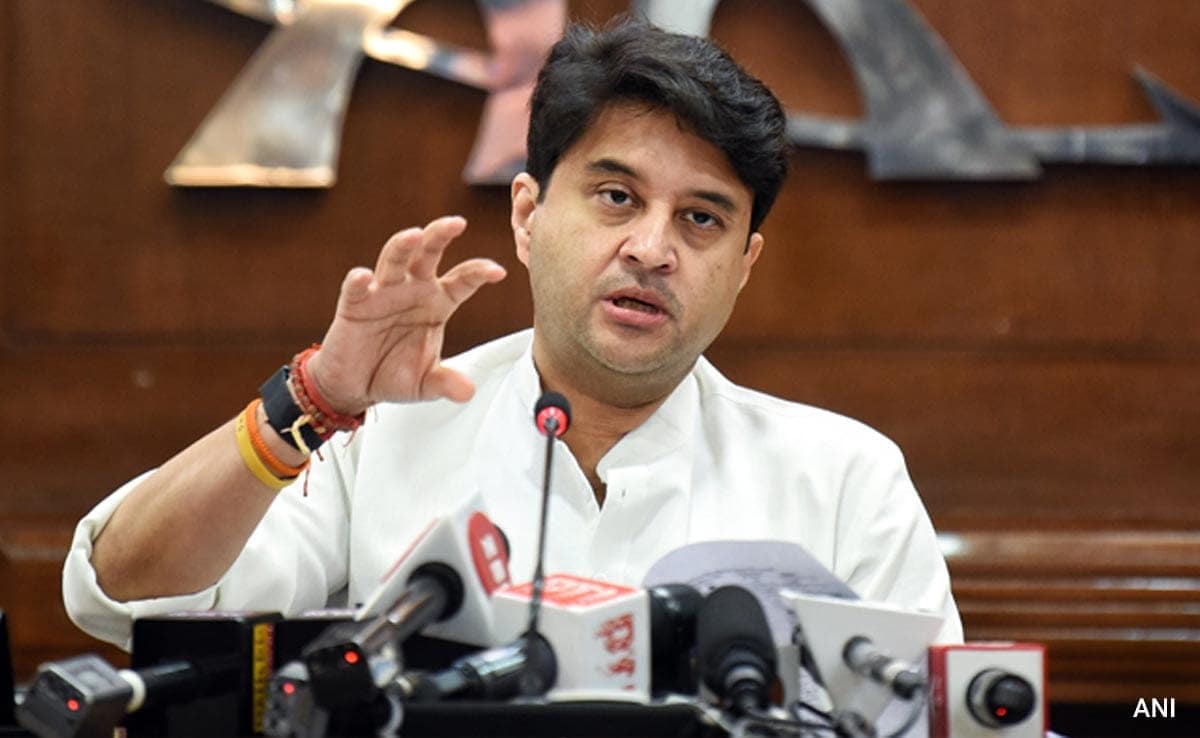
Civil Aviation Minister Jyotiraditya Scindia on Thursday said there is no proposal at present to interfere with the current regulatory framework for airfares.
Air ticket prices are not regulated by the government and are market driven, with airlines having freedom to fix reasonable fares after taking into consideration various factors, including cost of operation.
In a written reply to the Lok Sabha, Scindia said airlines remain compliant with the regulatory provisions under Aircraft Rules, 1937 as long as the fare charged by them does not exceed the fare established and displayed on their websites.
"The recent increase in airfare has been noticed in a few sectors, primarily driven by seasonality and demand-supply constraints. Further, the increase in airfare is also attributable to increase in fuel prices. Government has taken steps to sensitise the airlines," he said.
According to him, the airfares in these select sectors are monitored on daily basis and as a result of which they have shown a declining trend.
"There is no proposal at present to interfere with the existing regulatory framework on airfare," he said.
Recently, concerns were expressed in certain quarters about a steep rise in airfares on certain routes, especially in the wake of the grounding of budget carrier Go First.
In a separate written reply, Minister of State for Civil Aviation V K Singh said the suspension of operations by Go First resulted in capacity constraints.
"In the wake of suspension of operations by Go First, airlines have been advised to self regulate the air fares and maintain reasonable price levels and also to introduce new flights on the sectors that had substantial number of Go First flights," he said.
While responding to a query about surge in airfares following the recent train accident in Odisha, Singh said that airlines were advised to monitor and take necessary action in case of any abnormal surge in airfares to and from Bhubaneswar.
"The airlines were advised to keep passenger interest in mind and exercise moderation. The airfares were monitored on daily basis and as a result of which the fares have shown a declining trend," he noted.
To another query, the minister said that in the recent past, the government has received references including from the Kerala chief minister requesting necessary approvals for charter flights to be operated for transport of non-resident Keralites from Gulf countries to India.
"If and when received, charter flights are generally approved under the Inclusive Tour Package (ITP) guidelines. There are no specific requests for operation of charter aircraft on India-Gulf sector pending with this ministry as of 13.07.2023," Singh said.
(Except for the headline, this story has not been edited by NDTV staff and is published from a syndicated feed.)

-
Indians Are Travelling, But Not Every Journey Is A Holiday | The Week In Whys

Pilgrims, patients and working women are the real travellers, and the system hasn't quite caught up with them.
-
Getting To Work Costs Women More | The Reason Why
It is not just about women paying more than men. It is about women paying much more in cities than in villages.
-
AI Bias In Investing Cannot Be Eliminated, But It Can Be Governed
Framing is a particularly important example as identical financial information presented in terms of gains rather than losses can lead an LLM to reach a different assessment.
-
Joining The Dots | Dark Skies, Steady Diya: Why Hope Holds This Diwali
With war, a weak rupee and foreign outflows weighing on sentiment, policymakers at the NDTV World Summit and market veterans at NDTV Profit Ignite: Diwali Edition offered the same advice: stay invested and filter out the noise.
-
The Curious Case of Equitas Small Finance Bank And A CEO Who Quit For Stock
PN Vasudevan believes persistent investor concerns over a perceived conflict of interest had become a governance overhang on Equitas Small Finance Bank's stock, even as the lender improved profitability and asset quality.
-
Talking Points This Week: AI Cash Burn, A Tiger Comeback And An India That Still Finds Its Own Path
India is not immune to higher oil or tighter global liquidity, yet its earnings base is broader, its domestic policy levers are still available.
-
Foreign Investors Own Half Of HDFC Bank and ICICI Bank. An LTCG Cut Could Matter Most Here
Foreign portfolio investors have US$115 billion parked in HDFC Bank, ICICI Bank. If the government cuts long-term capital gains tax, Jefferies says returning foreign money could land here first.
-
'Never Seen This Level Of Negativity': Sandeep Tandon Says The Next Rally May Be Closer Than You Think
Veteran investor Sandeep Tandon says foreign selling is easing, large-caps are due a comeback and mid-caps are crowded, while he turns positive on gold, power and pharma this Diwali.
-
Indians Stay With Family, Not In Hotels | The Reason Why
India still lacks enough clean, reliable and affordable hotels for budget-conscious travellers.
-
The Economic Imperative: Analysing The Material Driving Force Behind India-Canada Strategic Reset
This economic complementarity is further reinforced by deep institutional investment ties and talent mobility, which form the bedrock of the bilateral framework.










