How China Cleaned Its Filthy Air While India Continues To Choke

(Bloomberg) --
India and China have each struggled with throat-searing air pollution blanketing their major cities with the onset of winter. Only one country has succeeded in tackling the problem.
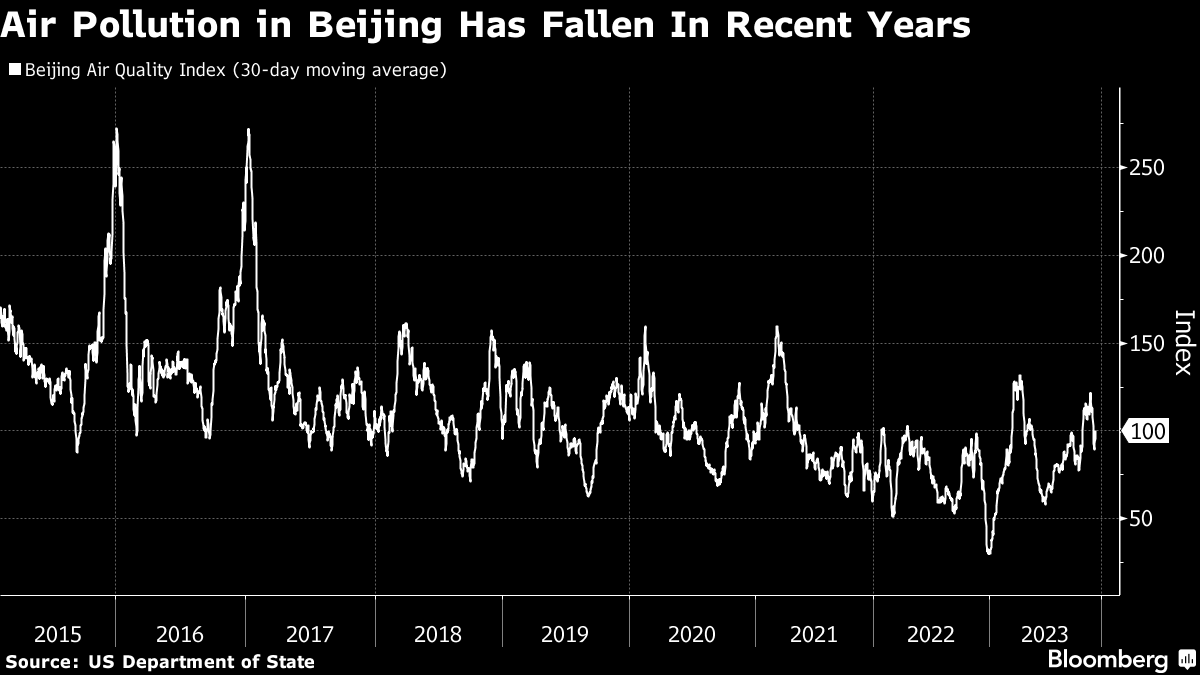
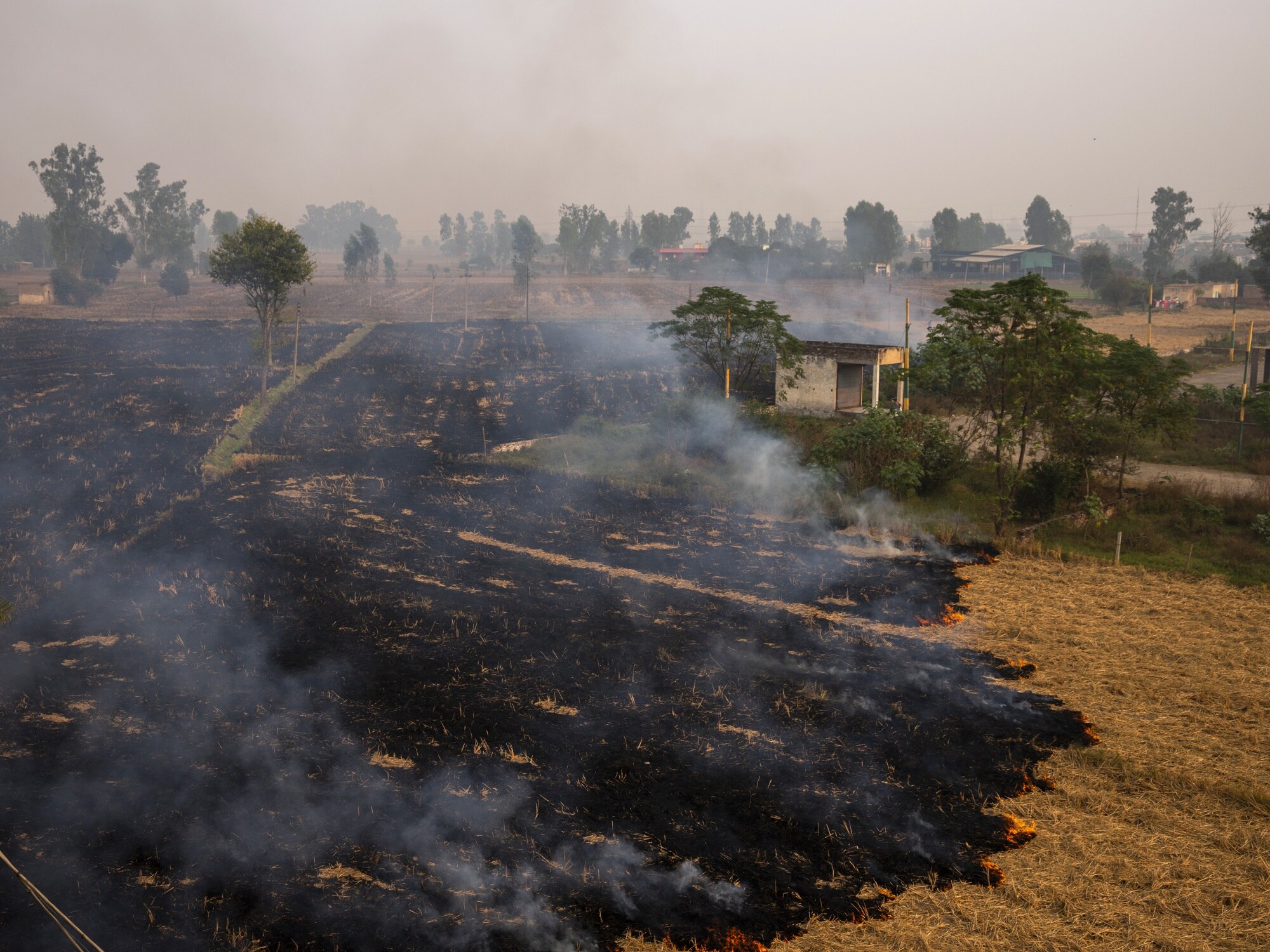
China has made strides in scrubbing the once-foul air that had become a fact of life each year in major cities like Beijing and industrial towns across the country. Meanwhile, huge swaths of northern India continue to choke on clouds of polluted air, peaking during the winter period as temperatures drop, winds disappear and farmers across the region set their fields ablaze.
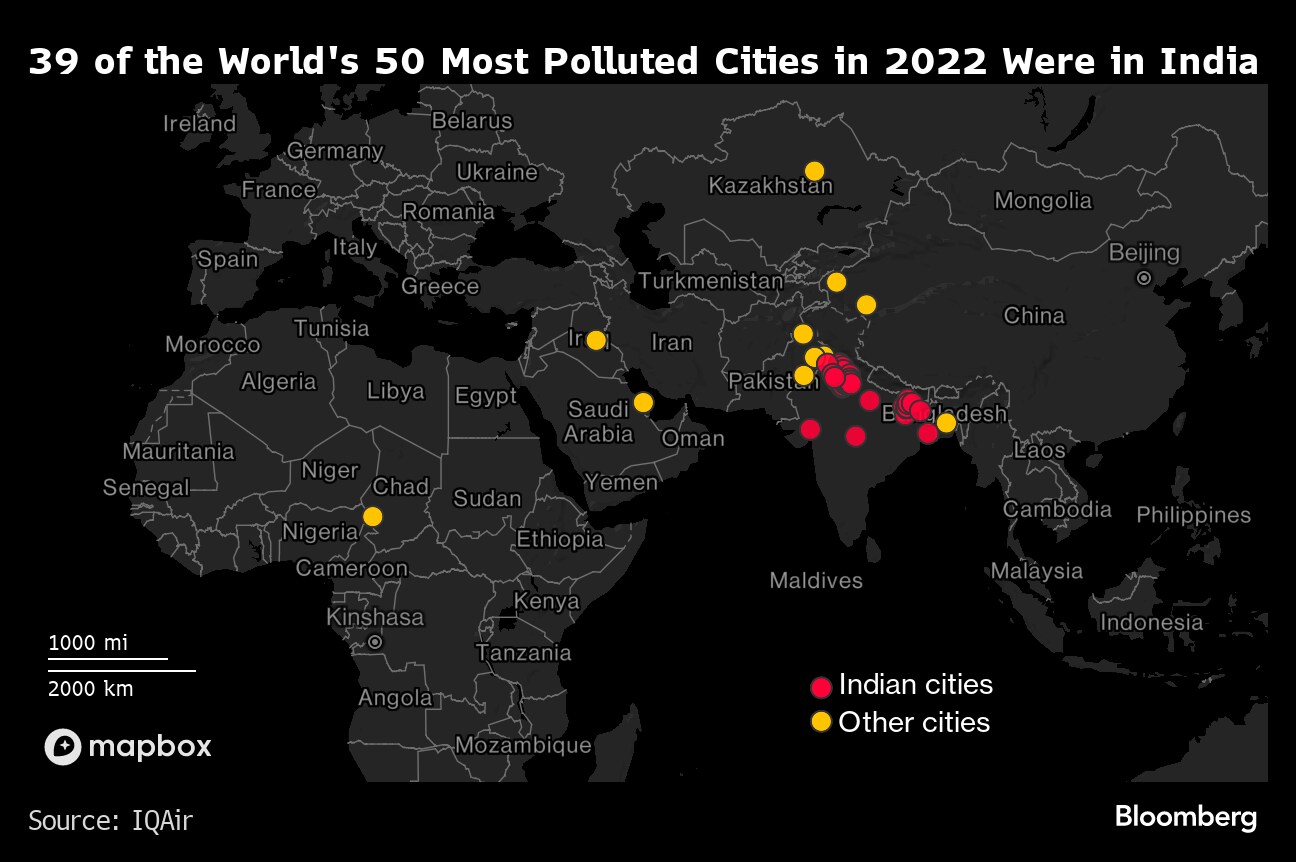
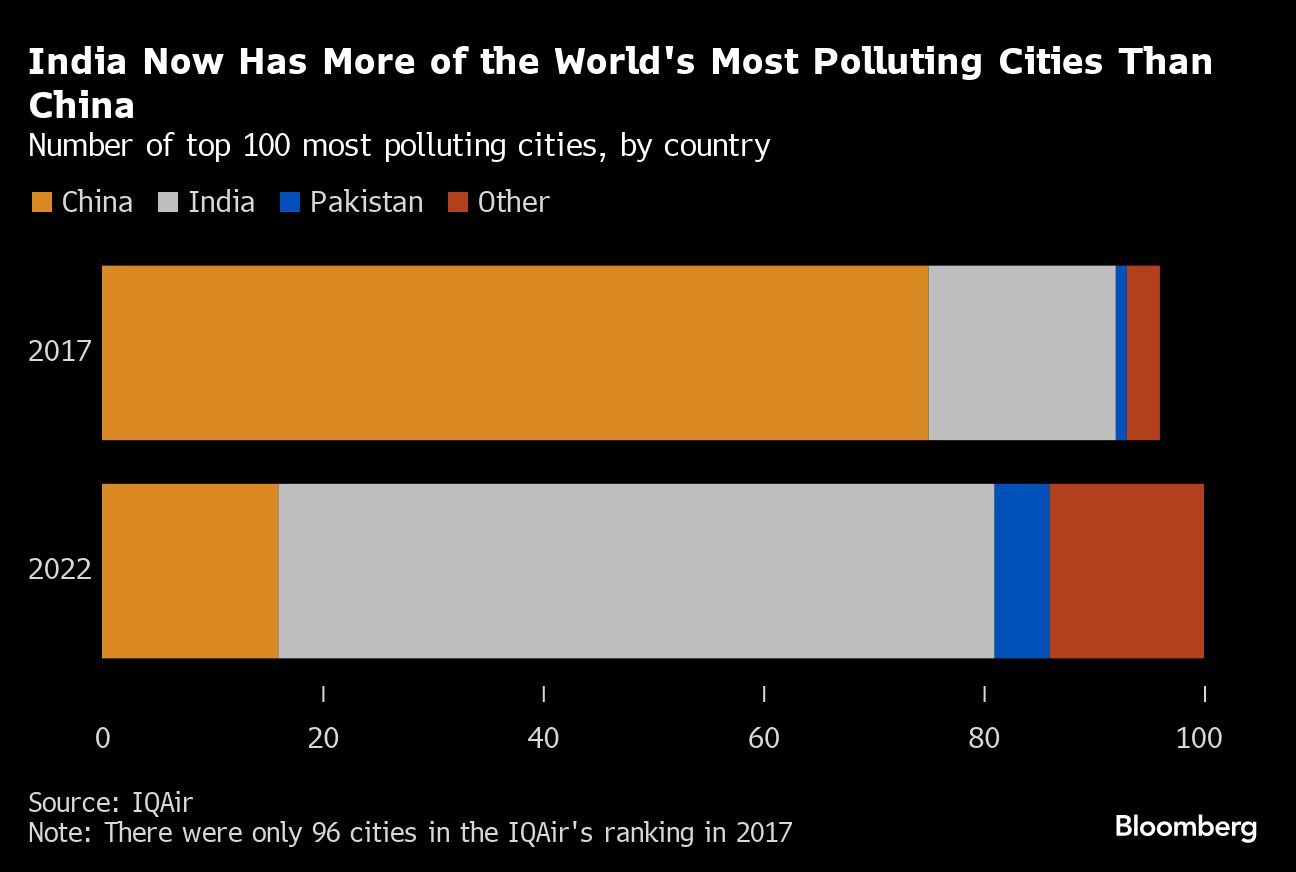
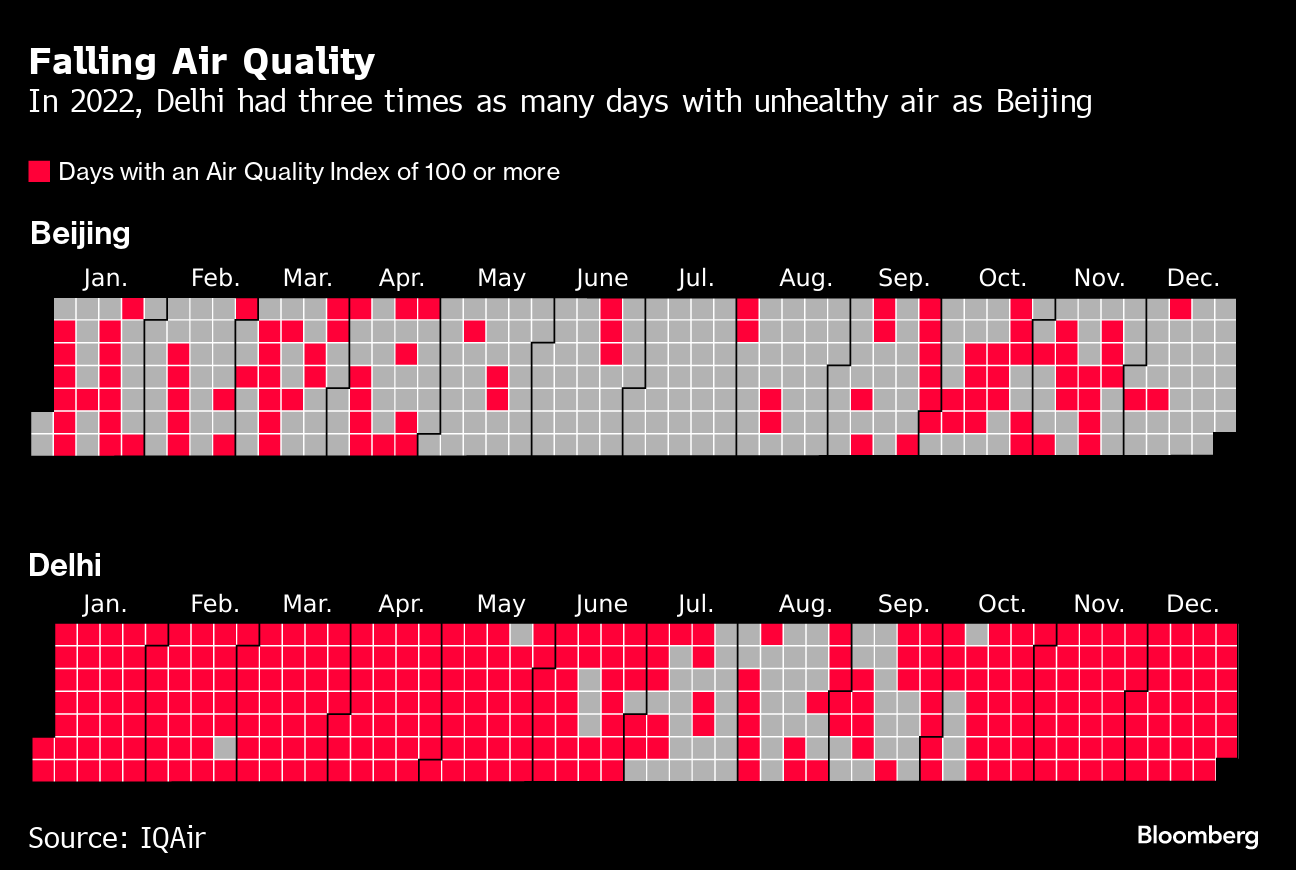
In the 30 days through Nov. 9, levels of hazardous microparticles known as PM2.5 averaged 14 times higher in New Delhi than in Beijing, according to air-quality tracker IQAir. The picture is even more stark outside the two capitals. Last year, 65 of the 100 most polluted cities were in India, while China had just 16, according to IQAir.
Previously, it was China that dominated the list: In 2017, about three-quarters of IQAir's tally of the world's most polluted cities were in China, while 17 were in India.
India's pollution crisis is conspicuously absent from its climate and environmental ambitions, both on the world stage and at home. It also remains far from the top of the agenda of a coming national election that observers widely expect will sweep Prime Minister Narendra Modi into a third term. That's despite a study last week showing air pollution killed an estimated 2.18 million Indians per year.
The pollution epidemic is a problem not just for the health of India's 1.4 billion residents — the biggest population of any country in the world — but also for its economy, currently the fastest-growing of any major nation. A World Bank report published in June estimated that India's annual increase in fine particle pollution shaves 0.56 percentage points off its annual GDP growth every year due to reduced worker productivity and capital formation.
Air pollution in India also reduces the productivity of a range of business assets — blocking sunlight from solar panels, degrading electronic circuitry and reducing crop yields, according to a 2021 report commissioned by the Clean Air Fund.
“This is the biggest challenge that urban India faces today,” said Karthik Ganesan, a fellow and director of research coordination at the Council on Energy, Environment and Water, a Delhi think tank. “Effectively, it's turning the demographic dividend into a big bane because I'm left having to care for all these people who in their 50s or 60s are down and out.”
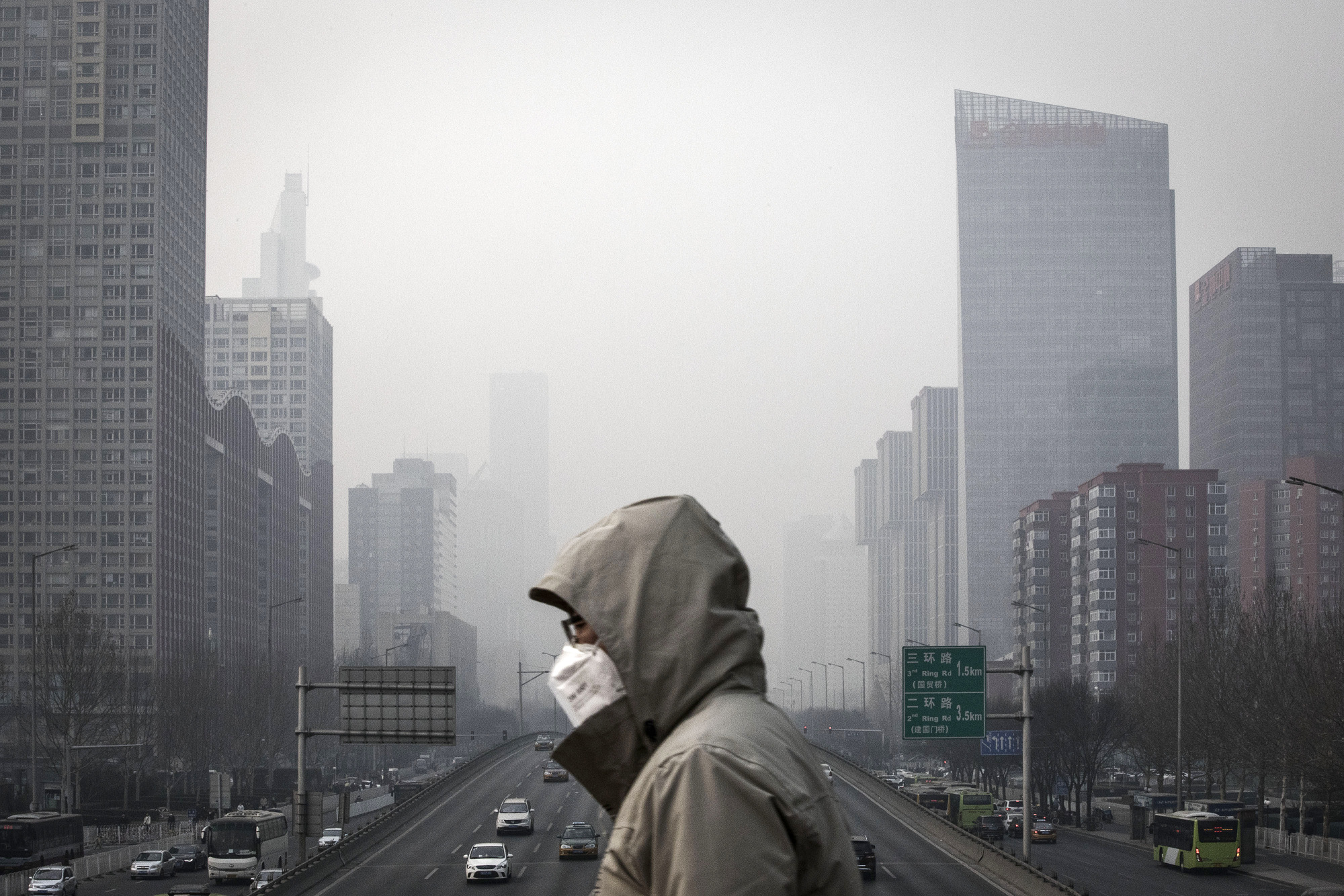
A decade ago, China was also confronted with crisis-level air pollution across its major cities, a consequence of breakneck growth and runaway emissions from a combination of vehicles, heavy industry and coal-fired power plants. The issue attracted international attention as the US Embassy in Beijing — one of the few reliable sources of air pollution data in the nation's capital — broadcast regular crisis-level readings. It also translated into protests that bubbled across the country.
China at first pushed back against the outcry and demanded foreign embassies cease publishing air-pollution data. But the government eventually owned up to the problem as pollution levels continued to soar to new records. In 2014, President Xi Jinping admitted air pollution was the “most prominent problem” facing Beijing, and the country responded with a national plan to reduce it with a $270 billion war chest.
In the years since, China restricted the number of cars on the road in cities like Beijing, Shanghai and Guangzhou, while capacity in China's emissions-heavy iron and steel industries fell and new coal-fired power plants were banned in some areas, according to the Energy Policy Institute at the University of Chicago, or EPIC.
Air pollution declined 42.3% between 2013 and 2021, according to the institute, which said China's efforts were the sole reason behind the modest drop in global pollution levels during that period.
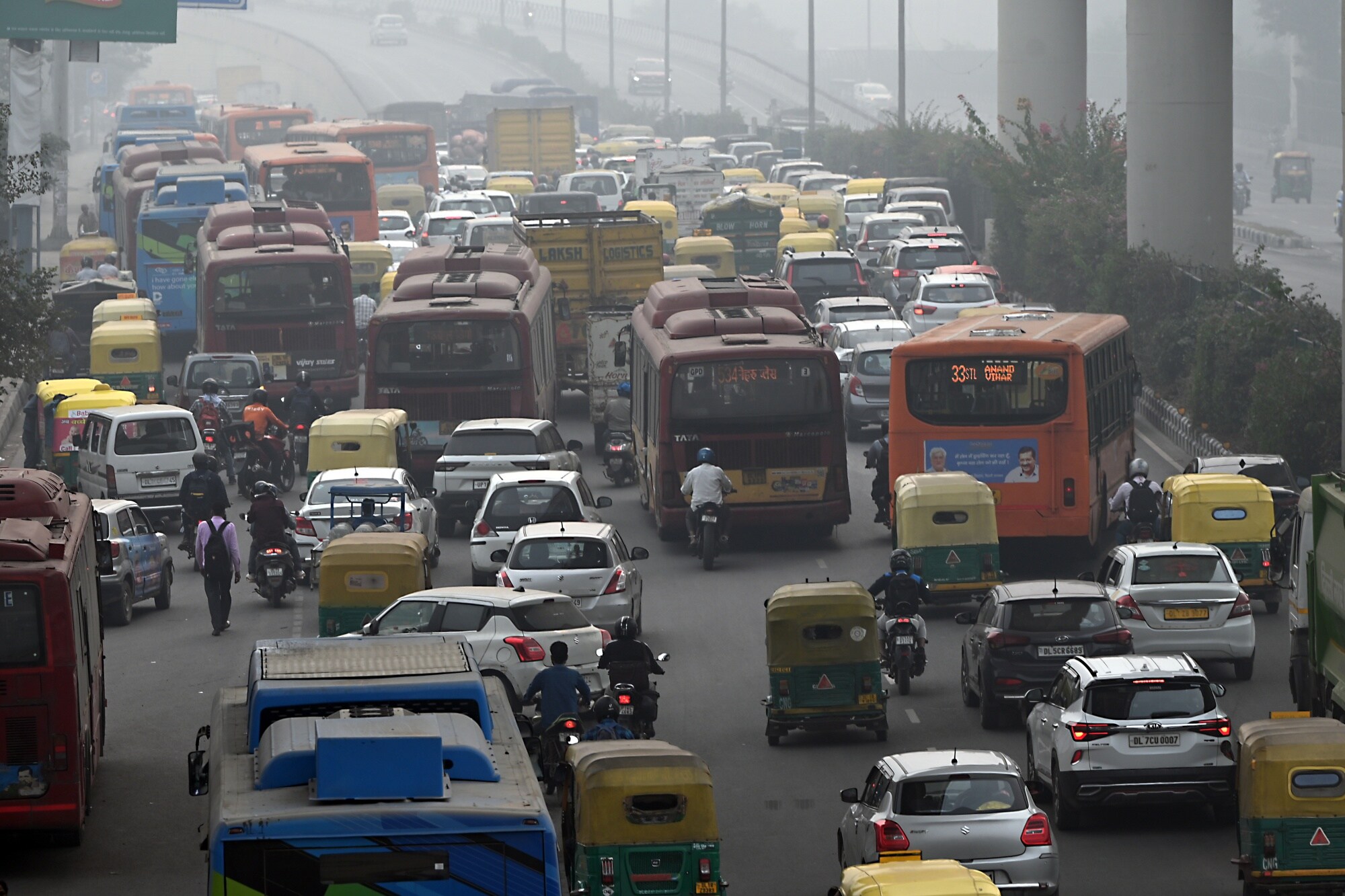
In Delhi, meanwhile, heavy air pollution remains a fact of life, especially for the many who work outdoors and lack access to luxury solutions like air purifiers and effective face masks.
“It's just constant,” said Subash Sharma, a 50-year-old rickshaw driver, as he waited for passengers on a recent hazy afternoon in central New Delhi. “When I go home, there's a layer of dirt on my face.”
Sharma has been driving a rickshaw — the three-wheeled, open-door vehicles ubiquitous across India — for more than a decade, often seven days a week. He said the steady dose of air pollution has led him to develop breathing problems and a stubborn black discoloration to his face. But he said he doesn't think too much about the long-term effects of the constant exposure to toxic air.
“We might live five years, 10 years, who knows?” he said. “You don't know anything about tomorrow, so why think about it.”
Such acceptance, not uncommon among New Delhiites, may be one reason why the pollution crisis doesn't figure heavily in the country's national politics. As New Delhi's air quality hit critical levels last month, Brijesh Goyal, the head of the Delhi-based Chamber of Trade and Industry urged Modi to hold an emergency meeting with the governments of several northern Indian to discuss the air crisis.
To date, the industry body hasn't gotten a response, Goyal said. Instead, issues like unemployment, corruption and Modi and his party's Hindu nationalist agenda are dominating the political agenda in the lead-up to next year's election.
“What figures in the electoral documents are what people want. If people are asking for clean air, it would figure there,” said Parthaa Bosu, executive director at EPIC India. “However, it seems that we as citizens are not fully committed to this cause.”
To be sure, Indian authorities have made some progress in tackling air pollution in recent years. In 2019, the government launched a National Clean Air Programme charged with disbursing funds to cities across the country to help clean the country's air.
In other areas, progress has been at the local level. They include expanded public transport options in New Delhi, regulations requiring city buses use natural gas and restrictions on farm fires that have resulted in a reduction in their number in recent years.
According to data collected by the Centre for Science and Environment, a New Delhi research group, the level of PM 2.5 — microscopic, cancer-causing pollutants that travel deep into lungs — averaged 98 during the three years through 2023, down 28% from the three-year period ending in 2017.
The pace of improvement, however, has slowed in recent years, and some new measures, like outdoor “smog towers,” do little to clean filthy air. Squeezing further improvements will require more sweeping changes, like taking a large numbers of drivers off Delhi's clogged streets or changing the farming patterns of Indian farmers so they don't have to set their fields ablaze, experts said.
“The tragedy is they have done all the things which are relatively easy to do — all those low hanging apples have been plucked,” said Avikal Somvanshi, senior manager at the the CSE. “Now what they need to do is much more difficult.
--With assistance from Christopher Udemans and Swati Gupta.
(Updates with research on deaths in fifth paragraph.)
More stories like this are available on bloomberg.com
©2023 Bloomberg L.P.

-
Indians Stay With Family, Not In Hotels | The Reason Why

India still lacks enough clean, reliable and affordable hotels for budget-conscious travellers.
-
The Economic Imperative: Analysing The Material Driving Force Behind India-Canada Strategic Reset
This economic complementarity is further reinforced by deep institutional investment ties and talent mobility, which form the bedrock of the bilateral framework.
-
Medicine Pricing: Where Must Profit Stop?
India must confront excessive margins, hidden incentives and regulatory gaps that threaten the integrity of medicine.
-
Why Amazon And Flipkart Are Struggling To Beat Meesho In India's Smaller Cities
With 274 million users and lowest-cost logistics, Meesho is defending its value commerce crown against giants like Amazon and Flipkart.
-
High US Salaries, No Green Card Certainty: The Financial Calculation Facing Indian H-1B Families
The suspension of PERM processing at eight technology employers does not cancel existing H-1B visas. What it does is force a question many Indian families have been avoiding: is the US salary worth tying your career and family plans to one employer?
-
Swiggy vs Eternal: Food Delivery's Two Rivals Are No Longer In The Same Race
Eternal is building a private AI assistant, dark.ai. Swiggy is still working out how to make Instamart pay, with an operating loss of Rs 895 crore in the July-September quarter while Blinkit stayed profitable.
-
Where You Live Shapes How You Get To Work | The Reason Why
Two-wheelers are the most popular way to get to work in India, accounting for nearly 43% of workplace commutes.
-
Unhedged Position: Can India See An Indonesia-Style Time Correction?
The Nifty is trading below levels it first clocked in 2024. Is there, then, as I have suggested in the headline, potential that the current time correction drags on painfully for the next three-five, even ten years?
-
Navigating Friction And Energy Realities: An Analysis Of Marco Rubio's October Visit To India
Occurring at a critical juncture marked by stalled trade negotiations and escalating geopolitical pressures over global energy supplies, the visit offers a profound window into modern US-India relations.
-
India Exports Capital. Why Not Export Trusteeship?
The big question, then, is whether India can build an institution that global borrowers, investors, banks, and lawyers can trust, even without an Indian connection.










