Air India-Vistara Merger To Forge Global Airline With 'Indian Heart': N Chandrasekaran
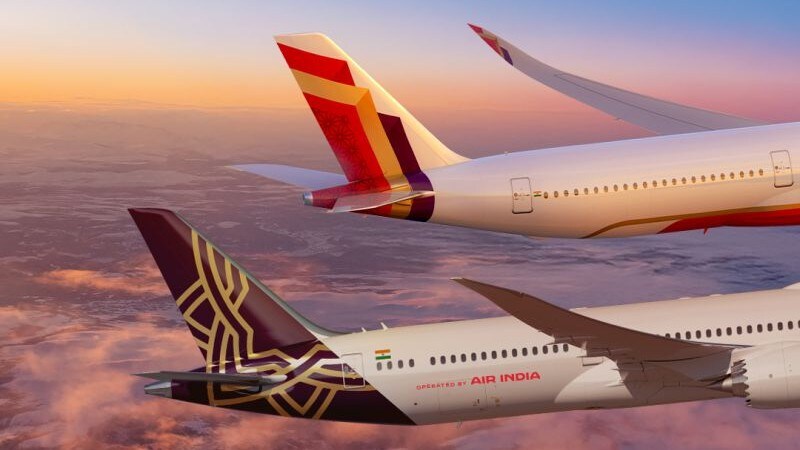
The Air India-Vistara merger is an important milestone in the transformation of Air India into a world-class global airline with an "Indian heart", Tata Sons Chairman N Chandrasekaran said on Thursday.
In a LinkedIn post, Chandrasekaran said this merger, on the back of the Air Asia and Air India Express merger, brought together four airlines to create one integrated airline group. The merger of Air India and Vistara was officially completed on Nov. 12.
"This week's merger between Air India Limited (AI) and Vistara is an important milestone in our commitment to transform AI into a world-class global airline with an Indian heart," Chandrasekaran wrote on his LinkedIn profile. "We have much to look forward to."
Chandrasekaran wrote that from its pre-privatisation size, the fleet has grown over 2.5 times and its 300 aircraft carry nearly 2 lakh passengers across 100 global destinations every day. Through its partners, the fleet offers worldwide connectivity to over 800 destinations.
"At the same time, it is important to acknowledge that a merger is undoubtedly a time of change — distinct cultures are put together to create something new and lasting. Such mergers take time to play out," he said.
"We have moved quickly, completing the process in 2 years, while keeping our eye on the ultimate goal: to realise AI's potential and turn it into a world-class global airline. Given our ambitions, this merger should be seen as part of a journey. Different parts of the business were at different points of maturity when the merger commenced, so they will take time to fully align," Chandrasekaran said.
Vistara will continue to deliver the service experience it is known for, while bringing to Air India some of its best practices. Customers will continue to experience Vistara's in-flight service and the cabin crew that they are accustomed to, according to Chandrasekaran.
"That brings me to AI, our national carrier. 2 years ago, when we took over, AI was in decline for a number of systemic reasons," the Tata Sons chairman said.
The turnaround it needed could not be solved simply by the allocation of resources, but by rethinking every aspect of Air India's functioning from the ground up. Change had to be meaningful, not just in matters of appearance, he said. "In the last 2 years, we have moved swiftly to invest in people, processes, systems and technology. New staff and planes are already in service, and more are on the way."
"The AI people will fly will be safer, its IT infrastructure will be stronger, and its personnel will reflect the next generation. We have created South Asia's largest training academy for pilots, cabin crew, and staff," Chandrasekaran said.
Air India is establishing a flying academy for cadet pilots and ground has been broken for a facility that will service its growing fleet of wide-body and narrow-body aircraft, he said. "I am optimistic about the future for AI. AI's new Airbus A350, which now flies to London and New York, gives us a glimpse of the future."
"As more new aircraft are delivered, and the legacy fleet is completely refitted, a new AI will take flight. We are fully aware that expectations for the new Air India are sky high. We expect nothing less, and we expect to deliver nothing less," he said.
The airline we are strengthening today will be ready for India's coming "aviation revolution". There is still more work to do, and Air India is bringing Vistara's best qualities to this merger, Chandrasekaran added.

-
AI Bias In Investing Cannot Be Eliminated, But It Can Be Governed

Framing is a particularly important example as identical financial information presented in terms of gains rather than losses can lead an LLM to reach a different assessment.
-
Joining The Dots | Dark Skies, Steady Diya: Why Hope Holds This Diwali
With war, a weak rupee and foreign outflows weighing on sentiment, policymakers at the NDTV World Summit and market veterans at NDTV Profit Ignite: Diwali Edition offered the same advice: stay invested and filter out the noise.
-
The Curious Case of Equitas Small Finance Bank And A CEO Who Quit For Stock
PN Vasudevan believes persistent investor concerns over a perceived conflict of interest had become a governance overhang on Equitas Small Finance Bank's stock, even as the lender improved profitability and asset quality.
-
Talking Points This Week: AI Cash Burn, A Tiger Comeback And An India That Still Finds Its Own Path
India is not immune to higher oil or tighter global liquidity, yet its earnings base is broader, its domestic policy levers are still available.
-
Foreign Investors Own Half Of HDFC Bank and ICICI Bank. An LTCG Cut Could Matter Most Here
Foreign portfolio investors have US$115 billion parked in HDFC Bank, ICICI Bank. If the government cuts long-term capital gains tax, Jefferies says returning foreign money could land here first.
-
'Never Seen This Level Of Negativity': Sandeep Tandon Says The Next Rally May Be Closer Than You Think
Veteran investor Sandeep Tandon says foreign selling is easing, large-caps are due a comeback and mid-caps are crowded, while he turns positive on gold, power and pharma this Diwali.
-
Indians Stay With Family, Not In Hotels | The Reason Why
India still lacks enough clean, reliable and affordable hotels for budget-conscious travellers.
-
The Economic Imperative: Analysing The Material Driving Force Behind India-Canada Strategic Reset
This economic complementarity is further reinforced by deep institutional investment ties and talent mobility, which form the bedrock of the bilateral framework.
-
Medicine Pricing: Where Must Profit Stop?
India must confront excessive margins, hidden incentives and regulatory gaps that threaten the integrity of medicine.
-
Why Amazon And Flipkart Are Struggling To Beat Meesho In India's Smaller Cities
With 274 million users and lowest-cost logistics, Meesho is defending its value commerce crown against giants like Amazon and Flipkart.










