Farmers Face Debts As Banks Turn Risk-Averse During Pandemic
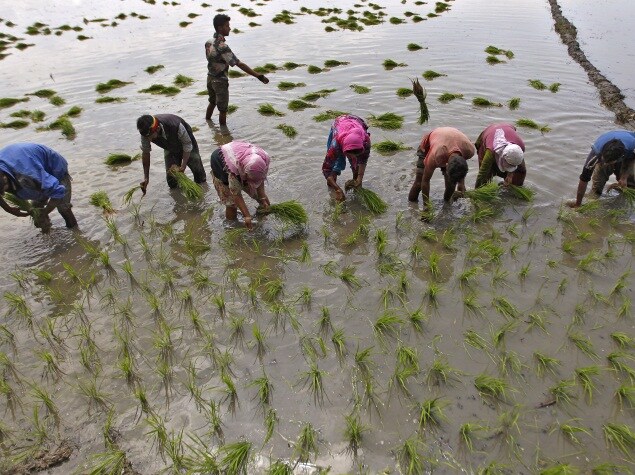
Last month, Dnyaneshwar Siddhanth, a farmer from Maharashtra, was in desperate need of money to buy seed and fertilizer as the monsoon sowing season approached. But after being rejected by his bank for a loan despite several attempts, Siddhanth finally borrowed Rs 1.5 lakh from a moneylender at a rate of 60 per cent annually. Amid India's worst economic slowdown in decades due to the novel coronavirus pandemic, millions of farmers like Siddhanth are being shunned by banks as lenders turn cautious due to rising bad loans.
That is forcing them to turn to illegal moneylenders who are charging increasingly exorbitant rates, according to over a dozen farmers and bankers that Reuters spoke to.
Agriculture accounts for near 15 per cent of India's $2.8 trillion economy and is a source of livelihood for more than half of its 1.3 billion people. Higher interest rates will reduce farm earnings, impacting overall rural incomes which are key to reviving the economy.
"Most of the profit goes to paying interest to a private moneylender," Siddhanth said.
"Everything now depends on monsoon rains. If the crops fail, then I will have to sell land to repay the loan."
Lenders Hamstrung
Till last year private moneylenders were charging 24-36 per cent interest, but are now asking for 48-60 per cent as more farmers seek loans, said Prashant Kathe, another farmer who has borrowed Rs 3 lakh rupees at a 60 per cent interest rate.
Typically, banks charge anywhere between 4-10 per cent for crop related loans.
The government has been instructing banks to increase lending, but bankers say they are choosing to be cautious.
Economists forecast India's economy to shrink by 5.1 per cent in the current fiscal year, the weakest performance since 1979.
Lenders also complain that they are caught up by farm loan waiver schemes announced by several governments to win over farmers ahead of elections.
"Even though some of the states announced the scheme years ago, the money has still not reached the bank so technically the farmer's account is a non-performing asset for us and we can't give more loans till the outstanding is cleared," said the head of agriculture lending at a large state-owned bank.
Last year, the government in India's richest state, Maharashtra, had announced that banks will write off loans of up to Rs 2 lakh to distressed farmers.
Siddhanth, who already owed a bank Rs 1.78 lakh from a previous loan, was covered under the scheme. However, the state government is yet to provide funds to repay it, and nearly one-third of the loan remains outstanding.
As of October 2019, 10 states that had announced farm loan waivers since 2014-15 had yet to complete the promised loan write-offs, according to local media reports.
"Only about 30-35 per cent of the promised amount by the various state governments has been sanctioned to the bank," said a senior banker who didn't wish to be identified.
The high level of bad loans in the agriculture sector is another deterrent to more lending.
The share of soured loans in the segment has risen from 8.4 per cent as of September 2018 to 10.1 per cent as of March 2020, at a time when the overall share of bad loans in the banking sector has been going down.
"There is reluctance to lend in the agri segment due to poor asset quality, as a result banks are more keen to lend if there is gold as collateral, but otherwise fresh lending in the segment has been tepid," said Anil Gupta, analyst at credit rating agency ICRA.
Between March and June this year, lending to the agriculture sector contracted 1.8 per cent, according to the Reserve Bank of India. During June 2019-2020, lending to the sector grew by 6.7 per cent compared to 11 per cent in the same period the previous year.

-
Indians Are Travelling, But Not Every Journey Is A Holiday | The Week In Whys

Pilgrims, patients and working women are the real travellers, and the system hasn't quite caught up with them.
-
Getting To Work Costs Women More | The Reason Why
It is not just about women paying more than men. It is about women paying much more in cities than in villages.
-
AI Bias In Investing Cannot Be Eliminated, But It Can Be Governed
Framing is a particularly important example as identical financial information presented in terms of gains rather than losses can lead an LLM to reach a different assessment.
-
Joining The Dots | Dark Skies, Steady Diya: Why Hope Holds This Diwali
With war, a weak rupee and foreign outflows weighing on sentiment, policymakers at the NDTV World Summit and market veterans at NDTV Profit Ignite: Diwali Edition offered the same advice: stay invested and filter out the noise.
-
The Curious Case of Equitas Small Finance Bank And A CEO Who Quit For Stock
PN Vasudevan believes persistent investor concerns over a perceived conflict of interest had become a governance overhang on Equitas Small Finance Bank's stock, even as the lender improved profitability and asset quality.
-
Talking Points This Week: AI Cash Burn, A Tiger Comeback And An India That Still Finds Its Own Path
India is not immune to higher oil or tighter global liquidity, yet its earnings base is broader, its domestic policy levers are still available.
-
Foreign Investors Own Half Of HDFC Bank and ICICI Bank. An LTCG Cut Could Matter Most Here
Foreign portfolio investors have US$115 billion parked in HDFC Bank, ICICI Bank. If the government cuts long-term capital gains tax, Jefferies says returning foreign money could land here first.
-
'Never Seen This Level Of Negativity': Sandeep Tandon Says The Next Rally May Be Closer Than You Think
Veteran investor Sandeep Tandon says foreign selling is easing, large-caps are due a comeback and mid-caps are crowded, while he turns positive on gold, power and pharma this Diwali.
-
Indians Stay With Family, Not In Hotels | The Reason Why
India still lacks enough clean, reliable and affordable hotels for budget-conscious travellers.
-
The Economic Imperative: Analysing The Material Driving Force Behind India-Canada Strategic Reset
This economic complementarity is further reinforced by deep institutional investment ties and talent mobility, which form the bedrock of the bilateral framework.










