Adani Wilmar Q4 Results: Revenue Jumps 40%, But Margin Contracts
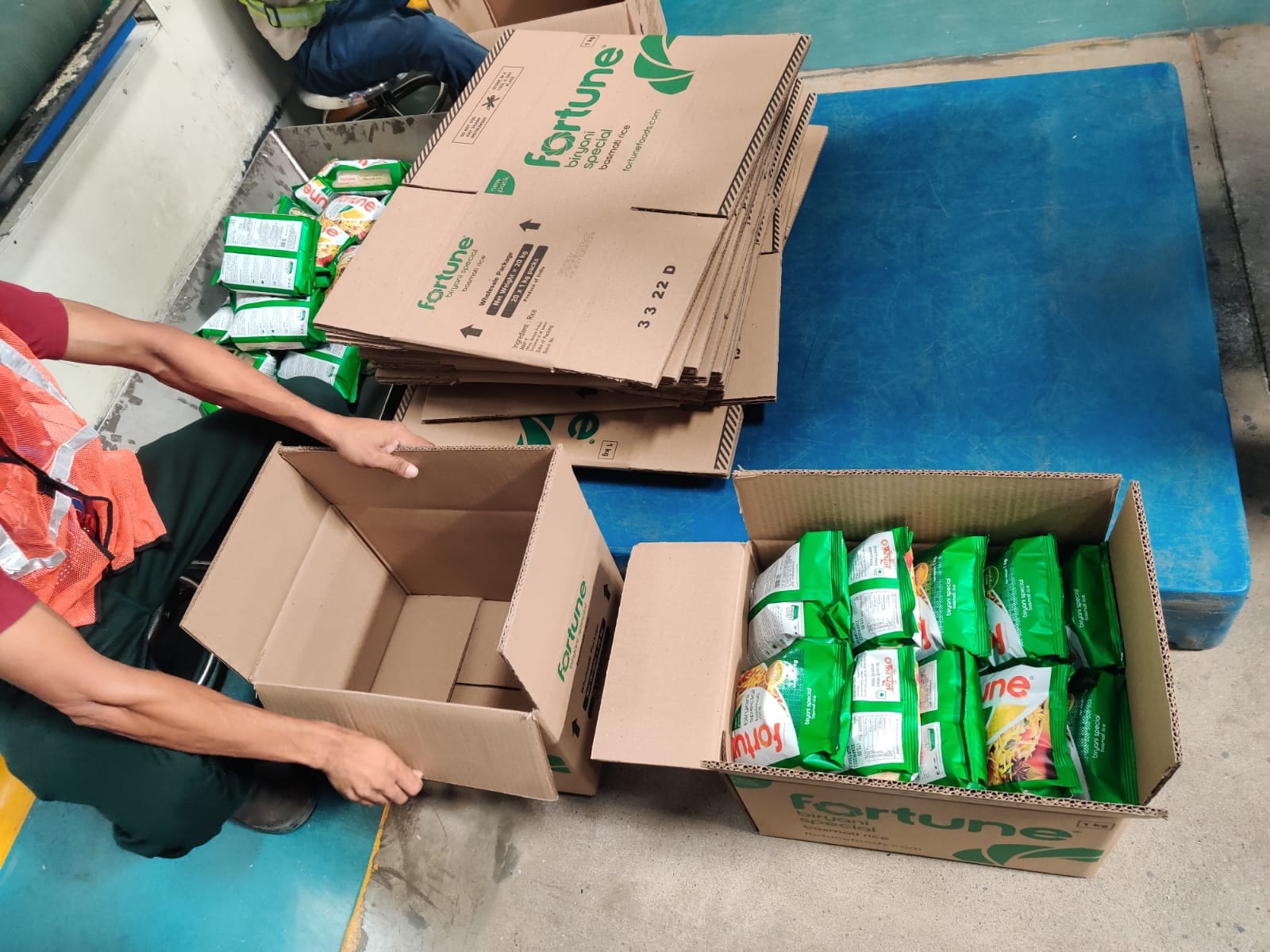
Adani Wilmar Ltd.'s fourth quarter revenue rose fuelled by higher edible oil prices due to the ongoing Russia-Ukraine conflict, even as it hurt the company margin.
Consolidated revenue of the 'Fortune' brand edible oil maker rose 40% to Rs 14,960.37 crore in the quarter-ended March, according to its stock exchange filing.
In what is Adani Wilmar's first earnings disclosure to the exchanges since its market debut in February this year, the company said its annual turnover rose 46% to Rs 54,213.55 crore, aided by revenue in the edible oil segment. It became the second FMCG company after Hindustan Unilever Ltd. to cross the Rs 50,000 crore turnover mark.
Highlights (YoY)
Edible oil business grew 41% to Rs 12,415 crore, while the food business rose 49% to Rs 757 crore.
Operating profit rose 21% to Rs 425.72 crore.
Net profit fell 26% to Rs 234.3 crore on higher tax expenses.
Margin stood at 2.8% vs 3.3%.
Volume grew 16% to 1.29 million metric tonnes.
Cost of materials consumed rose 40% to Rs 13,666.20 crore.
“We have delivered steady growth in spite of the challenging macro environment,” Angshu Mallick, managing director and chief executive officer at Adani Wilmar said in a company statement.
While Covid-19-led supply chain bottlenecks started easing after the second quarter of FY22, the risks then shifted to the ongoing geopolitical tension, higher commodity prices, and interest rate hikes by the U.S. Fed, he said.
Rural Demand Takes A Hit
Sustained inflation across edible oil has hit consumption, particularly in the hinterlands, Mallick said in a post-earnings conference call.
Crude palm oil is being offered at around $1,950 per tonne including cost, insurance and freight, up from $1,042 a tonne in June last year, he said. Similarly, soyabean oil prices rose from $1,196 per tonne to $1,770 per tonne, while sunflower oil prices shot up 66.5% to $2,100 a tonne at the end of March.
“While the rural market is the growth driver, inflation has impacted demand. We expect rural demand to remain tepid in the medium term," he said.
Future Roadmap
Adani Wilmar plans to expand capacities aggressively in the food business.
“Going forward, we will focus more on inorganic growth and strategic investments in the food space," Mallick said. The company is also looking at capacity addition in rice, wheat flour, pulses and besan.
The company launched Fortune Poha, two variants of ready-to-cook Khichdi, and Fortune Total Balance oil (a 3-in-1 blended oil) in FY22. “These launches are in line with the focus on expanding the value-added foods basket with health and wellness,” he said.
In a bid to strengthen its manufacturing footprint in the food segment, Adani Wilmar acquired a rice mill in Burdwan, West Bengal. “With all these efforts, we expect volumes in the food business to grow from 11-12% in FY22 to 20% in FY23.”
Adani Wilmar added 28 Fortune Mart stores in FY22, taking the total count to 33, with plans to add 100 more stores.
Fortune Mart is a franchise physical store to showcase Fortune-branded products. It also serves as fulfillment centres for home delivery of products ordered through its D2C channel: Fortune Online. The direct-to-consumer platform is currently available in 25 cities.
Adani Wilmar's flagship brand Fortune commands an 18.8% market share in India, according to its investor presentation. It reaches 90 million households, indicating that one out of every three households consumes a Fortune product, the company claims.
The company has 22 plants in India located across 10 states, comprising 10 crushing units and 19 refineries. Adani Wilmar's refinery in Mundra is the largest with a capacity of 5,000 tonnes per day.
Shares of Adani Wilmar fell 5.07% in the last five consecutive days compared with a 0.2% loss in the benchmark Nifty 50. The stock, however, rose multiple times since its IPO, going from Rs 221 in February to Rs 878 in April.

-
Signature Play: The Classic Cocktail Is Dead. Or Is It?

Classic cocktails are disappearing from India's cocktail menus. But they're still being ordered, taught to bartenders and borrowed from. So, who's really having the last drink?
-
A New Samvat Wishlist: Inclusive Prosperity And Human Development
India has strengthened its economic foundations through infrastructure, digital access and enterprise. Its next growth chapter must deepen productivity, create better livelihoods and widen participation in prosperity.
-
Love, Sex Aur Dhokha: The Audacious Plot To Spy On Jensen Huang
A Taipei dinner, a Singapore chip buyer and a suspected Chinese asset: inside the alleged spy operation that got close to NVIDIA's Jensen Huang.
-
Ten Things I Learnt This Samvat
Patience can be a trap. Cheap stocks can stay cheap. Leverage can wipe you out. What did Samvat 2082 teach us? Niraj Shah writes on 10 lessons from the year gone by.
-
Talking Points This Week: Tech Nerves, FII Buying, And A Faraway Banking Shock
The global markets are not shining this Diwali. The exception in the large markets is, India.
-
Midterm Rally Lasted A Day. The Hard Reality Of A Divided US May Last Two Years | Opinion
Between a contested AI boom, a debt ceiling that arrives in 2027 and a president with every incentive to act alone, the next two years may prove more volatile than the first day's rally suggests.
-
Blue Wave Will Derail the AI Trade but Won't Dismantle the AI Era | Unhedged Position
The Democrats' sweep of the US Congress will see politics collide with economic forces both over the long and short term.
-
It's Time To Take The GST Council's Bet On Trust Global
Payment records can prove India's services exports, and clear, proportionate rules can bring foreign digital sellers into the tax net.
-
Opinion | India at 38: From Innovation Overperformer to Innovation Powerhouse
India now has 453 VC-backed deep science startups, 18 of them late-stage, after 117 percent growth since 2020. Laurus Labs, at USD 9.3 billion, is the most valuable deep science company in any middle-income economy outside China.









