Adani Wilmar Q2 Results: Revenue Dips On Lower Edible Prices, Volume Growth Steady
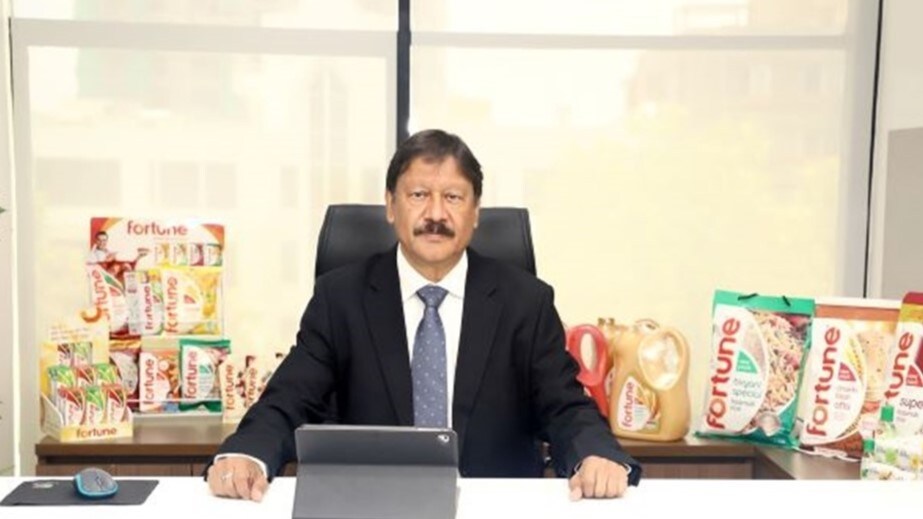
Adani Wilmar Ltd.'s second quarter volume grew steadily helped by stable rural demand and distribution expansion. Its revenue, however, fell due to lower edible oil prices, putting profitability under pressure.
The consolidated revenue of the owner of the 'Fortune' brand fell 13% over the previous year to Rs 12,267.2 crore in the quarter ended September, according to an exchange filing.
Volume rose 11% to 1.46 million metric tonne with broad-based growth across all segments.
Net loss at Rs 130 crore as against a net profit of Rs 31.9 crore.
Ebitda down 43% to Rs 143.67 crore.
Margin stood at 1.2% versus 1.8%.
The quarter continued to remain challenging for the edible oil segment. While the quarter was less volatile as compared with previous quarters, the losses in edible oil segment was driven by continued divergent trends in the spot physical prices and future prices, resulting in hedging losses, the company said in a statement.
The quarter also witnessed record imports by the industry, that anticipated an early festive demand.
The prices of edible oils fell further by 3-6% during the quarter and continued to remain rangebound in the sub-$1,000 per tonne levels.
"We continued the growth momentum across all the business categories, amidst the challenging environment in the edible oils segment," Angshu Mallick, managing director and chief executive officer at Adani Wilmar Ltd. said in a statement.
"While the profitability in edible oils were impacted consecutively for the second quarter, we believe that the abnormality will soon reverse," he said.
"Going forward, given that the gap between spot and future prices has narrowed, we expect the profitability of edible oils to come back to normal levels in terms of gross margin and Ebitda per tonne," said Mallick.
Revenue from the branded products under the food and FMCG segment have been growing consistently at 40% YoY in the past eight quarters.
The food and FMCG segment includes products such as wheat flour, rice, pulses, besan, sugar, poha and soap.
Restrictions on exports of basmati and non-basmati rice continued during the quarter.
"Wheat prices surged upwards on the back of a strong demand, vis-à-vis the tight supply chain," said Mallick. However, the government stepped in to release wheat under the open market sale scheme to control the prices.
Segmentwise Results
The food and FMCG business recorded a revenue growth of 26% to Rs 1,283 crore. Volume rose 19% to 0.26 million metric tonne.
Volume in its mainstay edible oil business rose 4% to 0.85 million metric tonne, while revenue slipped 19% to Rs 9,038 crore dragged by lower business-to-business sales. The branded sales, however, grew by 12% over the previous year.
Industrial essentials grew 25% in volume terms to 0.34 million metric tonne. Revenue rose 2% to Rs 1,947 crore.
The company said it has gained market share across most of the edible oil and food categories, given the immense focus on expanding direct reach and rural town coverage. About 30% of sales now come from rural towns, wherein nearly three fourth of the country's population resides. In the past six months, Adani Wilmar added over 13,000-plus towns.
The out-of-home consumption continues to grow with the company's hotel, restaurant and catering business growing 50% in terms of volume on a quarter-on-quarter basis.
Shares of Adani Wilmar fell 2.19% after the results were declared, as compared with a 0.12% decline in the benchmark Nifty 50.
Disclaimer: AMG Media Networks Ltd. (AMNL) currently owns 49% stake in Quintillion Business Media Ltd. (QBML), the owner of BQ Prime Brand. AMNL has entered into an MOU to acquire the balance 51% stake in QBML. Post acquisition, QBML will become a wholly owned subsidiary of AMNL.

-
Talking Points This Week: Leadership Shock At Nvidia, Earnings Strength, And The Fog Over Hormuz

The Anthropic IPO pricing and first trading day, Nvidia's upcoming earnings, and any fresh signals from Iran will set the tone for the following week.
-
Signature Play: The Classic Cocktail Is Dead. Or Is It?
Classic cocktails are disappearing from India's cocktail menus. But they're still being ordered, taught to bartenders and borrowed from. So, who's really having the last drink?
-
A New Samvat Wishlist: Inclusive Prosperity And Human Development
India has strengthened its economic foundations through infrastructure, digital access and enterprise. Its next growth chapter must deepen productivity, create better livelihoods and widen participation in prosperity.
-
Love, Sex Aur Dhokha: The Audacious Plot To Spy On Jensen Huang
A Taipei dinner, a Singapore chip buyer and a suspected Chinese asset: inside the alleged spy operation that got close to NVIDIA's Jensen Huang.
-
Ten Things I Learnt This Samvat
Patience can be a trap. Cheap stocks can stay cheap. Leverage can wipe you out. What did Samvat 2082 teach us? Niraj Shah writes on 10 lessons from the year gone by.
-
Talking Points This Week: Tech Nerves, FII Buying, And A Faraway Banking Shock
The global markets are not shining this Diwali. The exception in the large markets is, India.
-
Midterm Rally Lasted A Day. The Hard Reality Of A Divided US May Last Two Years | Opinion
Between a contested AI boom, a debt ceiling that arrives in 2027 and a president with every incentive to act alone, the next two years may prove more volatile than the first day's rally suggests.
-
Blue Wave Will Derail the AI Trade but Won't Dismantle the AI Era | Unhedged Position
The Democrats' sweep of the US Congress will see politics collide with economic forces both over the long and short term.
-
It's Time To Take The GST Council's Bet On Trust Global
Payment records can prove India's services exports, and clear, proportionate rules can bring foreign digital sellers into the tax net.
-
Opinion | India at 38: From Innovation Overperformer to Innovation Powerhouse
India now has 453 VC-backed deep science startups, 18 of them late-stage, after 117 percent growth since 2020. Laurus Labs, at USD 9.3 billion, is the most valuable deep science company in any middle-income economy outside China.









