Adani Wilmar Q2 Results: Revenue Dips On Lower Edible Prices, Volume Growth Steady
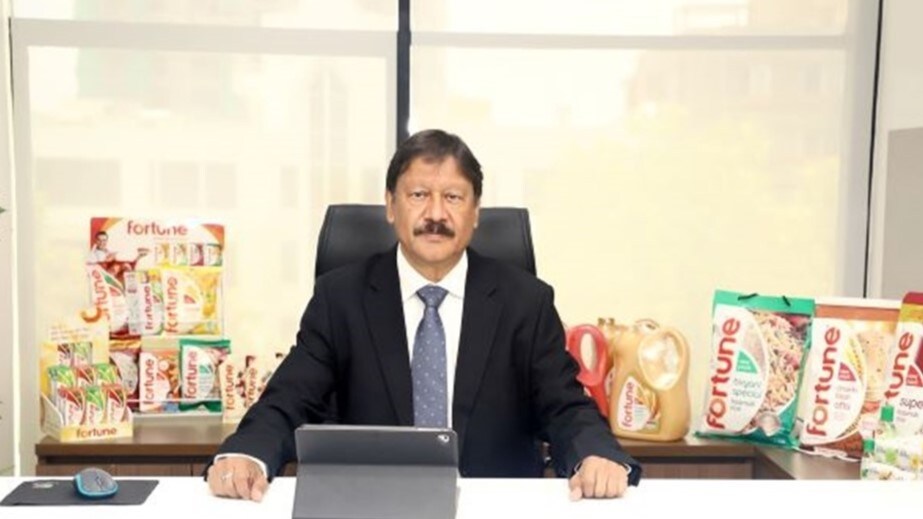
Adani Wilmar Ltd.'s second quarter volume grew steadily helped by stable rural demand and distribution expansion. Its revenue, however, fell due to lower edible oil prices, putting profitability under pressure.
The consolidated revenue of the owner of the 'Fortune' brand fell 13% over the previous year to Rs 12,267.2 crore in the quarter ended September, according to an exchange filing.
Volume rose 11% to 1.46 million metric tonne with broad-based growth across all segments.
Net loss at Rs 130 crore as against a net profit of Rs 31.9 crore.
Ebitda down 43% to Rs 143.67 crore.
Margin stood at 1.2% versus 1.8%.
The quarter continued to remain challenging for the edible oil segment. While the quarter was less volatile as compared with previous quarters, the losses in edible oil segment was driven by continued divergent trends in the spot physical prices and future prices, resulting in hedging losses, the company said in a statement.
The quarter also witnessed record imports by the industry, that anticipated an early festive demand.
The prices of edible oils fell further by 3-6% during the quarter and continued to remain rangebound in the sub-$1,000 per tonne levels.
"We continued the growth momentum across all the business categories, amidst the challenging environment in the edible oils segment," Angshu Mallick, managing director and chief executive officer at Adani Wilmar Ltd. said in a statement.
"While the profitability in edible oils were impacted consecutively for the second quarter, we believe that the abnormality will soon reverse," he said.
"Going forward, given that the gap between spot and future prices has narrowed, we expect the profitability of edible oils to come back to normal levels in terms of gross margin and Ebitda per tonne," said Mallick.
Revenue from the branded products under the food and FMCG segment have been growing consistently at 40% YoY in the past eight quarters.
The food and FMCG segment includes products such as wheat flour, rice, pulses, besan, sugar, poha and soap.
Restrictions on exports of basmati and non-basmati rice continued during the quarter.
"Wheat prices surged upwards on the back of a strong demand, vis-à-vis the tight supply chain," said Mallick. However, the government stepped in to release wheat under the open market sale scheme to control the prices.
Segmentwise Results
The food and FMCG business recorded a revenue growth of 26% to Rs 1,283 crore. Volume rose 19% to 0.26 million metric tonne.
Volume in its mainstay edible oil business rose 4% to 0.85 million metric tonne, while revenue slipped 19% to Rs 9,038 crore dragged by lower business-to-business sales. The branded sales, however, grew by 12% over the previous year.
Industrial essentials grew 25% in volume terms to 0.34 million metric tonne. Revenue rose 2% to Rs 1,947 crore.
The company said it has gained market share across most of the edible oil and food categories, given the immense focus on expanding direct reach and rural town coverage. About 30% of sales now come from rural towns, wherein nearly three fourth of the country's population resides. In the past six months, Adani Wilmar added over 13,000-plus towns.
The out-of-home consumption continues to grow with the company's hotel, restaurant and catering business growing 50% in terms of volume on a quarter-on-quarter basis.
Shares of Adani Wilmar fell 2.19% after the results were declared, as compared with a 0.12% decline in the benchmark Nifty 50.
Disclaimer: AMG Media Networks Ltd. (AMNL) currently owns 49% stake in Quintillion Business Media Ltd. (QBML), the owner of BQ Prime Brand. AMNL has entered into an MOU to acquire the balance 51% stake in QBML. Post acquisition, QBML will become a wholly owned subsidiary of AMNL.

-
Gold Is Rs 22,000 Cheaper Than A Month Ago. Should You Buy Amid The Wedding Season?

Gold's potential slide to $3,500 could save around Rs 4,700 per 10 grams, but a soft inflation print could just as easily push prices back up. One way to split the risk is to buy in parts, some now and the rest after the Fed's Dec. 9 decision.
-
AI Agents Are Gaining Power. Who Governs Them?
Artificial intelligence agents promise to transform productivity by moving machines from assisting decisions to executing them. But as organisations delegate greater authority to these AI-agents, they must first establish who controls that authority and who remains accountable when things go wrong.
-
Why Swapping Your Old Gold Can Trigger A Rs 5 Lakh Tax Bill, And How You Can Avoid It Legally
Swapping old gold for new is taxed as a sale and a fresh purchase. Getting your own gold remade can cut most of that bill, though it has its own costs.
-
The AI Trade is Done. The Real Opportunity for Investors Starts in 2027 | Unhedged Position
As pureplay AI stocks plunge and circular, capex-led financing unwinds, 2027 is set to be a year of reckoning for AI companies. Yet the bust clears the way for a better opportunity for investors in 2027 -- shifting the spotlight from AI builders to the companies using AI.
-
Leadership As Mission: Why The Age Of AI Demands More Human Leadership
Debjani Ghosh examines how AI is changing leadership, arguing that its success must be measured by its impact on people and the accountability of those guiding its use.
-
We May Need Another Tukaram Mundhe To Fight Air Pollution | The Reason Why
Developers may install basic measures such as sprinklers and green nets, resume work, and continue violating rules when this equipment stops working.
-
Extracting Value From Battery Scrap Could Be Challenging For India | The Reason Why
A discarded lithium-ion battery still contains valuable materials such as lithium, nickel and cobalt. These can be recovered and reused. When such batteries are crushed and shredded, they produce a dark powder called black mass.
-
One El Nino, India Can Handle. Two Could Break The Granary
India's grain stocks can absorb one bad year, but a second El Nino could drain the buffer in two to three years, economists say.
-
India's Troika Of Good Luck | Joining The Dots
As Jensen Huang's exit drags Nvidia down, a cooling AI trade and resilient earnings have revived investor interest in India. A likely RBI rate hike looms.
-
Talking Points This Week: Leadership Shock At Nvidia, Earnings Strength, And The Fog Over Hormuz
The Anthropic IPO pricing and first trading day, Nvidia's upcoming earnings, and any fresh signals from Iran will set the tone for the following week.









