Abu Dhabi Weighs Investment Pledges Worth $50 Billion for India
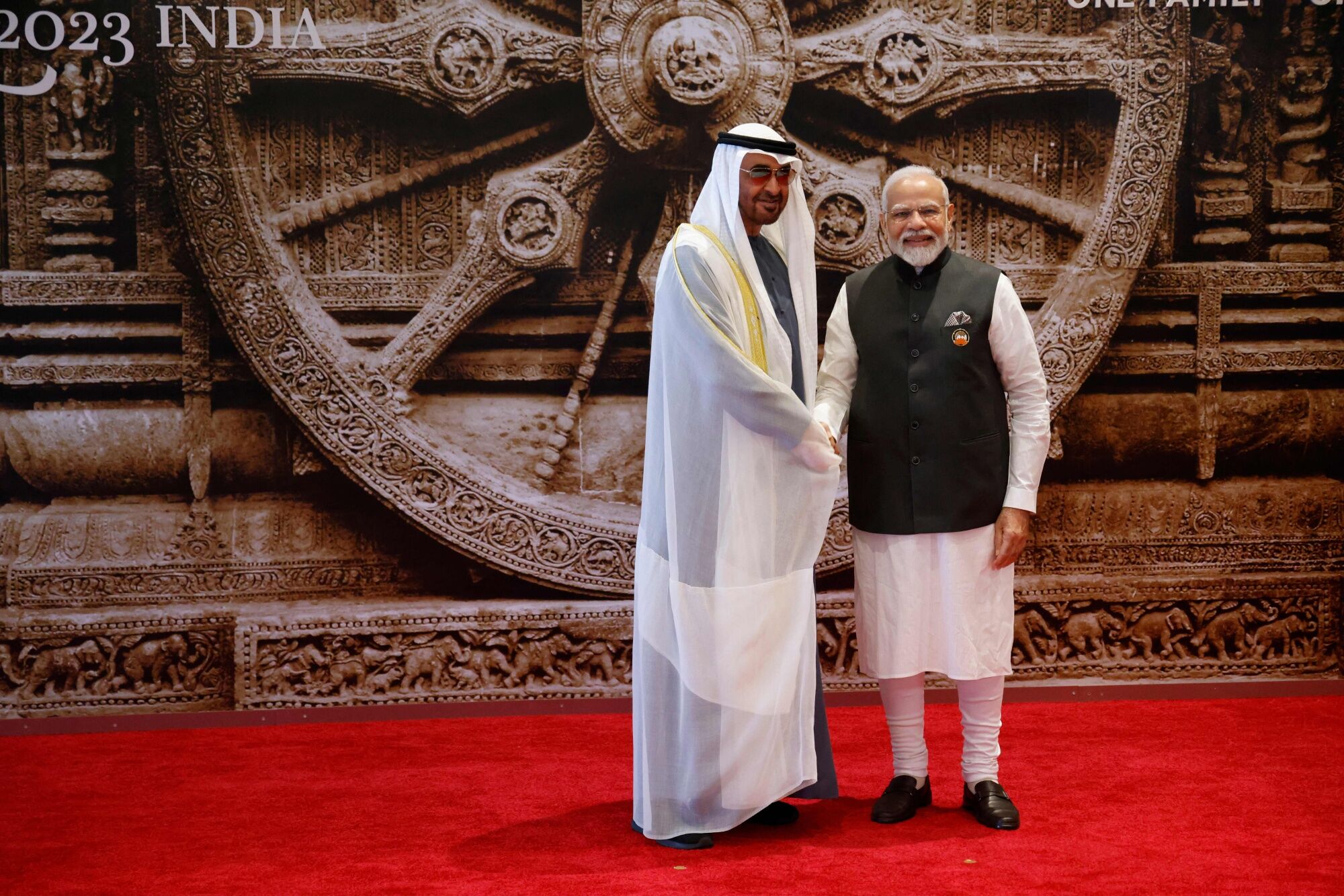
(Bloomberg) -- The United Arab Emirates is considering investing as much as $50 billion in India, its second-largest trading partner, as part of a broader bet on the world's fastest-growing major economy.
Provisional pledges from the UAE could be announced early next year, people familiar with the matter said, asking not to be named as the information is not public. Any new investments would follow Narendra Modi's meetings with UAE President Sheikh Mohammed bin Zayed in July.
The countries have been seeking to bolster ties over the past decade, and aim to increase non-oil bilateral trade to $100 billion. Modi's recent visit to Abu Dhabi marked his fifth trip to the Gulf nation since he took over as prime minister in 2014. The last Indian premier to visit the UAE before him was Indira Gandhi in 1981.
Deals being discussed include stakes in key Indian infrastructure projects and state-owned assets, with announcements likely before Modi seeks a third term in federal elections due next year, the people said. Some of the investments could involve sovereign wealth funds such as the Abu Dhabi Investment Authority, Mubadala Investment Co. and ADQ, they said.
The pledges are unlikely to have clear timelines for a large chunk of the investments, the people said. No final decisions have been made on the size or timing of the announcements.
As part of the push, entities overseen by Sheikh Tahnoon bin Zayed Al Nahyan have held early-stage talks on investing billions of dollars in India, one of the people said. Sheikh Tahnoon is the UAE president's brother and chairman of International Holding Co., which disclosed a 5% stake in Gautam Adani's flagship conglomerate last month. That came days after IHC sold down holdings in two Adani firms, though the firm reiterated its commitment to India at the time.
Representatives for India's finance and trade ministries, the UAE government, and Sheikh Tahnoon's private investment firm Royal Group didn't respond to requests for comment. ADIA, ADQ and Mubadala declined to comment.
Growth Engine
Royal Group has long prized India, and executives there have called the country a potential growth engine of the next decade, Bloomberg has reported. Sheikh Tahnoon is also chairman of ADQ as well as ADIA — one of the world's largest wealth funds, with close to $1 trillion in assets.
Read More: Gulf Royal's $1.5 Trillion Empire Draws Bankers and Billionaires
Lured by a rising middle class and seeking to diversify away from traditional investment destinations like Europe, Gulf state-backed investors have boosted ties with India. Others including the Qatar Investment Authority and Saudi Arabia's Public Investment Fund have also emerged as prominent investors in the country.
The UAE's plan is a further indicator of the government's push to position itself as a country that avoids taking sides in a world increasingly split between Washington and Beijing.
As one of few countries to manage close to $1.5 trillion in sovereign wealth, the UAE is a vital ally to the world's most populous nation, which is seeking to bridge infrastructure gaps. For India, any large foreign investments would help Prime Minister Modi highlight his efforts to bolster the economy ahead of the 2024 vote.
Read More: BRICS Bloc Grows Heft With Saudi Arabia and Other Mideast Powers
Earlier this year, the UAE announced plans to support Turkey's embattled economy with a $51 billion investment pledge, including about $30 billion in energy. Talks over one deal in that sector — just one part of the broader bilateral push — have collapsed, Bloomberg News has reported.
--With assistance from Abeer Abu Omar, Archana Narayanan and Shruti Srivastava.
More stories like this are available on bloomberg.com
©2023 Bloomberg L.P.

-
Talking Points This Week: Leadership Shock At Nvidia, Earnings Strength, And The Fog Over Hormuz

The Anthropic IPO pricing and first trading day, Nvidia's upcoming earnings, and any fresh signals from Iran will set the tone for the following week.
-
Signature Play: The Classic Cocktail Is Dead. Or Is It?
Classic cocktails are disappearing from India's cocktail menus. But they're still being ordered, taught to bartenders and borrowed from. So, who's really having the last drink?
-
A New Samvat Wishlist: Inclusive Prosperity And Human Development
India has strengthened its economic foundations through infrastructure, digital access and enterprise. Its next growth chapter must deepen productivity, create better livelihoods and widen participation in prosperity.
-
Love, Sex Aur Dhokha: The Audacious Plot To Spy On Jensen Huang
A Taipei dinner, a Singapore chip buyer and a suspected Chinese asset: inside the alleged spy operation that got close to NVIDIA's Jensen Huang.
-
Ten Things I Learnt This Samvat
Patience can be a trap. Cheap stocks can stay cheap. Leverage can wipe you out. What did Samvat 2082 teach us? Niraj Shah writes on 10 lessons from the year gone by.
-
Talking Points This Week: Tech Nerves, FII Buying, And A Faraway Banking Shock
The global markets are not shining this Diwali. The exception in the large markets is, India.
-
Midterm Rally Lasted A Day. The Hard Reality Of A Divided US May Last Two Years | Opinion
Between a contested AI boom, a debt ceiling that arrives in 2027 and a president with every incentive to act alone, the next two years may prove more volatile than the first day's rally suggests.
-
Blue Wave Will Derail the AI Trade but Won't Dismantle the AI Era | Unhedged Position
The Democrats' sweep of the US Congress will see politics collide with economic forces both over the long and short term.
-
It's Time To Take The GST Council's Bet On Trust Global
Payment records can prove India's services exports, and clear, proportionate rules can bring foreign digital sellers into the tax net.
-
Opinion | India at 38: From Innovation Overperformer to Innovation Powerhouse
India now has 453 VC-backed deep science startups, 18 of them late-stage, after 117 percent growth since 2020. Laurus Labs, at USD 9.3 billion, is the most valuable deep science company in any middle-income economy outside China.









