Abdul Wahid Shaikh And The Weight Of Freedom
The date Sept. 11, 2015, is a permanent tattoo in Abdul Wahid Shaikh's memory. Arguments in the 2006 Mumbai train blasts case against him and his 12 co-accused, all Muslim, had been completed a year ago in the special court in Mumbai. The day before, the men, including Wahid, were told that the next hearing would be at 11:30 a.m. It only meant one thing—the court was going to declare its verdict.

“Everyone wore the clothes they had worn for Eid which had gone by 10-15 days before. Some wore new shoes, some shaved, some applied mehendi to their hair which had turned white in the nine years we had been in prison,” recalls Wahid, a teacher, who is the subject of the recently released Hindi feature film, Haemolymph. “It was like we were getting dressed for a party.”

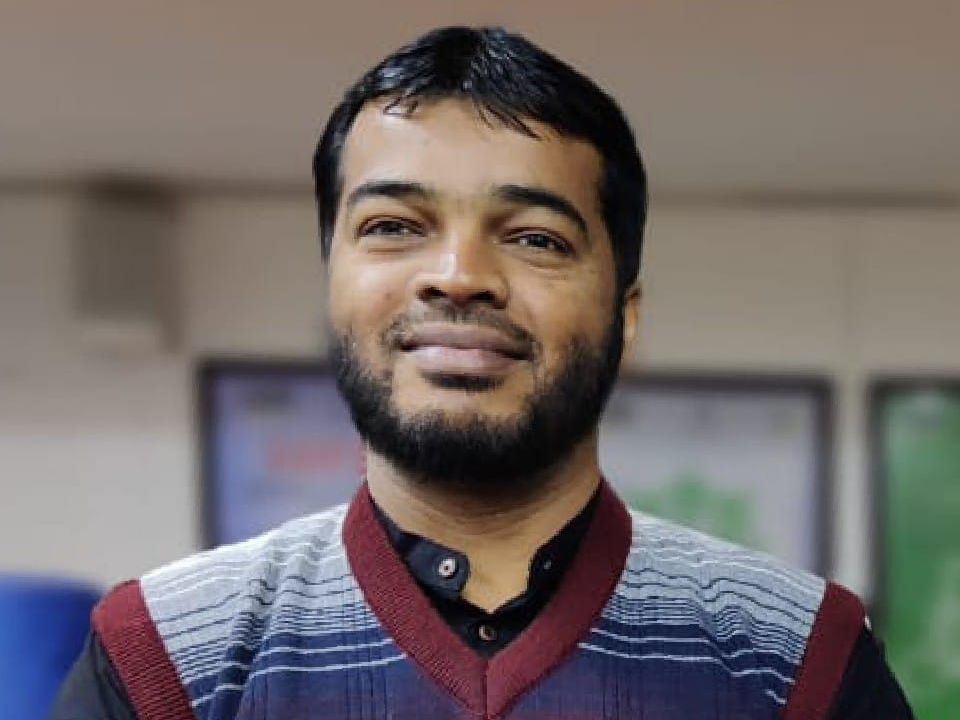
(Image: Abdul Wahid Shaikh)
Someone suggested they avoid breakfast so there would be space for all the celebratory sweets that were bound to come their way, says Wahid, adding that they all made a V for victory sign to the media waiting outside the court.
The men were excited, they believed their defence had punctured enough holes in the case of the city's Anti Terrorist Squad who had arrested them for planning and executing a series of bombings on Mumbai's local trains on July 11, 2006. The 7/11 train blasts, as they came to be known, killed 187 people and injured 829.
It was a dramatic trial, one during which a public confession was retracted and a brave young lawyer was murdered. The accused used the Right To Information Act to show the ATS' case was flawed. Some pointed out that call records indicated they were nowhere near the scene of the crime.

A forensic officer examines a damaged railway train compartment hit by a bomb blast, in Mumbai, on July 12, 2006. (Photograph: REUTERS/Punit Paranjpe)
That day in September, as they woke up and got ready, all 13 men were convinced this was going to be their last day in prison.
“We had even testified, usually a double-edged sword in a criminal trial because the testimony of an accused can be used against them,” says Wahid. While waiting for the verdict he wrote a book, Begunah Quaidi (innocent prisoner) on government-issued dairies and A4 sheets that he smuggled outside as he wrote. It contains an entire chapter on torture.
In court, Wahid's name was called first. He was acquitted.
After that, the judge repeated the same word 12 times for the men with whom he had spent nearly a decade in jail: guilty.
In the introduction to Mohammad Aamir Khan's book, Framed As a Terrorist, sociologist Nandita Haksar writes that “under the Indian criminal justice system it is easier to prove an innocent man guilty than for an innocent man to prove his innocence.” Khan spent 14 years in prison, incarcerated for serious crimes he never committed, before being acquitted in 2012. Arresting innocent Muslim men and labelling them terrorist is a story that has played out repeatedly in the Indian justice system.
Wahid never stopped carrying the burden of acquittal. “I felt terribly sad that we had entered jail together and that I was exiting alone,” he says. “The media couldn't understand why I was crying.”

Police stand guard outside the jail, where 12 men convicted of planning the 2006 train blasts, are imprisoned in Mumbai, on Sept.14, 2015. ( Photograph: REUTERS/Shailesh Andrade)
For the first month after he was acquitted—and even before he went back to the school where he had once worked to reclaim his teaching job—he kept going back to prison to meet the men. He carried letters to and from their families and things they wanted from outside.
“I promised them I wouldn't forget them,” he says.
In the years since that day, Wahid has carried not just the weight of those men but of all the Muslim men who have a similar ‘India story'—arrested under draconian terror laws, imprisoned for years, and eventually acquitted. A year after his release, he started Innocence Network—a collective of those fighting for the rights of those ‘wrongfully prosecuted or convicted, especially under charges of terrorism'.
In 2020, he began Acquit Undertrial, a YouTube channel where he stood in front of the camera and shared stories of people wrongly persecuted as terrorists. He armed himself with a law degree.
A chapter on him in a book by journalist Sunetra Choudhury led director Sudarshan Gamare to Wahid's book, and then to meet him. It wasn't the first time Wahid had been approached by a filmmaker. Most eventually decided the subject wasn't worth what it would cost them. “Pehle goli mujhe lagegi,” one director told Wahid, referring to the fact that he would be targeted for making the movie.

A still from a promotional trailer for ‘Haemolymph'. (Image: TikatBaari Productions / YouTube)
Wahid repeatedly requests me to write that he was acquitted by Allah's grace. He cries every time he sees the movie—for what happened to him and those he left behind. Every Indian should watch the film and cry with him.
Priya Ramani is a Bengaluru-based journalist and is on the editorial board of Article-14.com.
The views expressed here are those of the author, and do not necessarily represent the views of BQ Prime or its editorial team.

-
Talking Points This Week: Leadership Shock At Nvidia, Earnings Strength, And The Fog Over Hormuz

The Anthropic IPO pricing and first trading day, Nvidia's upcoming earnings, and any fresh signals from Iran will set the tone for the following week.
-
Signature Play: The Classic Cocktail Is Dead. Or Is It?
Classic cocktails are disappearing from India's cocktail menus. But they're still being ordered, taught to bartenders and borrowed from. So, who's really having the last drink?
-
A New Samvat Wishlist: Inclusive Prosperity And Human Development
India has strengthened its economic foundations through infrastructure, digital access and enterprise. Its next growth chapter must deepen productivity, create better livelihoods and widen participation in prosperity.
-
Love, Sex Aur Dhokha: The Audacious Plot To Spy On Jensen Huang
A Taipei dinner, a Singapore chip buyer and a suspected Chinese asset: inside the alleged spy operation that got close to NVIDIA's Jensen Huang.
-
Ten Things I Learnt This Samvat
Patience can be a trap. Cheap stocks can stay cheap. Leverage can wipe you out. What did Samvat 2082 teach us? Niraj Shah writes on 10 lessons from the year gone by.
-
Talking Points This Week: Tech Nerves, FII Buying, And A Faraway Banking Shock
The global markets are not shining this Diwali. The exception in the large markets is, India.
-
Midterm Rally Lasted A Day. The Hard Reality Of A Divided US May Last Two Years | Opinion
Between a contested AI boom, a debt ceiling that arrives in 2027 and a president with every incentive to act alone, the next two years may prove more volatile than the first day's rally suggests.
-
Blue Wave Will Derail the AI Trade but Won't Dismantle the AI Era | Unhedged Position
The Democrats' sweep of the US Congress will see politics collide with economic forces both over the long and short term.
-
It's Time To Take The GST Council's Bet On Trust Global
Payment records can prove India's services exports, and clear, proportionate rules can bring foreign digital sellers into the tax net.
-
Opinion | India at 38: From Innovation Overperformer to Innovation Powerhouse
India now has 453 VC-backed deep science startups, 18 of them late-stage, after 117 percent growth since 2020. Laurus Labs, at USD 9.3 billion, is the most valuable deep science company in any middle-income economy outside China.









