Aadhaar Made Mandatory For Kerosene Subsidy, Atal Pension Scheme
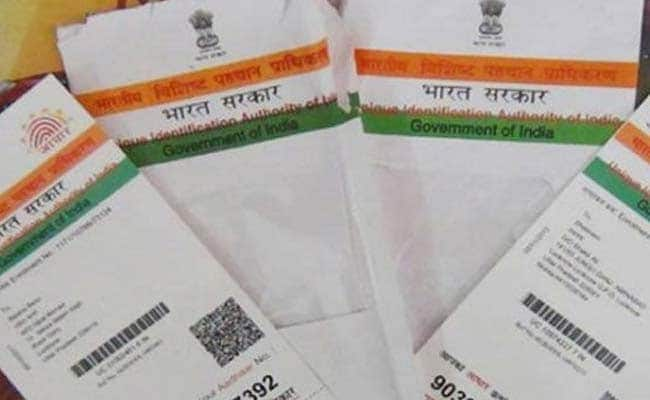
New Delhi: The Aadhaar card has now been made mandatory for government subsidy on purchase of kerosene and for benefits of the Atal Pension Yojana. Those availing kerosene subsidy or contributing for the pension scheme will now be required to furnish proof of possession of Aadhaar number or undergo the enrolment process to get the benefits, officials said on Sunday. The last date to get the Aadhaar or enrolment for getting kerosene subsidy will be September 30.
For the Atal Pension Yojana, the deadline for getting the Aadhaar is June 15, they said, quoting an official order.
However, till an Aadhaar card is obtained, ration card, driving licence, voter identity card, Kisan passbook with photo, job card issued under the Mahatma Gandhi National Rural Employment Guarantee Scheme (MGNREGS) and a certificate issued by a gazetted officer or a 'tehsildar' will be considered as proof of identity for the benefits.
It has been also decided to link the Aadhaar number with the ration card issued to households availing the benefits or with the bank account for cash transfer benefit.
The Ministry of Oil and Natural Gas has introduced Direct Benefit Transfer through which subsidy is transferred directly to the bank accounts of the beneficiaries, who purchase the PDS kerosene at non-subsidised rate.
The decision to make Aadhaar mandatory for these two schemes will prevent leakages of subsidies and ensure that the beneficiaries get their due.
For this, the central government has invoked Section 7 of the Aadhaar Act, 2016, which mandates that when the government gives subsidy, benefit or service from the Consolidated Fund of India (CFI), an individual can be asked to undergo authentication or furnish proof of possession of Aadhaar.
The Centre allocates subsidised kerosene to the states and Union Territories as affordable cooking fuel for domestic use, mainly to those living below the poverty line.
Under the Atal Pension Yojana, which is available to all the citizens in the age group of 18-40 years, a subscriber would receive a minimum guaranteed pension of Rs 1,000 to Rs 5,000 per month, depending upon his contribution, from the age of 60 years.
The same pension would be paid to the spouse of the subscriber and on the demise of both the subscriber and the spouse, the accumulated pension wealth is returned to the nominee.

-
Signature Play: The Classic Cocktail Is Dead. Or Is It?

Classic cocktails are disappearing from India's cocktail menus. But they're still being ordered, taught to bartenders and borrowed from. So, who's really having the last drink?
-
A New Samvat Wishlist: Inclusive Prosperity And Human Development
India has strengthened its economic foundations through infrastructure, digital access and enterprise. Its next growth chapter must deepen productivity, create better livelihoods and widen participation in prosperity.
-
Love, Sex Aur Dhokha: The Audacious Plot To Spy On Jensen Huang
A Taipei dinner, a Singapore chip buyer and a suspected Chinese asset: inside the alleged spy operation that got close to NVIDIA's Jensen Huang.
-
Ten Things I Learnt This Samvat
Patience can be a trap. Cheap stocks can stay cheap. Leverage can wipe you out. What did Samvat 2082 teach us? Niraj Shah writes on 10 lessons from the year gone by.
-
Talking Points This Week: Tech Nerves, FII Buying, And A Faraway Banking Shock
The global markets are not shining this Diwali. The exception in the large markets is, India.
-
Midterm Rally Lasted A Day. The Hard Reality Of A Divided US May Last Two Years | Opinion
Between a contested AI boom, a debt ceiling that arrives in 2027 and a president with every incentive to act alone, the next two years may prove more volatile than the first day's rally suggests.
-
Blue Wave Will Derail the AI Trade but Won't Dismantle the AI Era | Unhedged Position
The Democrats' sweep of the US Congress will see politics collide with economic forces both over the long and short term.
-
It's Time To Take The GST Council's Bet On Trust Global
Payment records can prove India's services exports, and clear, proportionate rules can bring foreign digital sellers into the tax net.
-
Opinion | India at 38: From Innovation Overperformer to Innovation Powerhouse
India now has 453 VC-backed deep science startups, 18 of them late-stage, after 117 percent growth since 2020. Laurus Labs, at USD 9.3 billion, is the most valuable deep science company in any middle-income economy outside China.









