A World Desperate For Sugar Sees It Pile Up In Brazilian Ports
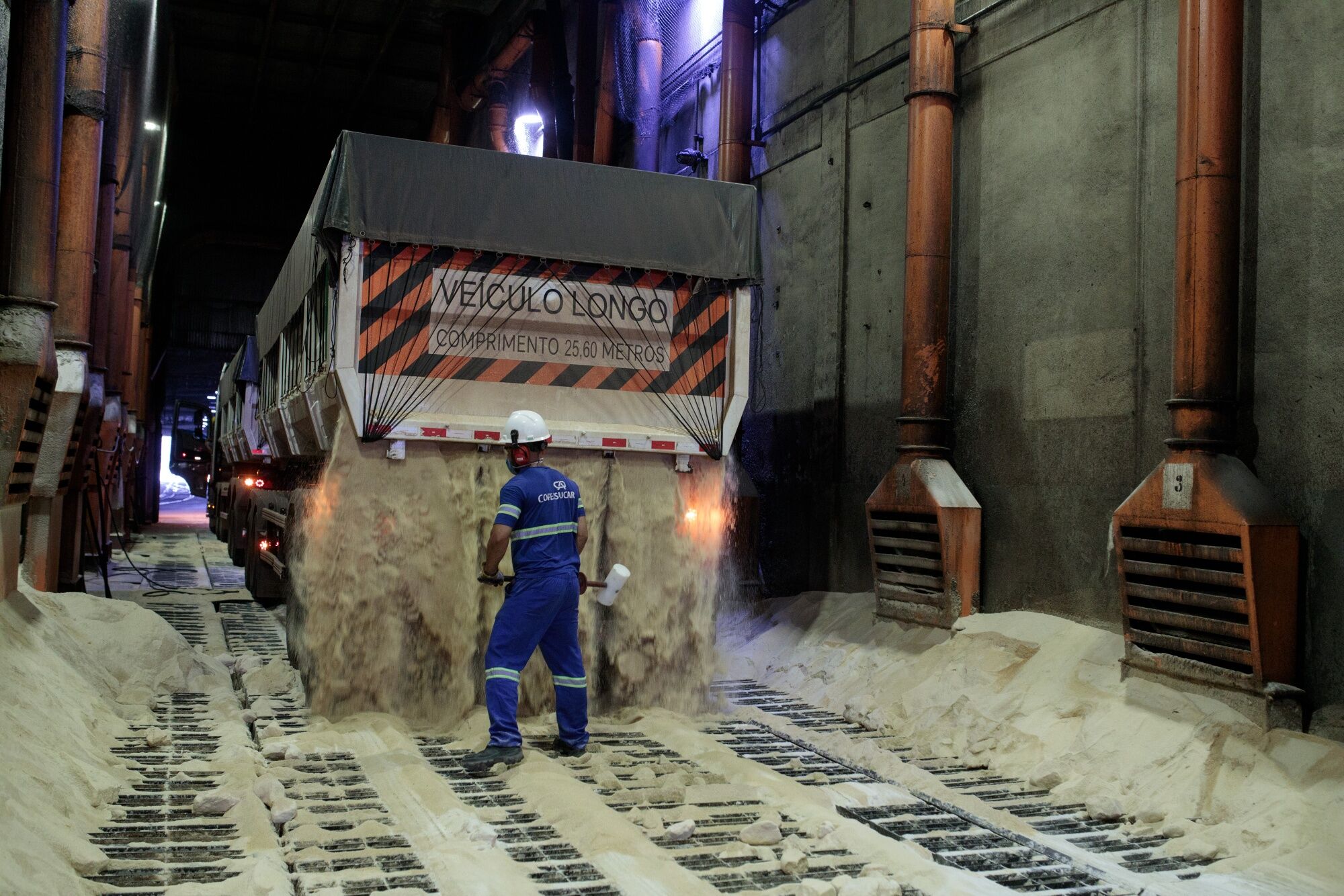
(Bloomberg) -- The world needs sugar from top producer Brazil more than ever to help ease global shortages. Congestion at key ports means the country can't ship it fast enough.
More than a decade after port logjams plagued Latin America's biggest economy — sending sugar prices rallying — logistics are being stretched to their maximum again. Approximately 70 vessels are waiting some 20 days to load over 3 million tons of sugar in the country, shipping agency SA Commodities said. That's equivalent to a month of exports.
To make matters worse, a fire at Paranagua, Brazil's second-biggest port, has shut down a terminal and impacted operations at another facility. And all of that is happening just as a drought in the Amazon region is rerouting grain shipments from northern ports, increasing competition with sugar in the southeast.
“This is the first time in years that Brazil tested its maximum logistics capacity,” said Ricardo Carvalho, commercial director at BP Bunge Bioenergia SA, a joint venture between the British oil major and one of the largest crop traders.
Bumper soy and corn crops have coincided with sugar production that's expected to hit a record this year. While bigger crops should in theory help ease global sugar shortages that have already sent prices to their highest since 2011, a repeat of last decade's logjams is keeping the world undersupplied.
Poor crops and the threat of export restrictions in India and Thailand have already put raw sugar futures traded in New York on track for a fifth year of gains, the longest winning streak since 1989. With global inventories expected to fall to their lowest level in 13 years, the world is again relying on Brazil to meet growing demand.
“The dependence that the world is creating on Brazilian sugar is frightening,” Mauro Angelo, chief executive officer of Alvean, the world's largest sugar trader, said in an interview in Sao Paulo last week. The company is controlled by Brazilian producer Copersucar SA.

For many sugar traders, it's feeling like the early 2010s all over again. Brazil faced severe logjams back then, followed by a fire in the port of Santos that disrupted loadings. Competition with grain exports was also strong, only easing when a wave of logistic investments in the country's north started operating.
But unlike then, conditions now paint an uncertain future. With high interest rates and rising construction costs, relief for sugar markets may only come with a new terminal in Santos. Cofco International Ltd. is expected to start operating the facility in 2025, said Marcelo de Andrade, managing director of soft commodities at the trading unit of China's largest food company.
“The world needs sugar. Brazil has sugar, but can't ship it, so prices have to rise,” de Andrade said in Sao Paulo last week. “How long will the party last? Until Cofco's terminal starts.”
But even then, the pressure would ease for only about two to three years, before Brazil's total agricultural production grows enough to stretch capacity again, Alvean's Angelo said.
For now, the tight logistics has put the sugar markets in alert mode.
The Amazon drought means that about 1 million tons of grains that would normally travel in barges through the region is being directed to ports in the southeast, according to Carvalho of BP Bunge. While water levels have been improving after reaching historical lows, sugar logistics should remain under pressure.

Brazil will start harvesting its new soybean crop later this year, and many terminals that are now shipping sugar will flip to the oilseed next year. Others will stop for annual maintenance.
Many are already struggling with heavy rainfall, which prevents terminals from loading sugar at the risk of ruining the product.
“The current record sugar crop is testing the limits of the tight port logistics particularly in Santos,” Thierry Songeur, a general manager at Paris-based trader Sucres et Denrees SA. “The market is vulnerable to the weather news, with heavy and long lasting rains likely to trigger a bullish move.”
Saturday's fire at a conveyor belt servicing the CAP Terminal at Paranagua only adds further pressure to a strained market. While the nearby Bunge Ltd. facility is expected to return to full operations this week or early next week at the latest, it's unclear how long CAP will be offline.
The terminals held mostly grains, which terminals and railroad operators typically prefer due to higher profitability. That likely means competition to ship will increase at other ports.
Port logjams have already forced sugar millers in Brazil to get creative, finding third-party warehouses to store the sweetener. Água Bonita was one of the producers that rented extra space.
“It is a problem for sure,” said managing director Flavio Ribeiro. “Even though having a lot of product to sell is the kind of problem we like to have.”
--With assistance from Tarso Veloso and Gerson Freitas Jr..
More stories like this are available on bloomberg.com
©2023 Bloomberg L.P.

-
Talking Points This Week: Leadership Shock At Nvidia, Earnings Strength, And The Fog Over Hormuz

The Anthropic IPO pricing and first trading day, Nvidia's upcoming earnings, and any fresh signals from Iran will set the tone for the following week.
-
Signature Play: The Classic Cocktail Is Dead. Or Is It?
Classic cocktails are disappearing from India's cocktail menus. But they're still being ordered, taught to bartenders and borrowed from. So, who's really having the last drink?
-
A New Samvat Wishlist: Inclusive Prosperity And Human Development
India has strengthened its economic foundations through infrastructure, digital access and enterprise. Its next growth chapter must deepen productivity, create better livelihoods and widen participation in prosperity.
-
Love, Sex Aur Dhokha: The Audacious Plot To Spy On Jensen Huang
A Taipei dinner, a Singapore chip buyer and a suspected Chinese asset: inside the alleged spy operation that got close to NVIDIA's Jensen Huang.
-
Ten Things I Learnt This Samvat
Patience can be a trap. Cheap stocks can stay cheap. Leverage can wipe you out. What did Samvat 2082 teach us? Niraj Shah writes on 10 lessons from the year gone by.
-
Talking Points This Week: Tech Nerves, FII Buying, And A Faraway Banking Shock
The global markets are not shining this Diwali. The exception in the large markets is, India.
-
Midterm Rally Lasted A Day. The Hard Reality Of A Divided US May Last Two Years | Opinion
Between a contested AI boom, a debt ceiling that arrives in 2027 and a president with every incentive to act alone, the next two years may prove more volatile than the first day's rally suggests.
-
Blue Wave Will Derail the AI Trade but Won't Dismantle the AI Era | Unhedged Position
The Democrats' sweep of the US Congress will see politics collide with economic forces both over the long and short term.
-
It's Time To Take The GST Council's Bet On Trust Global
Payment records can prove India's services exports, and clear, proportionate rules can bring foreign digital sellers into the tax net.
-
Opinion | India at 38: From Innovation Overperformer to Innovation Powerhouse
India now has 453 VC-backed deep science startups, 18 of them late-stage, after 117 percent growth since 2020. Laurus Labs, at USD 9.3 billion, is the most valuable deep science company in any middle-income economy outside China.









