A Company Incapable Of Good Governance Does Not Deserve Profits: Vikram Singh Mehta

At a time when several Indian companies battle corporate governance concerns, Vikram Singh Mehta, executive chairman at Brookings India, said there can't be a tradeoff between transparency and profits.
“A company that does not make profits, probably cannot afford corporate governance,” Mehta said at the Gatekeepers of Governance conference in Mumbai. “But a company that is incapable of good governance does not deserve profits.”
While a business model is important and profits cannot be made without that, he said, a company can generate long-term shareholder value only if it has transparent good governance.
If you have a management that feels that its only objective is maximisation of profits, to meet demands of shareholder, then, I believe that in today's world, it might not be applicable. It might have been applicable some years back, but in today's world, and looking forward, that company, that management will lose its licence to operate. You have to look beyond the narrow purpose of the shareholder.Vikram Singh Mehta
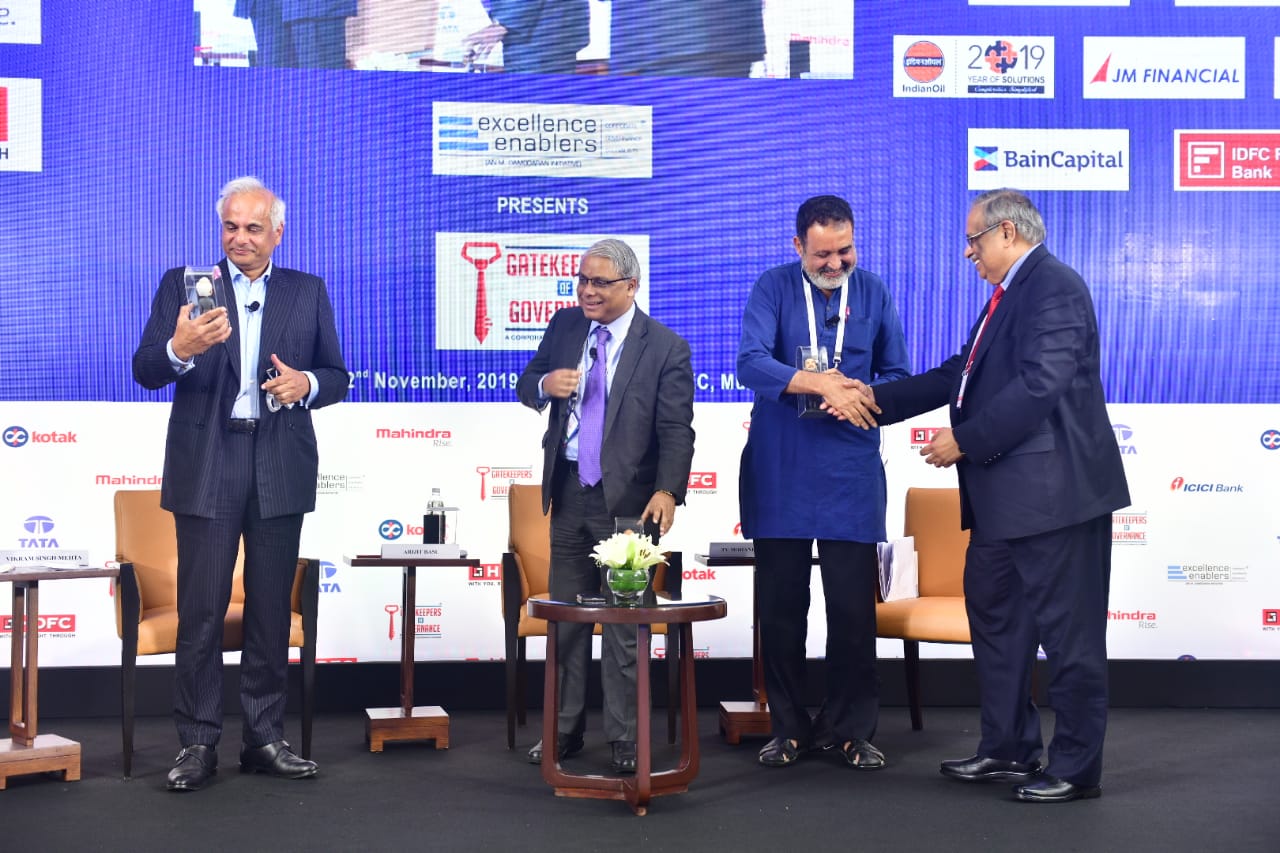
Mehta, former chairman at Shell Group, along with State Bank of India Managing Director Arijit Basu, spoke at Governance Premium: A Myth Or Reality session moderated by TV Mohandas Pai, chairman at Manipal Global Education.
According to Mehta, governance pays. “I, for one, don't think that governance premium is a fiction, or myth,” he said. “There is enough evidence to establish that reputation matters. We know that institutional investors will pay a premium to acquire stock of companies that are better governed.”
Determining Premium On A Business
Both government-owned businesses and MNCs have good corporate governance practices in place. Then why do MNCs tend to attract a better premium? The difference in reality and perception could be a major factor, says Mehta.
“Good governance does attract a premium, and if a government-owned company wants to secure the same premium as a multi-national, or a privately run company, then it must make an effort to bridge the gap between perception and reality. It's a matter then, of communication.”
The real issue, according to him, is, how do you realise that premium? “Communication is one. However, there are multiple stakeholders that impact the governance of a company, and it's a very narrow corridor within which all the stakeholders have to come together to collaborate, in order to realise that premium.”
The process of securing long-term value from good governance is a long journey, Mehta said. “It's not a one-off. It requires multiple stakeholders to find a way to stay within the narrow corridor and collaborate.”
An independent director must not look to enhance his/her powers, a manager should not manage the company as an autocrat, and the regulator should ensure that there is predictability, consistency, and not an intrusiveness that exists today, he added.
Expanding Definition Of Shareholder
Basu said the definition of a stakeholder cannot include only investors and the way “we look at capitalism has to change”.
When we now talk of shareholder, I don't think any company or any board can think of a shareholder in the narrow sense of only the investors in the company. It has to be all the stakeholders. It would include environmental concerns, social responsibilities in poorer companies. Those things are a given.Arijit Basu, MD, State Bank of India
Do Superstar CEOs Ensure A Premium On Governance?
Mehta said there are enough examples of superstar chief executive officers destroying companies. “My biggest concern is that corporate governance has become a mantra. It's a chant heard in every boardroom. The worry that I have is that is it a rhetorical flourish that is lacking conviction, or is it embedded in core values of the company?”
His biggest concern is that while corporate governance chant is heard in every boardroom, is it a rhetorical flourish that is lacking conviction, or is it embedded in core values of the company?
According to Basu, in the absence of good corporate governance, chances of a business model falling apart are higher. Pai, too, placed a premium on governance citing:
- It reduces risk
- It motivates employees to be more productive
- It creates sustainability and longevity in business which is good because mortality in business has become higher
- It creates a bond with customers
- It helps in hiring process because people respect you
“Corporate governance fosters innovation because it's about free thinking,” said Pai. “But you cannot compromise on a business model, growth and aggressive competition.”
Watch the entire discussion between Mohandas Pai, Vikram Singh Mehta and Arijit Basu here:

-
Signature Play: The Classic Cocktail Is Dead. Or Is It?

Classic cocktails are disappearing from India's cocktail menus. But they're still being ordered, taught to bartenders and borrowed from. So, who's really having the last drink?
-
A New Samvat Wishlist: Inclusive Prosperity And Human Development
India has strengthened its economic foundations through infrastructure, digital access and enterprise. Its next growth chapter must deepen productivity, create better livelihoods and widen participation in prosperity.
-
Love, Sex Aur Dhokha: The Audacious Plot To Spy On Jensen Huang
A Taipei dinner, a Singapore chip buyer and a suspected Chinese asset: inside the alleged spy operation that got close to NVIDIA's Jensen Huang.
-
Ten Things I Learnt This Samvat
Patience can be a trap. Cheap stocks can stay cheap. Leverage can wipe you out. What did Samvat 2082 teach us? Niraj Shah writes on 10 lessons from the year gone by.
-
Talking Points This Week: Tech Nerves, FII Buying, And A Faraway Banking Shock
The global markets are not shining this Diwali. The exception in the large markets is, India.
-
Midterm Rally Lasted A Day. The Hard Reality Of A Divided US May Last Two Years | Opinion
Between a contested AI boom, a debt ceiling that arrives in 2027 and a president with every incentive to act alone, the next two years may prove more volatile than the first day's rally suggests.
-
Blue Wave Will Derail the AI Trade but Won't Dismantle the AI Era | Unhedged Position
The Democrats' sweep of the US Congress will see politics collide with economic forces both over the long and short term.
-
It's Time To Take The GST Council's Bet On Trust Global
Payment records can prove India's services exports, and clear, proportionate rules can bring foreign digital sellers into the tax net.
-
Opinion | India at 38: From Innovation Overperformer to Innovation Powerhouse
India now has 453 VC-backed deep science startups, 18 of them late-stage, after 117 percent growth since 2020. Laurus Labs, at USD 9.3 billion, is the most valuable deep science company in any middle-income economy outside China.









