A CEO Urges Others To Stop Being So Nice To Investors
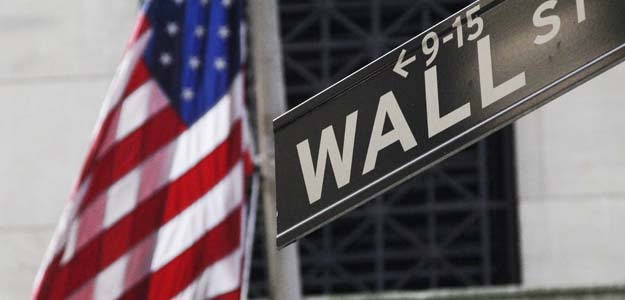
On Tuesday morning, the chief executives of 500 of the nation's largest companies will receive a letter in the mail that will most likely surprise them.
The sender of the letter is Laurence D. Fink, chief executive of BlackRock, the largest asset manager in the world. Fink oversees more than $4 trillion - that's trillion with a "t" - of investments, making him perhaps the world's most important shareholder.
He is planning to tell the leaders that too many of them have been trying to return money to investors through so-called shareholder-friendly steps like paying dividends and buying back stock.
To Fink, these maneuvers, often done under pressure from activist investors, are harming the long-term creation of value and may be doing companies and their investors a disservice, despite the increases in stock prices that have often been the result.
"The effects of the short-termist phenomenon are troubling both to those seeking to save for long-term goals such as retirement and for our broader economy," Fink writes in the letter. He says that such moves were being done at the expense of investing in "innovation, skilled work forces or essential capital expenditures necessary to sustain long-term growth."
At a time when most investors are clamoring - and applauding - high dividends and bigger buybacks, Fink is bucking the trend.
U.S. companies spent nearly $1 trillion last year on stock repurchases and dividends, and virtually every big U.S. company is engaged in these practices. General Electric announced last week that it would buy back $50 billion of its stock after selling most of GE Capital. Apple plans to spend $90 billion buying back its own stock this year. Exxon Mobil spent $13 billion last year on its own stock. IBM, which I've questioned for its aggressive use of buybacks and dividends, has spent $108 billion buying back its own shares since 2000.
Rather than consider the return of all this money to shareholders positively, Fink says the move "sends a discouraging message about a company's ability to use its resources wisely and develop a coherent plan to create value over the long term." Moreover, he argues that "with interest rates approaching zero, returning excessive amounts of capital to investors" isn't helpful because they "will enjoy comparatively meager benefits from it in this environment."
Fink and I have been discussing - and debating - this topic for more than a year. Last week, before mailing his letter, he shared it with me.
"I feel the same pressures as other CEOs," he told me. But he suggested that it's not just the fault of managements for being so shortsighted - the investors themselves may be the problem. "Investors need to focus on long-term strategies and long-term outcomes," Fink said, suggesting we're currently living in a "gambling society."
Fink has a novel suggestion for encouraging shareholders to take a broader perspective, but it may very well upset his peers on Wall Street. He recommends that gains on investments held for less than three years be taxed as ordinary income, not at the usually lower long-term capital gains rate, which now applies after one year.
"We believe that U.S. tax policy, as it stands, incentivizes short-term behavior," he writes in his letter. "Since when was one year considered a long-term investment? A more effective structure would be to grant long-term treatment only after three years, and then to decrease the tax rate for each year of ownership beyond that, potentially dropping to zero after 10 years."
Fink contends that such a shift in tax policy "would create a profound incentive for more long-term holdings and could be designed to be revenue-neutral. In short, tax reform that promotes long-term investment will benefit both the companies who rely on capital markets and the hundreds of millions of people saving for retirement."
Asked whether such a change in tax policy would reduce liquidity in the market, Fink scoffed: "I don't think Warren Buffett cares about liquidity that much."
It is refreshing to see a finance executive talk some sense on these issues.
However, Fink is not simply being altruistic. To some degree, he is talking his own book: BlackRock's business model, unlike those of so many finance companies that rely on trading fees, does not require it to turn over its portfolio. Given its size and scale, BlackRock often holds its investments for decades.
So from a financial perspective, Fink has little to lose. In fact, the firm may have much to gain if tax rules were adjusted to be more favorable to the way Fink invests. (And what's the harm in suggesting tax policy change, as smart as it may be, that has a low probability of ever happening?)
That's not to suggest Fink doesn't believe what he's saying; he does. He is a relatively progressive finance executive who has been a longtime Democrat and has taken positions that many of his peers in finance abhor.
To Fink, the shortsightedness that pervades corporate America is just a symptom of a larger issue. "This is not just a corporate problem," he said. "It's a societal problem, whether it's health care or politics or business."
He also said he recognized that his letter might not be popular in certain quarters, but he qualified his approach by saying, "I'm not trying to make friends or enemies."
Still, Fink is taking a direct shot at the rise of activist investors, like Carl C. Icahn, who have made careers out of pressing companies to return cash to shareholders.
Fink said he met with two activists last week. One of them, he said, told him, "You hate me, don't you?"
"No, I don't hate you," Fink said he replied. "I'm just trying to get some balance."

-
Why Swapping Your Old Gold Can Trigger A Rs 5 Lakh Tax Bill, And How You Can Avoid It Legally

Swapping old gold for new is taxed as a sale and a fresh purchase. Getting your own gold remade can cut most of that bill, though it has its own costs.
-
The AI Trade is Done. The Real Opportunity for Investors Starts in 2027 | Unhedged Position
As pureplay AI stocks plunge and circular, capex-led financing unwinds, 2027 is set to be a year of reckoning for AI companies. Yet the bust clears the way for a better opportunity for investors in 2027 -- shifting the spotlight from AI builders to the companies using AI.
-
Leadership As Mission: Why The Age Of AI Demands More Human Leadership
Debjani Ghosh examines how AI is changing leadership, arguing that its success must be measured by its impact on people and the accountability of those guiding its use.
-
We May Need Another Tukaram Mundhe To Fight Air Pollution | The Reason Why
Developers may install basic measures such as sprinklers and green nets, resume work, and continue violating rules when this equipment stops working.
-
Extracting Value From Battery Scrap Could Be Challenging For India | The Reason Why
A discarded lithium-ion battery still contains valuable materials such as lithium, nickel and cobalt. These can be recovered and reused. When such batteries are crushed and shredded, they produce a dark powder called black mass.
-
One El Nino, India Can Handle. Two Could Break The Granary
India's grain stocks can absorb one bad year, but a second El Nino could drain the buffer in two to three years, economists say.
-
India's Troika Of Good Luck | Joining The Dots
As Jensen Huang's exit drags Nvidia down, a cooling AI trade and resilient earnings have revived investor interest in India. A likely RBI rate hike looms.
-
Talking Points This Week: Leadership Shock At Nvidia, Earnings Strength, And The Fog Over Hormuz
The Anthropic IPO pricing and first trading day, Nvidia's upcoming earnings, and any fresh signals from Iran will set the tone for the following week.
-
Signature Play: The Classic Cocktail Is Dead. Or Is It?
Classic cocktails are disappearing from India's cocktail menus. But they're still being ordered, taught to bartenders and borrowed from. So, who's really having the last drink?
-
A New Samvat Wishlist: Inclusive Prosperity And Human Development
India has strengthened its economic foundations through infrastructure, digital access and enterprise. Its next growth chapter must deepen productivity, create better livelihoods and widen participation in prosperity.









