A 79-Year-Old Tech Pioneer Aims For His Third Startup IPO
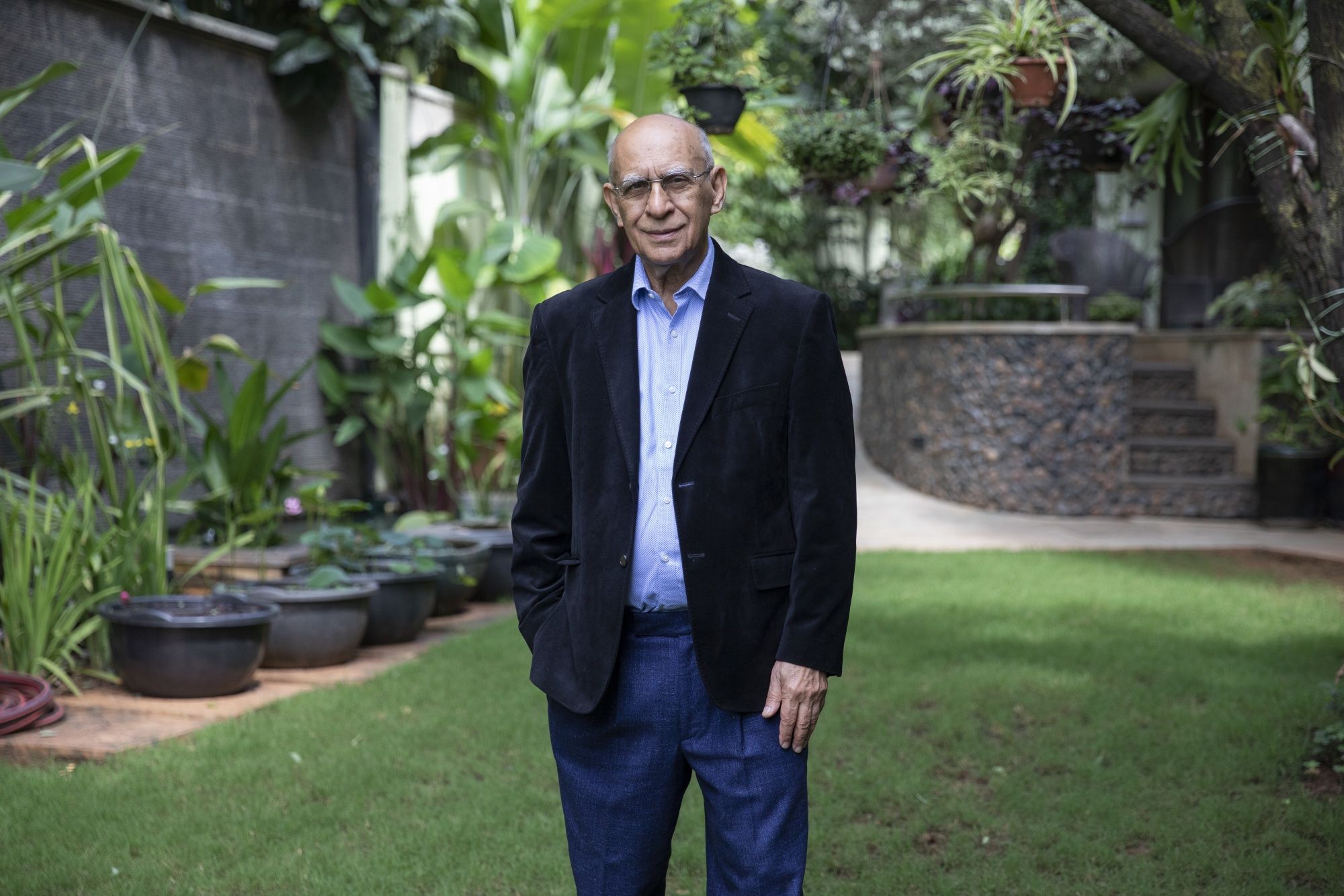
(Bloomberg) -- Ashok Soota has spent four decades in India's technology industry, headed three prominent IT companies and taken two of them public. Now, the 79-year-old is getting his newest venture off the ground with a goal to take it to IPO in five years.
When Soota turns 80 in November, Happiest Health will be a rare Indian technology startup with an octogenarian founder. He is basing the startup on his holistic view on health and wellbeing, while drawing inspiration from Berkshire Hathaway Inc.'s Warren Buffett and Charlie Munger -- who are plowing ahead in their nineties.

“They embody the canon that work is exercise for the mind,” Soota said in an interview this week on the roof garden of his sweeping Bangalore home, seated amid flowering orchids and a large aquarium full of fish.
Located in the viridescent Koramangala neighborhood, the residence isn't far from where India's IT outsourcing businesses first set up decades ago. Soota played key roles in building what's become a $227 billion industry.
He was brought in to steer Wipro Ltd. in 1984 and went on to make a success of its outsourcing business while largely staying in the shadow of its charismatic chairman, billionaire Azim Premji. Soota quit in 1999 to co-found rival IT services company Mindtree Ltd., bringing it to an initial public offering in 2007.
He then did a repeat by founding digital services-focused outsourcer Happiest Minds Technologies Ltd. in 2011. As executive chairman, he led it to a public debut in 2020 amid the pandemic, entering billionaire ranks when its market value surpassed $2.5 billion last year.
Soota-founded ventures have recently faced headwinds along with the broader tech sector. Happiest Minds, of which Soota owns about 53%, has lost a quarter of its value this year for a current market capitalization of $1.8 billion. Mindtree is down about a third.
On the surface, Soota isn't perturbed. His latest startup, Happiest Health, aspires to be a Google-meets-WebMD-meets-Mayo Clinic venture that helps people navigate mental and physical health. It lets customers access health information that has thus far been hard to find, particularly on treatments and therapies melding Western and Eastern practices.
Happiest Health aims to eventually combine modern medicine and research with gentler therapies like Ayurveda, naturopathy, yoga and meditation via short videos, newsletters, webinars and paid-for events.
Bootstrapped by Soota, the company has 90 employees, including doctors, scientists and writers. Soota is building the business based on his background in overseeing hundreds of thousands of employees and his experiences with their wellbeing, work-life balance and relationship issues.
“For decades, Ashok Soota spotted IT services trends and figured out how to stay ahead,” said Thomas George, president of researcher CyberMedia Research. “He's now chasing a new challenge.”
Soota walks about five miles every morning followed by 30 minutes of laps in his pool. He also practices yoga a couple of times a week.
The serial entrepreneur hinted he may still have a startup idea or two up his sleeve. “The median age of India's technology workforce is 26 or 27 years,” said Soota. “Being around them keeps me young and full of plans.”
More stories like this are available on bloomberg.com
©2022 Bloomberg L.P.

-
The Curious Case of Equitas Small Finance Bank And A CEO Who Quit For Stock

PN Vasudevan believes persistent investor concerns over a perceived conflict of interest had become a governance overhang on Equitas Small Finance Bank's stock, even as the lender improved profitability and asset quality.
-
Talking Points This Week: AI Cash Burn, A Tiger Comeback And An India That Still Finds Its Own Path
India is not immune to higher oil or tighter global liquidity, yet its earnings base is broader, its domestic policy levers are still available.
-
Foreign Investors Own Half Of HDFC Bank and ICICI Bank. An LTCG Cut Could Matter Most Here
Foreign portfolio investors have US$115 billion parked in HDFC Bank, ICICI Bank. If the government cuts long-term capital gains tax, Jefferies says returning foreign money could land here first.
-
'Never Seen This Level Of Negativity': Sandeep Tandon Says The Next Rally May Be Closer Than You Think
Veteran investor Sandeep Tandon says foreign selling is easing, large-caps are due a comeback and mid-caps are crowded, while he turns positive on gold, power and pharma this Diwali.
-
Indians Stay With Family, Not In Hotels | The Reason Why
India still lacks enough clean, reliable and affordable hotels for budget-conscious travellers.
-
The Economic Imperative: Analysing The Material Driving Force Behind India-Canada Strategic Reset
This economic complementarity is further reinforced by deep institutional investment ties and talent mobility, which form the bedrock of the bilateral framework.
-
Medicine Pricing: Where Must Profit Stop?
India must confront excessive margins, hidden incentives and regulatory gaps that threaten the integrity of medicine.
-
Why Amazon And Flipkart Are Struggling To Beat Meesho In India's Smaller Cities
With 274 million users and lowest-cost logistics, Meesho is defending its value commerce crown against giants like Amazon and Flipkart.
-
High US Salaries, No Green Card Certainty: The Financial Calculation Facing Indian H-1B Families
The suspension of PERM processing at eight technology employers does not cancel existing H-1B visas. What it does is force a question many Indian families have been avoiding: is the US salary worth tying your career and family plans to one employer?
-
Swiggy vs Eternal: Food Delivery's Two Rivals Are No Longer In The Same Race
Eternal is building a private AI assistant, dark.ai. Swiggy is still working out how to make Instamart pay, with an operating loss of Rs 895 crore in the July-September quarter while Blinkit stayed profitable.










