5,800 Shell Firms Under Government Lens Over Deposits Post Note Ban
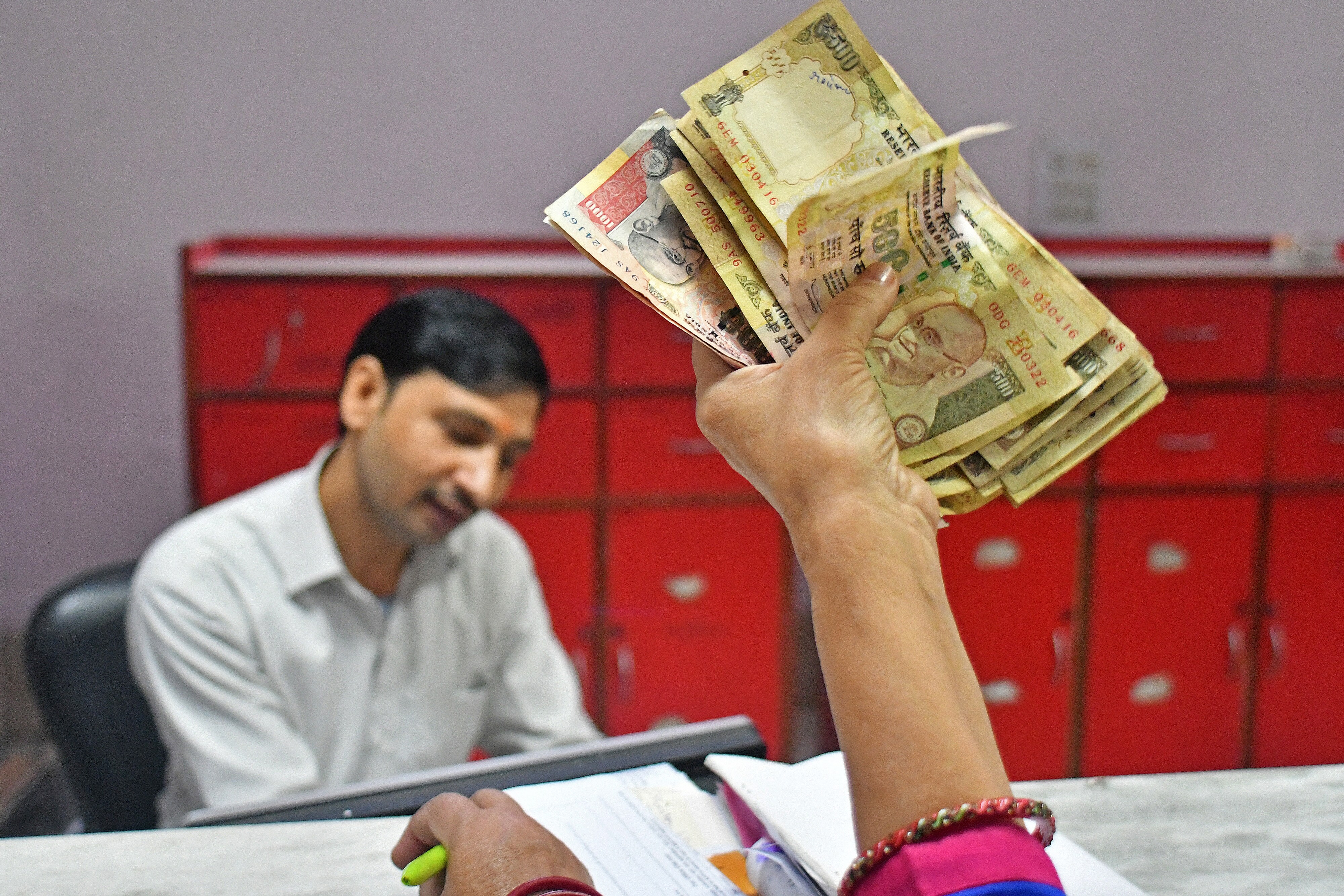
Intensifying its crackdown on black money, the government said it has collated information about 5,800 shell companies with near zero-balance accounts, which saw nearly Rs 4,574 crore deposits post note ban, and Rs 4,552 crore withdrawal thereafter.
“Vital information has been received from 13 banks regarding the bank account operations and post-demonetisation transactions of some of the 2,09,032 suspicious companies that had been struck off the Register of Companies earlier this year,” the government said in a statement today.
Last month, the government imposed restrictions on operations of bank accounts of over 2 lakh 'struck-off' companies.
Terming it as a "major breakthrough" in fight against black money and shell companies, it said the first instalment of data pertains to about 5,800 companies -- out of more than 2 lakh that were struck off, involving 13,140 accounts.
“Few of the companies have been found to have more than 100 accounts to their names. The highest grosser among these is a company having 2,134 accounts, followed by others having accounts in the range of 900, 300, etc,” it said.
The data on pre-demonetisation accounts and transactions conducted during the cash ban period is “startling”, the government stated.
After separating the loan accounts, these companies had a meagre balance of Rs 22.05 crore on November 8, 2016.
“However, from November 9, 2016 (after the announcement of demonetisation), till the date of their name being struck off, these companies have altogether deposited a huge amount of Rs 4,573.87 crore in their accounts and withdrawn an equally large amount of Rs 4,552 crore,” the statement said.
With loan accounts, there was a negative opening balance of Rs 80.79 crore in these accounts.
Companies had multiple accounts with minuscule or negative balance as on November 8, 2016, which have seen deposits and withdrawal running into several crores. The accounts were thereafter again left as dormant with paltry balance.
"This exercise of swindling the authorities was carried out post demonetisation till the companies were struck off. In some cases, certain companies have gone more adventurous and made deposits and withdrawals even after being struck off," it said.
Citing an example, it said that in one of the banks, 429 companies having zero balance each on November 8, 2016, deposited and withdrew over Rs 11 crore and left again with a cumulative balance of just Rs 42,000 as on the date of the freeze.
Also Read: SEBI Board To Take Stock Of Action Against Suspected Shell Companies
Similarly, in the case of another bank, more than 3,000 such companies—most having multiple accounts—have been located.
From having a cumulative balance of about Rs 13 crore as on November 8, 2016, these companies have deposited and withdrawn about Rs 3,800 crore, leaving a negative cumulative balance of almost Rs 200 crore at the time of freezing of their accounts.
It needs to be re-emphasised that this data is only about 2.5 per cent of the total number of suspected companies that have been struck off by the government. The huge money game played by these companies may well be the tip of an iceberg of corruption, black money and black deeds of these and many more of their brethren.Government Statement
Investigative agencies have been asked to complete necessary investigation in a time-bound manner.
After being removed from the list, operations of the bank accounts of 2,09,032 suspicious companies were restricted for discharge of their liabilities only.

-
The Economic Imperative: Analysing The Material Driving Force Behind India-Canada Strategic Reset

This economic complementarity is further reinforced by deep institutional investment ties and talent mobility, which form the bedrock of the bilateral framework.
-
Medicine Pricing: Where Must Profit Stop?
India must confront excessive margins, hidden incentives and regulatory gaps that threaten the integrity of medicine.
-
Why Amazon And Flipkart Are Struggling To Beat Meesho In India's Smaller Cities
With 274 million users and lowest-cost logistics, Meesho is defending its value commerce crown against giants like Amazon and Flipkart.
-
High US Salaries, No Green Card Certainty: The Financial Calculation Facing Indian H-1B Families
The suspension of PERM processing at eight technology employers does not cancel existing H-1B visas. What it does is force a question many Indian families have been avoiding: is the US salary worth tying your career and family plans to one employer?
-
Swiggy vs Eternal: Food Delivery's Two Rivals Are No Longer In The Same Race
Eternal is building a private AI assistant, dark.ai. Swiggy is still working out how to make Instamart pay, with an operating loss of Rs 895 crore in the July-September quarter while Blinkit stayed profitable.
-
Where You Live Shapes How You Get To Work | The Reason Why
Two-wheelers are the most popular way to get to work in India, accounting for nearly 43% of workplace commutes.
-
Unhedged Position: Can India See An Indonesia-Style Time Correction?
The Nifty is trading below levels it first clocked in 2024. Is there, then, as I have suggested in the headline, potential that the current time correction drags on painfully for the next three-five, even ten years?
-
Navigating Friction And Energy Realities: An Analysis Of Marco Rubio's October Visit To India
Occurring at a critical juncture marked by stalled trade negotiations and escalating geopolitical pressures over global energy supplies, the visit offers a profound window into modern US-India relations.
-
India Exports Capital. Why Not Export Trusteeship?
The big question, then, is whether India can build an institution that global borrowers, investors, banks, and lawyers can trust, even without an Indian connection.
-
France's Economy & Politics Are In Crisis | The Reason Why
Let's look at how the French economy and politics evolved under Nicolas Sarkozy, Franois Hollande and Emmanuel Macron.










