4 Companies That Pivoted Their Business And Thrived. Should You Bet On Them?
The Greek philosopher, Heraclitus once said, "Change is the only constant."
While this is true for human beings, it's also true for businesses. How a company responds to change and trends determines its ability to survive (or thrive). Without changing itself, it runs the risk of becoming irrelevant and obsolete.
However, if it chooses the path of transformation, it can continue to survive and even flourish.
Here are five companies that pivoted their business and thrived.
#1 BSE
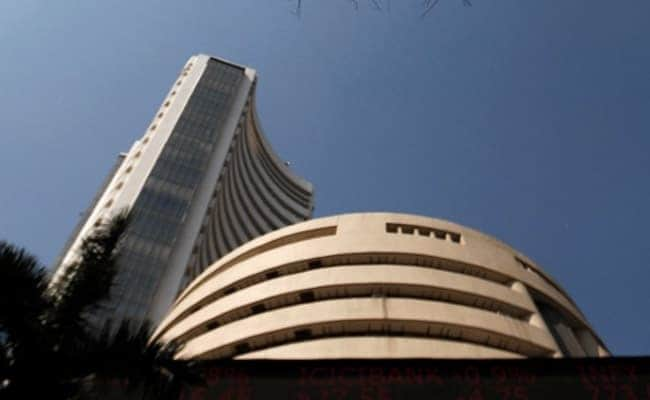
First on our list is the Bombay Stock Exchange.
What is now a fintech company used to at one point be a gathering of stockbrokers under a banyan tree. This later evolved to an office in a building in Mumbai in 1928.
For decades, stockbrokers would buy and sell physical shares in an open outcry trading floor.
Then in 1995, the Bombay Stock Exchange switched to an electronic trading system as digitisation took the world by storm.
The company made this transition in only 50 days. This automated, screen-based trading platform, called BSE On-Line Trading (BOLT), had a capacity of 8 million orders per day.
Today, BSE is the fastest stock exchange in world with a speed of 6 microseconds.
The company uses a technology platform called Bolt Plus, which is based on the business architecture of global giant Deutsche Borse.
It has over 4,000 securities listed on its platform and has commodity derivatives contracts in gold and silver. It also has a platform for trading in equities of small-and-medium enterprises and runs India INX, the first international exchange of India.
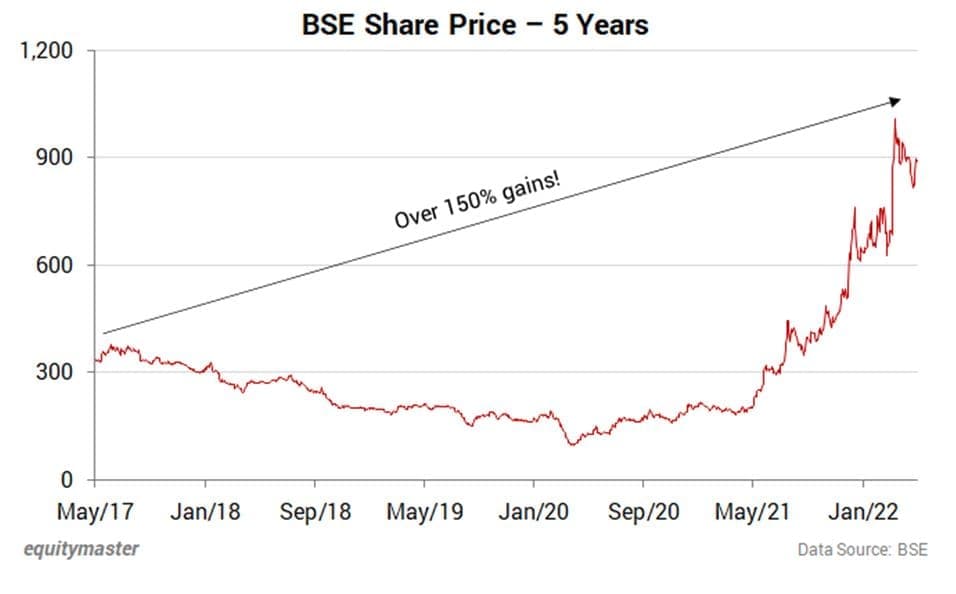
BSE is a perfect example of how a company made the pivot and transformed its business to stay relevant.
In the December 2021 quarter, the company's revenue increased by 60% YoY while net profit almost doubled.
BSE saw a 44% YoY increase in average daily turnover in equity segment at Rs 55,200 crore. The total number of transactions in its mutual fund distribution platform, BSE StAR MF also grew 106% YoY to reach 50 million.
#2 Kabra ExtrusionTechnik
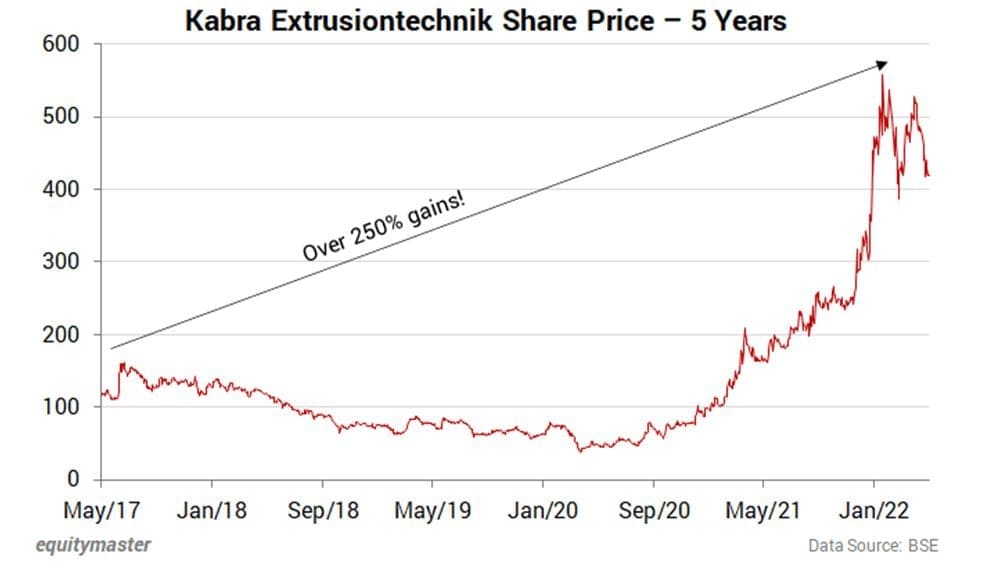
Next on the list is Kabra ExtrusionTechnik (KET).
The company is a market leader in manufacturing extrusion machinery for plastics. It has over 60% market share in the segment.
KET is the sole supplier to many players in the plastics industry, such as Supreme Industries and Ashirvad. It has maintained its leadership with the help of strong in-house R&D and long-term technical tie ups with leading players across the globe.
However, in the financial year 2021, the company decided to venture into the electric vehicle (EV) segment via its battery division, Battrixx.
Led by various government initiatives/incentives, an increase in fuel prices & environmental concerns, demand and consumer awareness for electric mobility has gone up. The same is reflected in high demand for electric vehicles (EV).
The company believes this momentum of shift will continue to grow and is a huge opportunity.
Battrixx is positioned to provide a wide range of advanced Li battery packs with smart battery management system (BMS).
In March 2022, Battrixx, announced it acquired a 100% stake in Pune-based Varos Technology, a pioneer in developing IoT tools for EV infrastructure and battery management systems.
With this, KET is set to strengthen its leadership position in newer technologies for electric vehicles and other energy storage applications.
For the December 2021 quarter, the company reported a 70% YoY growth in revenue and a 51% YoY increase in net profit.
It has also approved a proposal to raise up to Rs 300 crore for the expansion of Battrixx. With these funds, Battrixx will enhance its annual production capacity from 100,000 battery packs to 700,000 packs by the end of 2024.
#3 Arman Financial Services
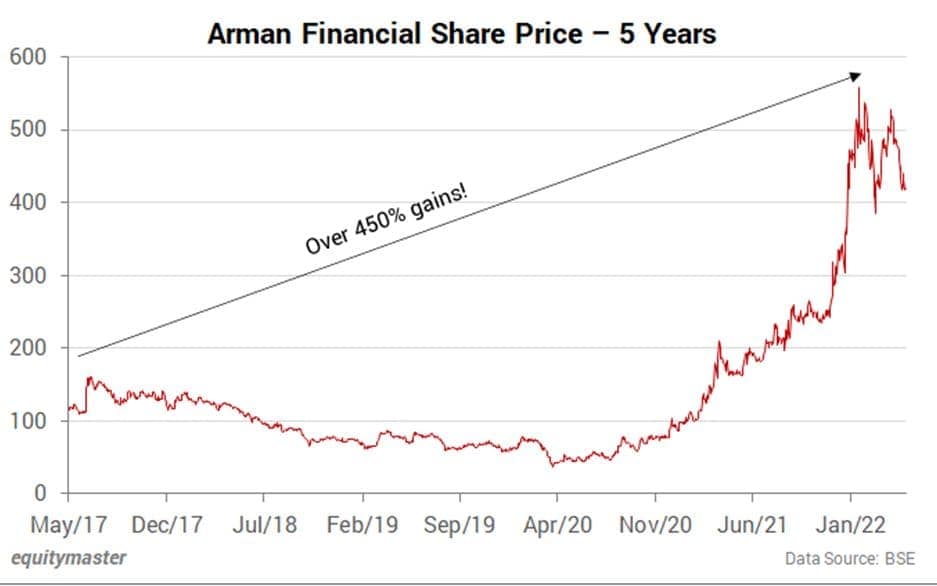
Third on the list is Arman Financial Services, a non-banking finance company.
The company is headquartered in Ahmedabad and provides loans to the unorganised sector residing in rural and semi-rural locales.
It also owns Namra, a microfinance company, that provides loans exclusively to women self-help groups for income-generating activities such as livestock, dairy, agri, and allied ventures, kirana stores, and other rural activities.
Prior to May 2013, Arman Financial was engaged in the business of two-wheeler financing and microfinance lending business through Joint Liability Group (JLG) model.
However, in 2013, the company decided to grow its microfinance business.
Following the RBI directive for creating a separate category of NBFC for lending to micro finance sector, the company was the first in India to obtain "NBFC-MFI" license for its wholly owned subsidiary - Namra Finance Ltd (Namra).
In 2017, Arman also commenced the MSME Lending Business.
Today, microfinance lending is the largest business segment of the group contributing 80% of the total assets under management (AUM). In the last three years, the company's revenue has grown at a CAGR of 35% while net profit has grown at a CAGR of 13%.
With a view to achieve deeper penetration, the group has, in the past 4 years, expanded into newer regions. The company's branch network increased from 80 branches as on March 2017 to 239 branches as on March 2021.
For the December 2021 quarter, Arman Financial reported a 22.4% YoY increase in revenue and a 140% YoY rise in net profit.
#4 MoldTek Packaging
Last on our list is MoldTek Packaging, a market leader in the rigid plastic packaging space.
In the 1990s, the company pioneered the concept of plastic pails for the paints industry. It also introduced plastic containers for the lubricant industry with value added features such as 'pull-up spout' and tamper & leak free features.
Then in the 2010s, the company saw opportunity in the food packaging and FMCG industry. It pivoted its business and received orders from segment leaders such as Adani Wilmar, ConAgra, Cargill, Healthy Heart etc.
This resulted in robust growth for the company. It increased production capacities at existing plants and set up a new plant in Dubai to keep up with demand.
Post a successful entry and execution in food and FMCG packaging, the company is again shifting gears. It has recently announced entry into Pharma (domestic and OTC) packaging.
The margin profile of the pharma segment is superior compared to food and FMCG (F&F) products. Pharma also enjoys better premium pricing compared to F&F.
The management expects revenue from the pharma packaging to contribute from 2024. The immediate focus is on CRC Caps, where the market opportunity could be worth Rs 500 crore.
In the December 2021 quarter, MoldTek reported a 20% YoY increase in revenue while net profit rose by 11.4% YoY.
It also recently raised Rs 100 crore through QIP issue, at a price of Rs 740 per share.
The issue witnessed participation from marquee investors such as Goldman Sachs India Equity, White Oak India Equity Fund, Aditya Birla Sun Life Trustee Private Limited Plc, ICICI Prudential Smallcap Fund, and others.
To conclude...
Turning a business in a different direction could be a risk not many would be willing to take.
However, if done at the right time, with calculated foresight, it could pay off.
Change and transformation in an organisation have many positives. They encourage innovation, help employees develop skills, and lead to better business opportunities.
They also drive growth, which in turn drives the stock price, and thus the value of the company higher.
However, sometimes risks may not pay off.
Before investing in a company at the precipice of change, assess the fundamentals and prospects of the business.
Sustained research must not be compromised despite the positive odds.
Disclaimer: This article is for information purposes only. It is not a stock recommendation and should not be treated as such.
This article is syndicated from Equitymaster.com
(This story has not been edited by NDTV staff and is auto-generated from a syndicated feed.)

-
Gold Is Rs 22,000 Cheaper Than A Month Ago. Should You Buy Amid The Wedding Season?

Gold's potential slide to $3,500 could save around Rs 4,700 per 10 grams, but a soft inflation print could just as easily push prices back up. One way to split the risk is to buy in parts, some now and the rest after the Fed's Dec. 9 decision.
-
AI Agents Are Gaining Power. Who Governs Them?
Artificial intelligence agents promise to transform productivity by moving machines from assisting decisions to executing them. But as organisations delegate greater authority to these AI-agents, they must first establish who controls that authority and who remains accountable when things go wrong.
-
Why Swapping Your Old Gold Can Trigger A Rs 5 Lakh Tax Bill, And How You Can Avoid It Legally
Swapping old gold for new is taxed as a sale and a fresh purchase. Getting your own gold remade can cut most of that bill, though it has its own costs.
-
The AI Trade is Done. The Real Opportunity for Investors Starts in 2027 | Unhedged Position
As pureplay AI stocks plunge and circular, capex-led financing unwinds, 2027 is set to be a year of reckoning for AI companies. Yet the bust clears the way for a better opportunity for investors in 2027 -- shifting the spotlight from AI builders to the companies using AI.
-
Leadership As Mission: Why The Age Of AI Demands More Human Leadership
Debjani Ghosh examines how AI is changing leadership, arguing that its success must be measured by its impact on people and the accountability of those guiding its use.
-
We May Need Another Tukaram Mundhe To Fight Air Pollution | The Reason Why
Developers may install basic measures such as sprinklers and green nets, resume work, and continue violating rules when this equipment stops working.
-
Extracting Value From Battery Scrap Could Be Challenging For India | The Reason Why
A discarded lithium-ion battery still contains valuable materials such as lithium, nickel and cobalt. These can be recovered and reused. When such batteries are crushed and shredded, they produce a dark powder called black mass.
-
One El Nino, India Can Handle. Two Could Break The Granary
India's grain stocks can absorb one bad year, but a second El Nino could drain the buffer in two to three years, economists say.
-
India's Troika Of Good Luck | Joining The Dots
As Jensen Huang's exit drags Nvidia down, a cooling AI trade and resilient earnings have revived investor interest in India. A likely RBI rate hike looms.
-
Talking Points This Week: Leadership Shock At Nvidia, Earnings Strength, And The Fog Over Hormuz
The Anthropic IPO pricing and first trading day, Nvidia's upcoming earnings, and any fresh signals from Iran will set the tone for the following week.









