India’s Inflation At Three-Month Low Gives RBI Some Respite
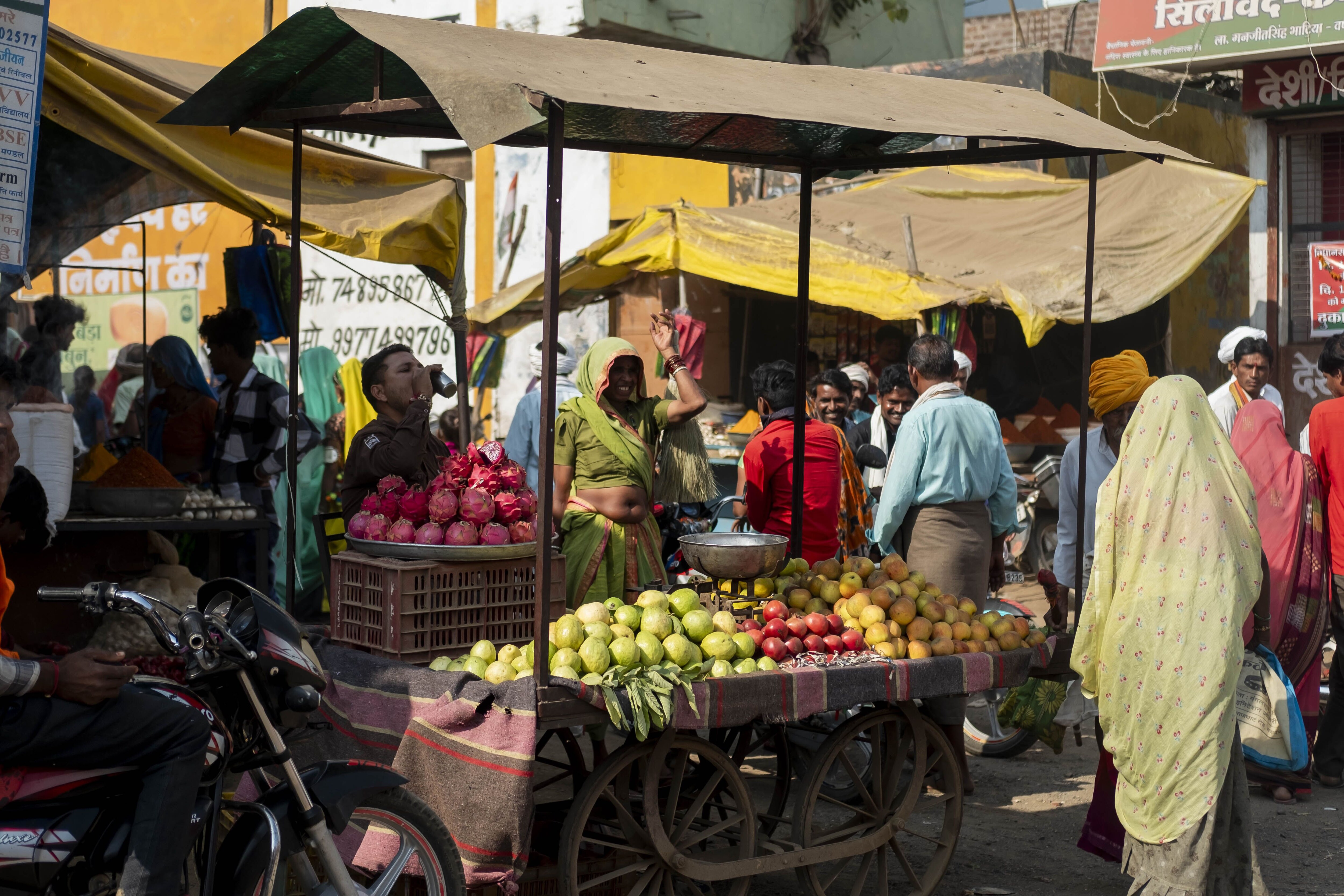
(Bloomberg) -- India's inflation eased to a three-month low in January as food prices moderated, providing some relief to rate-setters nervous about price shocks spilling over to other segments of the economy.
The consumer price index rose 5.10% last month from a year earlier, statistics ministry data showed Monday. That's almost in line with the 5.0% median estimate in a Bloomberg survey of economists and compares with a 5.69% print in December.
The reading comes as fresh availability of vegetables and pulses cooled food prices. Food inflation, that makes up about half of the consumer price basket, moderated to 8.30%, from 9.53% in December.
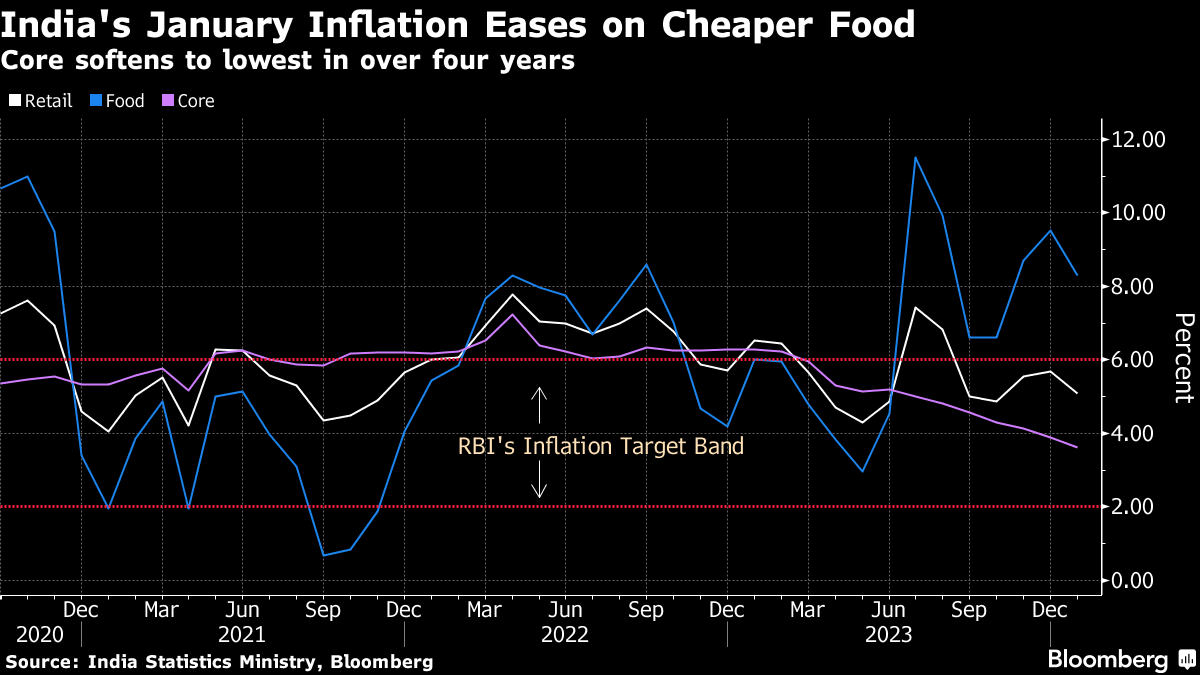
Food costs, driven primarily by uncertain weather, imparts considerable volatility in the consumer price index, which the central bank aims to keep anchored at 4%. Excluding volatile food and fuel costs, the core measure of inflation, slowed further to 3.61%, the lowest since 2019.
High price gains prompted the monetary authority to stick to its hawkish policy stance last week, indicating it's in no rush to cut interest rates until later in the year. The RBI will also take its cue from the US Federal Reserve, which remains wary of cutting rates too soon.
“Uncertainties in food inflation outlook should keep RBI cautious in the near term, with much of action by the central bank expected on the liquidity front,” Upasna Bhardwaj, chief economist at Kotak Mahindra Bank Ltd said by phone. The supply side interventions should continue to provide respite in food prices, she said.
Housing prices rose 3.2% in January from a year earlier, while clothing and footwear costs climbed 3.37%. Fuel and electricity prices fell 0.6%.
What Bloomberg Economics Says
We don't see the Reserve Bank of India letting go of its hawkish stance even as consumer inflation declined sharply for the first time in three months in January.
— Abhishek Gupta, India economist
For the full report, click here
Cooling inflation will help Prime Minister Narendra Modi's government seeking a third term in the nationwide elections due in the next few months. To tame prices, his administration has curbed exports of wheat, sugar and most rice varieties, and cracked down on hoarding. India has also extended low edible oil import duties for another year.
Separately, the government also released figures showing factory output grew to 3.8% from 2.40% in November.
(Updated with economists quotes, chart, details)
More stories like this are available on bloomberg.com
©2024 Bloomberg L.P.

-
One Battle After Another: India's Corporate Dynasties Battle For Control

2026 could go down as Corporate India's year of succession wars, governance battles and family fault lines.
-
Rs 50-Lakh Gold In Bank Locker, Rs 3 Lakh Of Protection: The Gap Most Families Don't Know About
The RBI ties a bank's liability to the annual locker rent and families who want to insure their jewellery face a separate question about how to prove what was inside.
-
The More Food Turns Into Fuel, The Harder It Is To Read Agricultural Markets | The Reason Why
A policy designed to reduce dependence on imported fuel can create new pressures elsewhere in the food economy.
-
Your iPhone Costs 12 Grams Of Gold, A Car About 100. What Does Your Life Weigh?
Measured in rupees, almost everything looks more expensive than it did a generation ago. Measured in grams of gold, a lot of it has become cheaper.
-
Gold Is Rs 22,000 Cheaper Than A Month Ago. Should You Buy Amid The Wedding Season?
Gold's potential slide to $3,500 could save around Rs 4,700 per 10 grams, but a soft inflation print could just as easily push prices back up. One way to split the risk is to buy in parts, some now and the rest after the Fed's Dec. 9 decision.
-
AI Agents Are Gaining Power. Who Governs Them?
Artificial intelligence agents promise to transform productivity by moving machines from assisting decisions to executing them. But as organisations delegate greater authority to these AI-agents, they must first establish who controls that authority and who remains accountable when things go wrong.
-
Why Swapping Your Old Gold Can Trigger A Rs 5 Lakh Tax Bill, And How You Can Avoid It Legally
Swapping old gold for new is taxed as a sale and a fresh purchase. Getting your own gold remade can cut most of that bill, though it has its own costs.
-
The AI Trade is Done. The Real Opportunity for Investors Starts in 2027 | Unhedged Position
As pureplay AI stocks plunge and circular, capex-led financing unwinds, 2027 is set to be a year of reckoning for AI companies. Yet the bust clears the way for a better opportunity for investors in 2027 -- shifting the spotlight from AI builders to the companies using AI.
-
Leadership As Mission: Why The Age Of AI Demands More Human Leadership
Debjani Ghosh examines how AI is changing leadership, arguing that its success must be measured by its impact on people and the accountability of those guiding its use.
-
We May Need Another Tukaram Mundhe To Fight Air Pollution | The Reason Why
Developers may install basic measures such as sprinklers and green nets, resume work, and continue violating rules when this equipment stops working.









