Donald Trump To Repeal Biden-Era Fuel Efficiency Standards: What This Means For Automakers
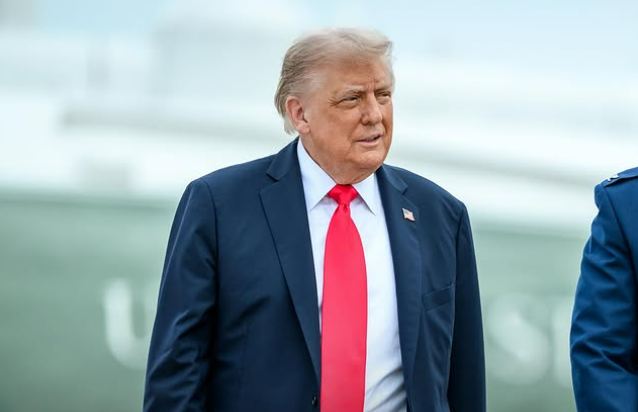
United States President Donald Trump announced on Wednesday that he will repeal Biden-era fuel efficiency standards. The move is aimed at relaxing fuel-efficiency requirements for millions of new cars and light trucks, marking Trump's fresh efforts to ease pollution rules.
“We are officially terminating Joe Biden's ridiculously burdensome, horrible actually, Cafe standards that imposed expensive restrictions,” Trump said in an Oval Office announcement, flanked by top auto executives, including the CEOs of Ford and Stellantis. “It put tremendous upward pressure on car prices, combined with the insane electric vehicle mandate,” the US President added.
Trump's latest announcement means that gasoline-powered vehicles will now face fewer emission curbs. According to a Guardian report, transportation is the largest source of greenhouse gas emissions in the US and the move is likely to worsen climate change.
What New Rules Mean For Automakers
The Biden administration had set stricter fuel economy rules for cars and light trucks. Trump is planning to ease the existing rules and expects that the relaxed norms will allow “the automakers to make vehicles that Americans want to purchase.” The US President's decision is part of his administration's broader push against federal support for cleaner vehicles.
“This is important for American jobs. The more cars we sell, the more jobs we have in this country,” Trump's Transportation Secretary, Sean Duffy, said at the press conference.
The decision is the latest action to reverse Biden-era policies, including terminating consumer credits of up to $7,500 for electric vehicle purchases and repealing fines for automakers that don't meet federal mileage standards.
These decisions will likely make cars more affordable in the US by lowering costs for automakers. This means that with the new rules, automakers could spend less on electric or hybrid vehicle development. Gasoline-powered vehicles may remain cheaper to produce and buy.
What Biden Era Rules Said
The Biden administration rules required automakers to increase the average fuel efficiency of new vehicles to about 50 miles per gallon by 2031.
The plan was aimed at reducing greenhouse gas emissions and combating climate change by encouraging the shift towards electric and cleaner vehicles. These standards were built on the Corporate Average Fuel Economy (CAFE) rules, first created in 1975 and gradually tightened over the years.
The standards proposed by Trump would now require cars to get about 34 miles to the gallon by 2031, according to the Guardian report.

-
The Economic Imperative: Analysing The Material Driving Force Behind India-Canada Strategic Reset

This economic complementarity is further reinforced by deep institutional investment ties and talent mobility, which form the bedrock of the bilateral framework.
-
Medicine Pricing: Where Must Profit Stop?
India must confront excessive margins, hidden incentives and regulatory gaps that threaten the integrity of medicine.
-
Why Amazon And Flipkart Are Struggling To Beat Meesho In India's Smaller Cities
With 274 million users and lowest-cost logistics, Meesho is defending its value commerce crown against giants like Amazon and Flipkart.
-
High US Salaries, No Green Card Certainty: The Financial Calculation Facing Indian H-1B Families
The suspension of PERM processing at eight technology employers does not cancel existing H-1B visas. What it does is force a question many Indian families have been avoiding: is the US salary worth tying your career and family plans to one employer?
-
Swiggy vs Eternal: Food Delivery's Two Rivals Are No Longer In The Same Race
Eternal is building a private AI assistant, dark.ai. Swiggy is still working out how to make Instamart pay, with an operating loss of Rs 895 crore in the July-September quarter while Blinkit stayed profitable.
-
Where You Live Shapes How You Get To Work | The Reason Why
Two-wheelers are the most popular way to get to work in India, accounting for nearly 43% of workplace commutes.
-
Unhedged Position: Can India See An Indonesia-Style Time Correction?
The Nifty is trading below levels it first clocked in 2024. Is there, then, as I have suggested in the headline, potential that the current time correction drags on painfully for the next three-five, even ten years?
-
Navigating Friction And Energy Realities: An Analysis Of Marco Rubio's October Visit To India
Occurring at a critical juncture marked by stalled trade negotiations and escalating geopolitical pressures over global energy supplies, the visit offers a profound window into modern US-India relations.
-
India Exports Capital. Why Not Export Trusteeship?
The big question, then, is whether India can build an institution that global borrowers, investors, banks, and lawyers can trust, even without an Indian connection.
-
France's Economy & Politics Are In Crisis | The Reason Why
Let's look at how the French economy and politics evolved under Nicolas Sarkozy, Franois Hollande and Emmanuel Macron.










