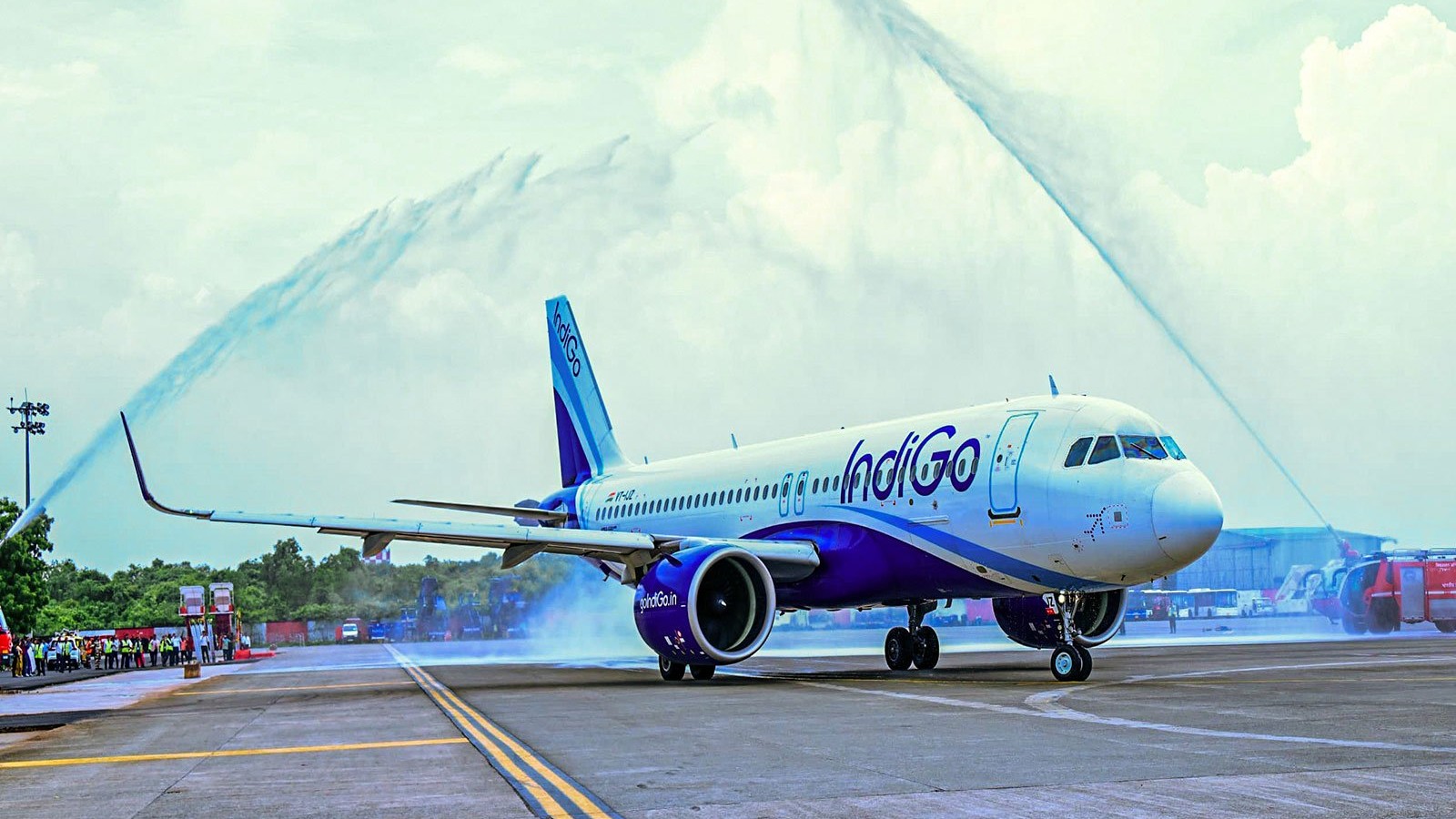
Around 12 to 13 years ago, I experienced an IndiGo mess I will never forget. Not because of what happened, but because of the way they responded. I was scheduled to fly on an IndiGo flight that departed around 1 p.m. or so from Mumbai. I had an important event that evening in Bangalore.
Everything seemed fine and IndiGo had a reputation for on-time performance — IndiGo marketing now refers to IST as IndiGo Standard Time. But that afternoon, as the clock ticked by, there was no sign of boarding.
Soon, a bunch of passengers were at the boarding gate, enquiring about the flight and the staff announced there was a delay because of a technical issue with the aircraft.
Also Read | Layoffs Are Rising In Tech, But These Skills Are Helping People Unlock Better Pay
More time went by and IndiGo announced the departure of the next flight to Bangalore, which was scheduled to depart around 3 .pm. Obviously, the passengers on my flight were upset about the next flight departing while there was no news about our flight, and tempers were fraying fast at the boarding gates.
To my relief, there was soon another announcement stating that IndiGo was cancelling our flight but was accommodating all passengers on the 3 p.m. flight — it was sheer luck that both flights had light passenger loads. I wouldn't be delayed for my event, or so I thought.
Once we took our seats the pilot came on air and announced that there would be a delay of a few minutes as luggage from the earlier flight was being shifted from the grounded aircraft and passenger manifests had to be resubmitted.
He also helpfully announced that the earlier aircraft had a malfunctioning wiper and it being the monsoon season, engineering could not release the aircraft till the matter was rectified.
All's well that ends well? Not quite. 15 minutes later the pilot came back on air to announce a further delay as paperwork was taking more time. Unfortunately for me and for the poor pilot the matter wasn't sorted in 15 more minutes. Or even an hour.
Each successive time he came back on air we could sense the man in charge of the aircraft was losing his cool, until he finally admitted that he was completely exasperated and that the ground staff doing the paperwork were out of their depth.
Finally, around 5 p.m., a miffed pilot and some very angry passengers who had cooled our collective heels for over two hours on the aircraft were told the flight could depart. I did make it for my event but that's another story for another day.
I knew IndiGo's then Chief Information Officer and I told him of this experience a few days later when we were talking about IndiGo's supposedly finely tuned process. The process did seem to work but clearly when it ran into an extraordinary situation, things unravelled, and how.
He promised to get back and I forgot about it. A month later he called me and said he had an update. Rather than merely apologise he went into what happened and what IndiGo had learnt from it.
It seems they stress tested the system at other airports to figure out whether their processes held when similar situations occurred and that helped them understand what they needed to do to ensure that such events wouldn't cause a cascading failure.
They made changes to their playbook to ensure that until things were actually out of their control, the IndiGo promise of efficiency and on-time performance would be met.
I have always admired IndiGo — a true Indian success story at a scale that is respectable anywhere in the world, but since then I was even more of a fan. Hence, IndiGo's shameful meltdown that started in early December came as a surprise.
How could an airline that was so focused on efficiency and its core offering get tripped by regulations they had at least two years to prepare for? More importantly, what about technology that now drives operations in any modern enterprise such as IndiGo?
Surely AI tools could have predictively warned that IndiGo would not have enough flight crew for operations with the revised guidelines on night operations, considering IndiGo is the king of domestic night skies in India (flights between midnight to 6 a.m.).
IndiGo uses AI for customer service through 6Eskai, an AI chatbot, but operationally also uses an AI-powered risk management platform for efficiency.
Hopefully, the ongoing enquiries will reveal to us why IndiGo couldn't see the crisis looming despite having deployed great technology at much expense. And whether initiatives like 6Eskai helped or made things worse for customers — while many stranded flyers complained about long hold times on IndiGo's customer service lines, no one seemed to have praised 6Eskai for helping them.
Was it because customers prefer speaking to a human when things go wrong or because 6Eskai wasn't really able to help? And indulging in deceptive practices during a meltdown will only make customers angrier and raise the chances of regulators coming down harder.
Cutting edge technology must be useful in a crisis, or it's just a showpiece, as some AI implementations unfortunately are. Hopefully, IndiGo as well as many other companies across sectors will learn and course-correct based on what they learn from the recent debacle.
IndiGo Wake-Up Call For Investors: When Tech Claims, Business Reality Don't MatchMeanwhile, here are some of the other key AI-related pieces from the past few days:
Microsoft, Google Among 24 Firms Joining US AI ‘Genesis Mission'
AI Models Show Notable Skill In Aiding Development Of Potentially Hazardous Chemical, Biological Processes
'Adapt To AI Grind Or Resign': Microsoft CEO Satya Nadella Tells Leadership
'AI Is The Focus': Intel's India Play Is Getting Bigger, Says Top Boss Gokul V Subramaniam
This Indian AI Stock Has Surged 55,000% — And It Has Only Two Employees
AI Infra In Space? Your Next Data Centre Might Be In Orbit
AI Enters The Mandap: The Future of Wedding Jobs In India
Till next time,
- Ivor Soans
Can AI Make Healthcare Smarter, Faster, And More Accessible?Essential Business Intelligence, Sharp Market Insights, Practical Personal Finance Advice, Daily Fuel, Gold and Silver Prices and Latest Stories — On NDTV Profit.