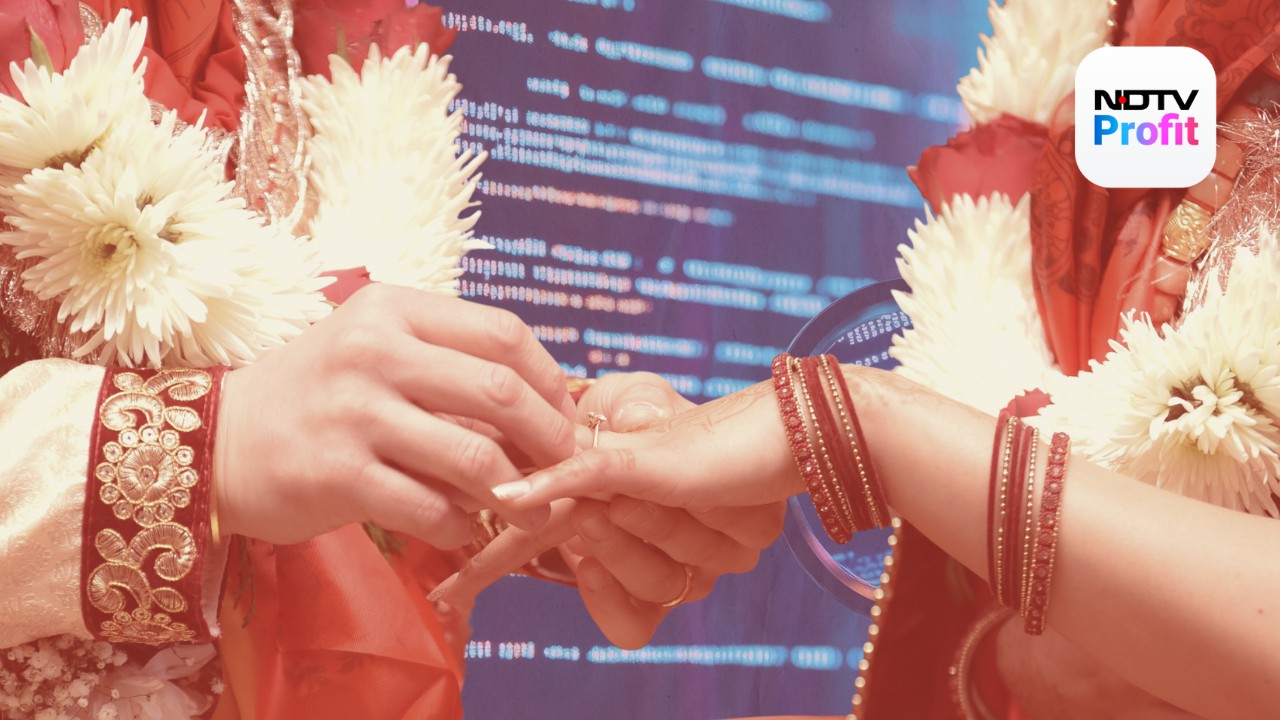
Artificial intelligence (AI) now coexists with some of India's oldest wedding rituals. According to the WedMeGood Annual Wedding Industry Report 2025–26, nearly 24% of wedding vendors in India are already using AI tools, signalling an early but meaningful shift in how one of the country's most people-driven industries is being organised.
The 'mandap', for now, remains unchanged. Behind the scenes, however, the work of planning a wedding increasingly relies on algorithms that respond faster, calculate better and never sleep.
The report, based on a survey of over 2,000 couples and insights from 500-plus wedding professionals, noted that AI adoption among vendors is still at an early stage but is gaining momentum. Vendors are beginning to use AI-led tools to improve speed, professionalism and client experience, particularly during high-demand periods like the peak-wedding season.
Also Read | Layoffs Are Rising In Tech, But These Skills Are Helping People Unlock Better Pay
WedMeGood's analysis shows that early adopters of AI are already seeing advantages in workflow efficiency and responsiveness. These tools are helping vendors manage enquiries, streamline communication and structure operations more effectively in an industry that has traditionally depended on referrals and manual coordination.
Trust Matters, But So Does Speed
The rise of AI coincides with broader structural shifts in the wedding ecosystem. One in three couples now checks online reviews before booking a vendor, underscoring the growing importance of visibility, trust and digital presence in vendor selection. Platforms like WedMeGood are increasingly acting as structured discovery channels for couples with high purchase intent.
Business growth expectations among wedding vendors in 2025 remain consistent with previous years, according to the report. Trust through referrals continues to play a role, but digital visibility — particularly through Instagram and wedding platforms — has become a key driver of growth.
AI-led tools are now emerging as an extension of this digital shift. The report highlights that WedTech platforms have begun launching AI-powered tools and chatbots, allowing vendors to respond faster and manage client interactions more systematically.
Early adopters are gaining an edge in turnaround time and perceived professionalism, potentially widening the gap between tech-enabled vendors and those relying solely on traditional methods.
Marriage Math: Renting, Borrowing, Or Buying—The New Wedding Outfit EconomicsHow Couples Are Structuring The Chaos
As AI-led tools make their way onto wedding platforms, they are also quietly changing how couples plan, not just whom they hire.
Technology is increasingly being used to bring order to the chaos of wedding planning — helping couples structure timelines, organise workflows and manage the sheer number of decisions involved in an Indian wedding.
What once lived across scattered WhatsApp groups, colour-coded spreadsheets and half-remembered notes is slowly moving into structured digital systems. Planning a wedding now looks less like improvisation and more like project management — complete with moodboards, guest lists, vendor shortlists and planning checklists.
Why Fewer Young Indians Want Early Marriage — And Why Zoho's Sridhar Vembu Says They ShouldWhat This Means For Wedding Jobs
The implications are significant for wedding jobs in India, many of which operate within a fragmented, freelance-heavy ecosystem. While the report does not indicate job displacement, it suggests that the nature of work is evolving, with increased emphasis on efficiency, structured communication and technology-enabled service delivery.
AI adoption in the wedding industry is no longer speculative. Though still limited in scale, the shift has begun, and vendors who adapt early are likely to benefit most as weddings become bigger, smarter and more experiential.
For an industry built on human emotion, creativity and coordination, the future of wedding work may increasingly depend on how seamlessly technology fits into the celebration — without ever stepping into the spotlight.
BNPL For Wedding Shopping: Is It Safe Or A Debt Trap?Essential Business Intelligence, Sharp Market Insights, Practical Personal Finance Advice, Daily Fuel, Gold and Silver Prices and Latest Stories — On NDTV Profit.