


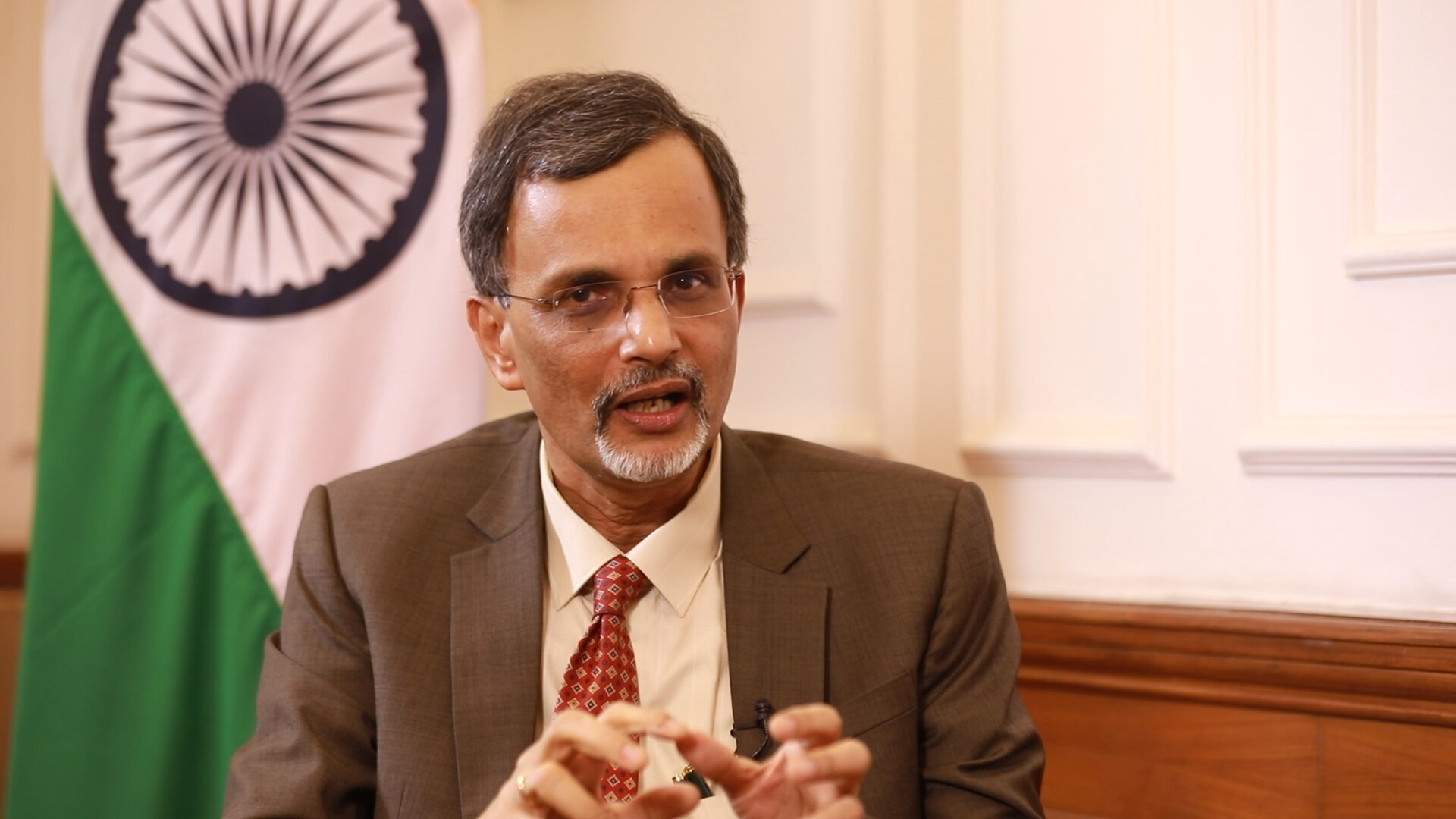
- Chief Economic Adviser says government is not worried about rupee breaching 90 against dollar
- Rupee fell 5% in 2025 due to foreign fund outflows and strong dollar demand
- No major impact on inflation or exports from rupee depreciation, says CEA
Chief Economic Adviser V Anantha Nageswaran on Wednesday said the government is not losing sleep over declining rupee, which has breached the 90-level against the greenback. The falling rupee is not affecting inflation or exports, said CEA Nageswaran at a CII event on Wednesday.
However, he expressed hope that it should improve and 'come back' next year. The rupee has depreciated about 5% against the US dollar in 2025. The domestic currency plummeted to a new low of 90.30 against the dollar in the intra-day session on Dec. 3, falling 34 paise from its previous close, amid foreign fund outflows and sustained buying of dollars by banks.
Falling rupee helps outward shipment but makes imports costlier. Import-dependent sectors such as gems and jewellery, petroleum, and electronics may see lower benefits due to a rise in input costs, putting pressure on inflationary expectations.
Rupee Breaches 90-Mark: What's dragging INR?
A decline in the domestic equity markets and the absence of an India-US trade deal put further pressure on the local unit, according to forex traders. Market experts see significant possible movement for the currency in the short term. Some analysts have cited 90.5 against the next important level for the rupee, while others even see it nearing 92 levels in case there is no early settlement of India-US trade uncertainties.
"The Indian rupee weakened to a fresh record low due to strong demand for the US dollar, pressure from FII outflows, and weak global risk sentiment. The US dollar has been strengthening mainly because of higher US interest rates, which has shifted investor preference toward dollar assets," said Swapnil Aggarwal, Director, VSRK Capital.
At the same time, domestic factors have added to the pressure as oil companies and importers increased their dollar buying, further impacting the rupee's movement. Together, these factors have created a supply-demand imbalance in the foreign exchange market, leading to depreciation pressures on the local currency, according to analysts.
#Thread #Rupee hitting 90 vs the dollar this week is historic.
December 3, 2025
But this fall didn't happen overnight. It's the result of 50 years of political shocks, global crises, and economic turning points.
A quick rewind 👇 pic.twitter.com/VoYsr1tS2HWill RBI intervene to manage INR's fall?
According to Aggarwal, the Reserve Bank of India (RBI) is likely to step in to manage the situation; however, its intervention may remain limited. The central bank's focus is expected to be on preventing sharp and sudden volatility rather than defending any specific level of the rupee. As a result, some fluctuation in the currency may continue in the near term.
The currency move comes just as the MPC meeting begins today, with the interest rate decision due on Dec. 5, ahead of the US Federal Reserve's policy outcome on Dec 10. A rate cut by the RBI could trigger additional selling in the rupee. For now, experts advise exporters to keep converting dollars on a spot basis with minimal hedging, while importers are advised to buy the dips.
CEA on India's FDI target
Speaking about gross foreign direct investment target, CEA Nageswaran said, 'We may cross $100 billion this year.' During the first six months of the current fiscal, total FDI, which includes equity inflows, reinvested earnings and other capital, increased to about $50 billion as against $42.3 billion in the same period of 2024-25.
India's gross FDI inflows for FY25 were approximately $81.04 billion, a 14% increase over the previous fiscal year. The gradual increase in net FDI numbers after 2014 and until the COVID-19 pandemic has now run into geopolitical and geo-economic challenges, CEA Nageswaran said.
'That explanation should not stop there. We are aware that we have to crank up our game,' he said. The government needs to address tax and non-tax issues, infrastructure-related issues, and also last-mile connectivity issues to increase FDI into India, he said.
The nature of the terrain has shifted when it comes to FDI over the last few years, the CEA said. Post COVID-19, some of the countries started focusing on localisation of production rather than depending completely on foreign nations leading many companies to move their investment in those jurisdictions, he added.
Essential Business Intelligence, Continuous LIVE TV, Sharp Market Insights, Practical Personal Finance Advice and Latest Stories — On NDTV Profit.



















_portrait_on_23_March_1950.jpg?im=FitAndFill,algorithm=dnn,width=240,height=180)