Air India Crash To Become India's Most Expensive Aviation Claim With A Potential Rs 2,400-Crore Demand
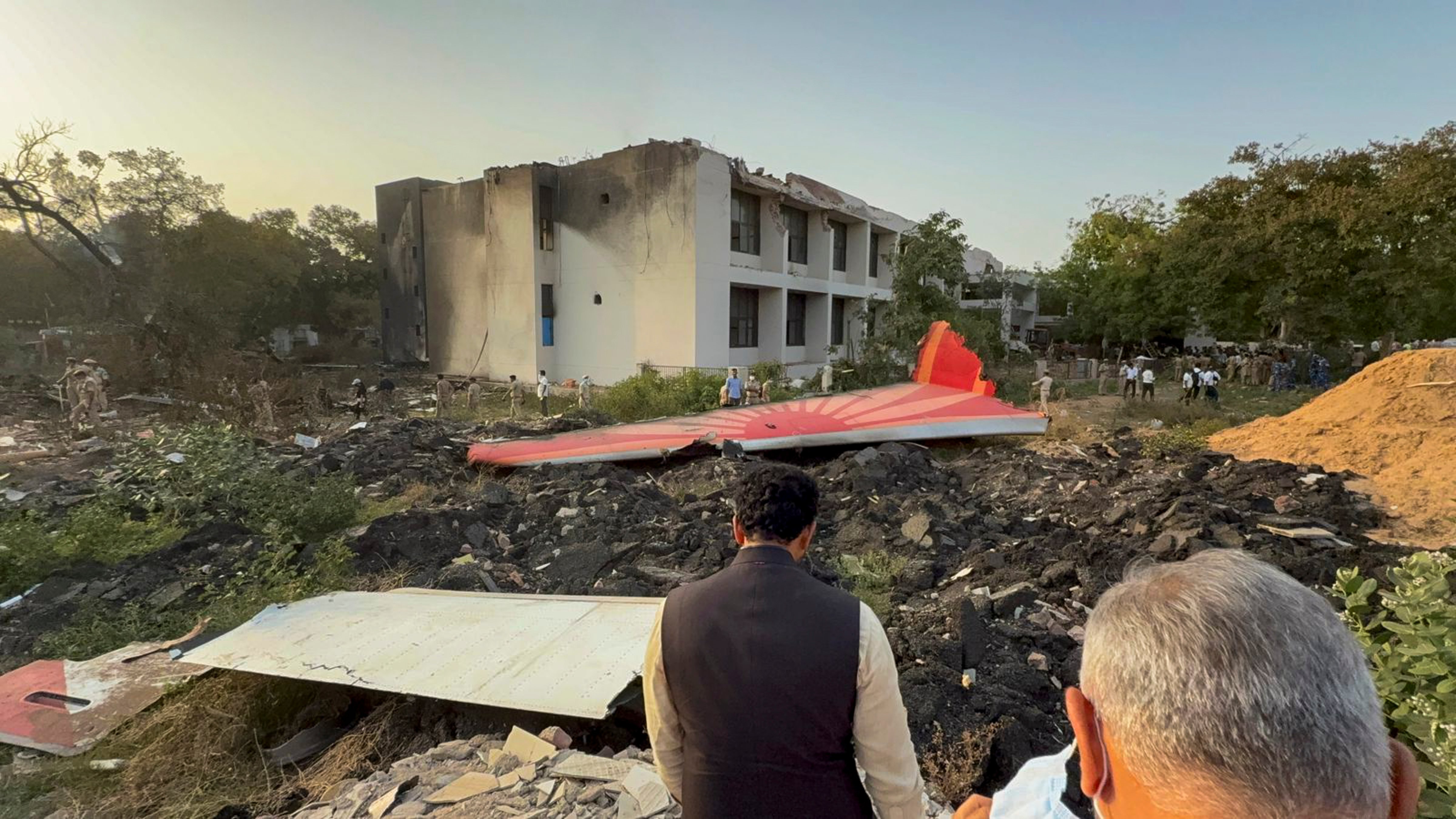
The crash of an Air India flight minutes after taking off from the Ahmedabad airport on Thursday is set to become India's most expensive aviation claim, with potential liabilities ranging between $211 million and $280 million. On the upper end, this will roughly translates to Rs 2,400 crore.
An airline's fleet insurance policy typically covers risks such as aircraft hulls, spare parts, and liabilities to passengers and third parties, said Ramaswamy Narayanan, chairman and managing director, GIC Re. The incident, involving a Boeing 787 Dreamliner aircraft, is expected to trigger claims under both the hull and liability sections due to the total loss of the aircraft and the fatalities.
This incident is likely to trigger multiple aspects of a typical aviation hull all-risk policy. Aircraft damage would be covered under the aviation hull all-risk section, which insures the current valuation of the aircraft, including spares and equipment,Amit Agarwal, chief executive officer and MD of Howden, India explained. For a Dreamliner, depending on its configuration, age, and other factors, this value can range between $211 million and $280 million, he estimated.
The aircraft involved (VT-ABN) was a 2013 model and was insured for approximately $115 million in 2021, based on available information. Whether the damage is partial or total, the loss would be covered based on the value declared by the airline, he said.
Airlines also typically purchase an add-on hull war risk cover, which is triggered if the loss results from a terrorist act or war-related event, Agarwal explained. In such cases, the loss would be covered under the hull war section.
The liability section—likely the most significant component of the loss in the Ahmedabad incident—could amount to millions of dollars. This section covers the airline's legal liability to passengers and third parties, including medical expenses, cargo, and baggage losses. The aircraft crashed into a civilian compound, which could result in substantial third-party claims.
Such losses generally affect multiple reinsurers, as airline fleet policies are often placed on a facultative basis involving several participants, Narayanan said. Since liability claims take time to quantify, it is currently difficult to assess the impact of this incident on future pricing."
While interim compensation may be announced by the airline, final compensation for passengers will be determined under the Montreal Convention of 1999, to which India became a signatory in 2009. Compensation is calculated using Special Drawing Rights, which stood at 128,821 SDRs (approximately $1.33 per SDR) as of October 2024. The actual payout will depend on the coverage purchased by Air India.
The Tata Group has announced a compensation of Rs 1 crore to the families of each person who lost their life in the tragic Air India plane crash in Ahmedabad on Thursday.
Industry Impact
This is a significant incident that could result in losses amounting to several hundred crores. The general aviation insurance premium market in India is estimated at around Rs 900 crore, Agarwal said.
"While most large losses are reinsured, this event is expected to influence aviation insurance rates going forward."
Ahmedabad Plane Crash: Top Stories

-
High US Salaries, No Green Card Certainty: The Financial Calculation Facing Indian H-1B Families

The suspension of PERM processing at eight technology employers does not cancel existing H-1B visas. What it does is force a question many Indian families have been avoiding: is the US salary worth tying your career and family plans to one employer?
-
Swiggy vs Eternal: Food Delivery's Two Rivals Are No Longer In The Same Race
Eternal is building a private AI assistant, dark.ai. Swiggy is still working out how to make Instamart pay, with an operating loss of Rs 895 crore in the July-September quarter while Blinkit stayed profitable.
-
Where You Live Shapes How You Get To Work | The Reason Why
Two-wheelers are the most popular way to get to work in India, accounting for nearly 43% of workplace commutes.
-
Unhedged Position: Can India See An Indonesia-Style Time Correction?
The Nifty is trading below levels it first clocked in 2024. Is there, then, as I have suggested in the headline, potential that the current time correction drags on painfully for the next three-five, even ten years?
-
Navigating Friction And Energy Realities: An Analysis Of Marco Rubio's October Visit To India
Occurring at a critical juncture marked by stalled trade negotiations and escalating geopolitical pressures over global energy supplies, the visit offers a profound window into modern US-India relations.
-
India Exports Capital. Why Not Export Trusteeship?
The big question, then, is whether India can build an institution that global borrowers, investors, banks, and lawyers can trust, even without an Indian connection.
-
France's Economy & Politics Are In Crisis | The Reason Why
Let's look at how the French economy and politics evolved under Nicolas Sarkozy, Franois Hollande and Emmanuel Macron.
-
You May Inherit The Business. You Must Earn Its Credibility.
Succession tests the founder's ability to share authority as much as it tests the next generation's readiness to assume it.
-
Signing Deals Is One Thing; Making Them Work Is Another | The Week In Whys
Sometimes, things don't turn out as planned. Indian companies have lost some bids to rivals, some projects won't produce until 2030.
-
FOMC Wall, PERM Suspension, Hospital Stocks | Talking Points This Week
A PERM suspension would directly affect green-card sponsorship rather than H-1B visas, so the near-term earnings impact could remain relatively limited. The key question is whether this marks a new phase in US scrutiny of Indian IT.









