

'Exposing Rich Guilt, Inequality': Deepinder Goyal Fires Off Sharply At Gig Economy Critics
"The gig economy just exposed the reality of inequality to the people who previously had the luxury of not seeing it," said Deepinder Goyal.



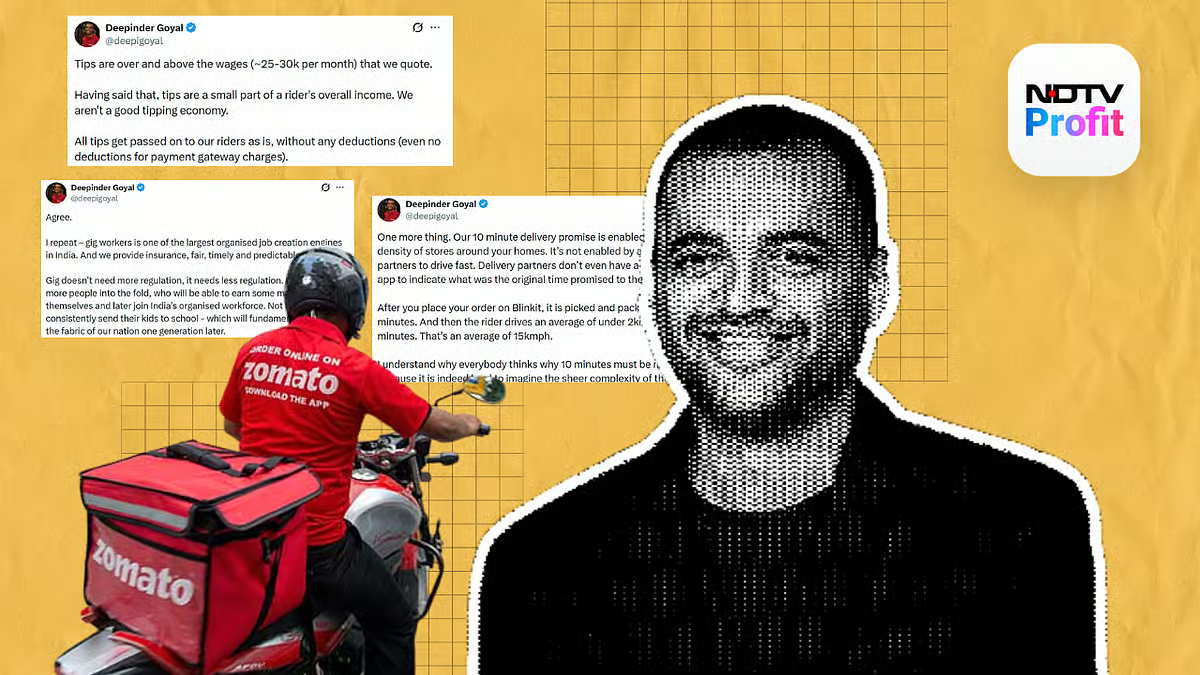
Billionaire Zomato founder Deepinder Goyal took on critics of the gig economy model in a series of lengthy social media posts on Friday, addressing issues of invisibility of working class, economic inequality, and what he termed "rich guilt".
In a candid post, Goyal argued that the conversation around gig workers like delivery agents often overlooks the complexities of creating sustainable livelihoods while balancing consumer expectations and business realities. "Ban gig work and you don’t solve inequality. You remove livelihoods," he said.
The debate took off this week when a section of gig workers went on strike on New Year’s Eve, demanding for higher pay and better working conditions. As per reports, food delivery platforms Swiggy, Zomato and MagicPin recorded a significant surge in orders that day, despite the agitation.
It also drew political attention with leaders like Raghav Chadha, an Aam Aadmi Party MP, meeting gig workers at a demonstration in the national capital.
Goyal said class divides kept the labour of the poor invisible to the rich for centuries, until gig work "shattered that invisibility, at unprecedented scale".
"Suddenly, the poor aren't hidden away. They're at your doorstep... This is the first time in history at this scale that the working class and consuming class interact face-to-face, transaction after transaction. And that discomfort with our own selves is why we are uncomfortable about the gig economy," he said.
"We aren't just debating economics. We are confronting guilt... Pre-gig era, the rich could enjoy luxury without moral discomfort. Labor was out of sight. Now, every doorbell ring is a reminder of systemic inequality. That's why debates explode," he added.
In another post, Goyal claimed gig work is "one of the largest organised job creation engines" in India which needs less regulation.
Addressing the issue of wages, he said market forces decide how much a worker gets paid. "Companies reliant on gig economy compete very brutally with each other. Demand is more than the supply, which results in gig incomes being more than what many formal entry level jobs in India pay."
Moreover, Goyal said Zomato’s 10-minute delivery promise is "enabled by the density of stores around your homes" rather than by pressuring delivery partners to drive faster.
He added that riders often travel under two kilometres at an average speed of 15 kmph, and that many Indians “voluntarily take up platform work and sometimes even prefer it to regular jobs.”
Goyal also stressed that while no system is perfect, the delivery model is often misunderstood on social media “by people who don’t understand how our system works and why.”
He ended his post, saying, “If I were outside the system, I would also believe that gig workers are being exploited, but that’s not true.”