

Risk Becoming Attractive: Economy, Mind And India's New Speculation Cycle | The Reason Why
Better housing or even a decent rental location, quality healthcare, private education, nutritious food, and occasional travel all cost far more than they once did.



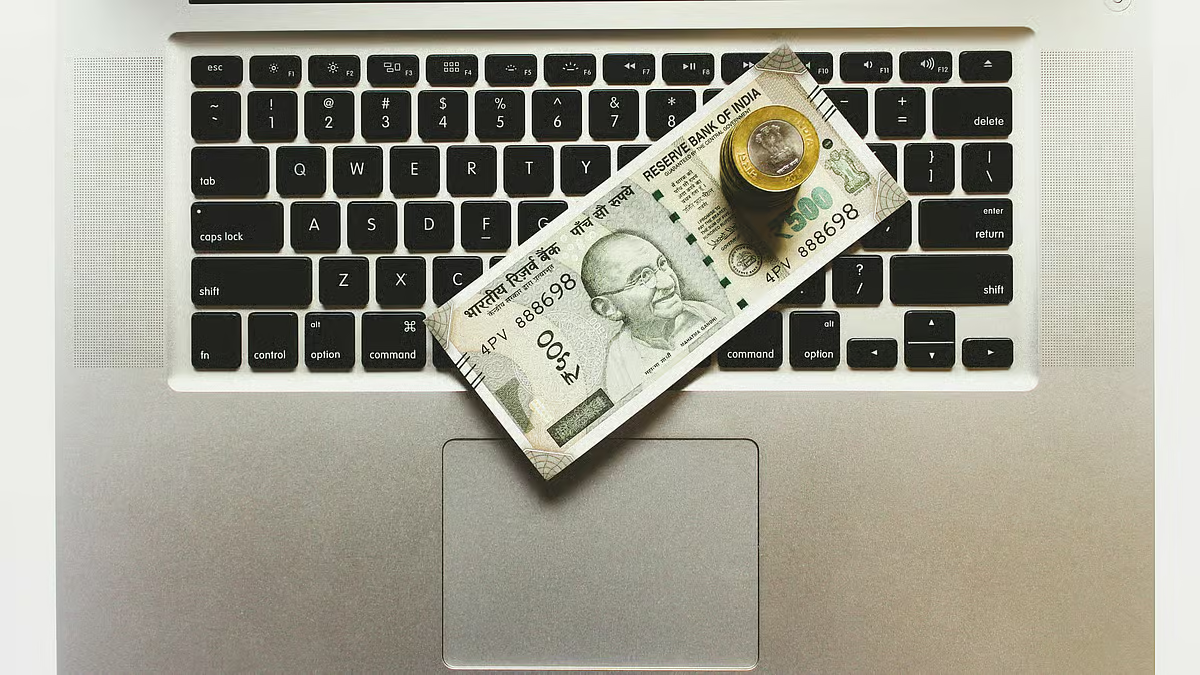
India's relationship with money and risk has changed. What began as wider participation in stocks and mutual funds post-Covid has drifted into riskier territory. Today, many young Indians are trying their hand at intraday trading, derivatives, cryptocurrencies, prediction markets, and real-money gaming apps like Dream11 or rummy platforms. The line between investing, gambling, and gaming has getting thinner.
Strong Economy, Less Comfort
At first, the rising participation of youngsters in stock markets felt like progress. But as volatility rose, SEBI's studies showed large losses among young traders, while governments moved to curb betting and gaming apps. Now, it's worrisome. We expected patient wealth building, but the last few years have been more about chasing the quick money.
Some will point at the economy. But employment has actually got better. Youth labour force participation rose from about 38% in FY18 to 47% in FY24. Youth unemployment also declined, from around 17–18% to about 10% over the same period.
The stress lies in earnings rather than employment. PLFS data shows nominal average monthly wages rose 3–4% annually between FY18 and FY24. However, with annual consumer inflation at around 5%, monthly real wages fell from just over Rs 12,000 in FY18 to about Rs 11,200 in FY24, indicating that inflation has eaten much of the nominal wage rise.
Rising Cost Of Better Life
If we set numbers aside and focus on lived experience, the cost of what people now see as "basic aspirations" has risen sharply. Better housing or even a decent rental location, quality healthcare, private education, nutritious food, and occasional travel all cost far more than they once did. Someone in their 30s today, for instance, can’t realistically buy a home in Mumbai’s suburbs the way their parents could in the 1990s.
Even with stable incomes and disciplined saving, long-term financial security feels harder to reach. Add the pressure of chasing the FIRE dream— financial independence and early retirement — and the bar rises even higher. In that setting, taking a high-risk bet doesn't feel reckless. It feels like a shortcut worth trying.
Social Media, Finfluencers and Celebrities Amplify These Sentiments
Earlier, duping someone was easy. This generation isn't uninformed. They actively seek financial guidance, and that’s where finfluencers step in. They have eased entry barriers in the complex financial markets – kudos to them. But their popularity often gets mistaken for expertise. Even if they are experts, they are driven by engagement, affiliate commissions, or course sales. Many highlight their wins and successes but hide losses. Over time, this creates a distorted picture where risk-taking appears common, repeatable, and rewarding.
In India, celebrity endorsements add another layer of legitimacy. When familiar faces promote platforms like Dream11 or rummy apps, these activities stop feeling speculative and start feeling mainstream.
Social media adds fuel to this mindset. Earlier, people compared themselves with friends or colleagues; today, they compare themselves with strangers online, where travel, lifestyle upgrades, and money are constantly on display. The rise of influencers as a career only sharpens this effect — making success look both effortless and unfair. For some, this breeds envy or a sense of being left behind; for others, it creates the urge to catch up quickly. In that environment, risky investments, trading, or even gambling begin to feel like reasonable ways to bridge the gap.
Beyond Dopamine
Yes, there's thrill in intraday or most of these risk-taking platforms. We love it when those profits and wins hit the dopamine. But there's more to it.
A small chance of a big payoff today often feels more attractive than slow, predictable gains over many years — especially when the future feels uncertain. People also mentally separate "investment money" — the main portfolio — from "risk money" — the smaller portion of the total portfolio. Losses in this second bucket don't hurt immediately, making it easier to keep going. Once losses pile up, the urge to recover what's already lost kicks in, pulling people deeper into the cycle.
Technology As Accelerator, Not Cause
Technology has just amplified most of our instincts. Earlier, gambling required effort and friction. Today, betting on markets, matches, or events takes seconds. Instant payments, seamless execution, and constant notifications compress decision-making and reduce reflection. Economic stress and social pressure do the rest.
A Search for Hope, Not Just Profit
This is not simply about greed or financial ignorance. Risky behaviour offers hope, excitement, and the feeling of control in an uncertain world. Thus, I believe, the blurring of gambling and investing is ultimately a social and psychological issue.
Until people feel secure about their future, the pull of high-risk shortcuts will remain strong — regardless of how often the odds are explained, platforms are banned, or rules are tightened.
Disclaimer: The views expressed in this article are solely those of the author and do not necessarily reflect the opinion of NDTV Profit or its affiliates. Readers are advised to conduct their own research or consult a qualified professional before making any investment or business decisions. NDTV Profit does not guarantee the accuracy, completeness, or reliability of the information presented in this article.