New RBI ATM Transaction Rules From May 1: Top Banks Including HDFC Bank, PNB Notify New Charges
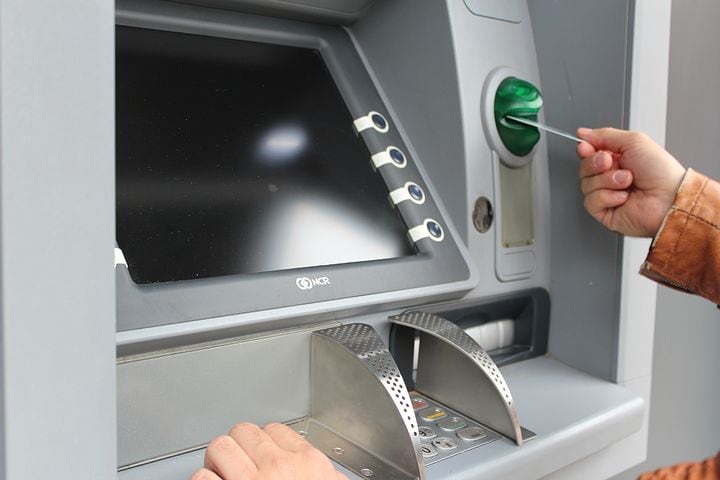
The ATM withdrawal rules will change from May 1, as directed by the Reserve Bank Of India. To simplify and standardise charges, several leading banks have already begun notifying account holders about revised fees and transaction limits.
RBI Guidelines
The RBI's updated framework applies to all banks and brings in key changes such as:
A cap on the number of free ATM transactions per month.
A maximum fee of Rs 23 (plus taxes) for each transaction beyond the free limit.
Inclusion of both financial (cash withdrawals) and non-financial transactions (balance enquiries, mini statements, PIN changes) under the purview of chargeable events, depending on the bank.
The rules also extend to Cash Recycler Machines (CRMs), though cash deposits will not attract fees under this framework.
Under the new structure, customers can carry out:
Three free ATM transactions per month in metro cities.
Five free ATM transactions per month in non-metro locations.
These limits apply regardless of whether the ATM belongs to the customer's own bank or another institution.
HDFC Bank
As per HDFC Bank's website, from May 1, the charge for ATM transactions beyond the free limit will be revised from Rs 21 plus taxes to Rs 23 plus taxes. At HDFC Bank ATMs, only cash withdrawal transactions will attract charges beyond the free usage limit. Non-financial transactions such as balance enquiries, mini statements and PIN changes will remain free. At non-HDFC Bank ATMs, both financial and non-financial transactions will be counted towards the free limit, and any excess usage will be chargeable under the new rate structure.
Punjab National Bank
According to the Punjab National Bank (PNB) website, with effect from May 9, 2025, customer charges for ATM transactions exceeding the free limit at other banks' ATMs will be revised to Rs 23 per financial transaction and Rs 11 per non-financial transaction, excluding GST.
IndusInd Bank
IndusInd Bank is set to implement a flat fee of Rs 23 for each cash withdrawal made at non-IndusInd Bank ATMs, once the customer has exhausted their monthly free usage. This change will take effect from May 1, 2025, and applies to all categories of customers including those with savings, salary, NRI or current accounts.
Kotak Mahindra Bank
Starting May 1, Kotak Mahindra Bank will revise its ATM transaction charges across both its own ATMs and those of other banks. Once customers exceed their monthly free transaction limits, financial transactions will be charged at Rs 23 (up from Rs 21), and non-financial transactions such as balance enquiries or mini statements will cost Rs 10 (up from Rs 8.50). The number of free transactions offered under specific account types or banking programmes remains unchanged. The revised charges will only apply to transactions beyond those free limits.
State Bank of India
State Bank of India (SBI) has taken a slightly different approach, having already revised its ATM policy earlier this year. Since Feb. 1, all SBI savings account holders are entitled to five free transactions at SBI ATMs, and 10 free transactions at ATMs of other banks, irrespective of whether the customer resides in a metro or non-metro area.
What You Should Know
With changes in ATM usage charges set to take effect, customers are urged to keep a close watch on their transaction frequency, particularly in metro cities where the number of free transactions is lower. To avoid incurring charges of Rs 23 per transaction beyond the free limit, it is advisable to limit unnecessary cash withdrawals. Embracing digital banking alternatives is also encouraged, as banks continue to promote reduced reliance on physical cash handling.

-
We May Need Another Tukaram Mundhe To Fight Air Pollution | The Reason Why

Developers may install basic measures such as sprinklers and green nets, resume work, and continue violating rules when this equipment stops working.
-
Extracting Value From Battery Scrap Could Be Challenging For India | The Reason Why
A discarded lithium-ion battery still contains valuable materials such as lithium, nickel and cobalt. These can be recovered and reused. When such batteries are crushed and shredded, they produce a dark powder called black mass.
-
One El Nino, India Can Handle. Two Could Break The Granary
India's grain stocks can absorb one bad year, but a second El Nino could drain the buffer in two to three years, economists say.
-
India's Troika Of Good Luck | Joining The Dots
As Jensen Huang's exit drags Nvidia down, a cooling AI trade and resilient earnings have revived investor interest in India. A likely RBI rate hike looms.
-
Talking Points This Week: Leadership Shock At Nvidia, Earnings Strength, And The Fog Over Hormuz
The Anthropic IPO pricing and first trading day, Nvidia's upcoming earnings, and any fresh signals from Iran will set the tone for the following week.
-
Signature Play: The Classic Cocktail Is Dead. Or Is It?
Classic cocktails are disappearing from India's cocktail menus. But they're still being ordered, taught to bartenders and borrowed from. So, who's really having the last drink?
-
A New Samvat Wishlist: Inclusive Prosperity And Human Development
India has strengthened its economic foundations through infrastructure, digital access and enterprise. Its next growth chapter must deepen productivity, create better livelihoods and widen participation in prosperity.
-
Love, Sex Aur Dhokha: The Audacious Plot To Spy On Jensen Huang
A Taipei dinner, a Singapore chip buyer and a suspected Chinese asset: inside the alleged spy operation that got close to NVIDIA's Jensen Huang.
-
Ten Things I Learnt This Samvat
Patience can be a trap. Cheap stocks can stay cheap. Leverage can wipe you out. What did Samvat 2082 teach us? Niraj Shah writes on 10 lessons from the year gone by.
-
Talking Points This Week: Tech Nerves, FII Buying, And A Faraway Banking Shock
The global markets are not shining this Diwali. The exception in the large markets is, India.









