Ola Electric IPO: Here's All You Need To Know
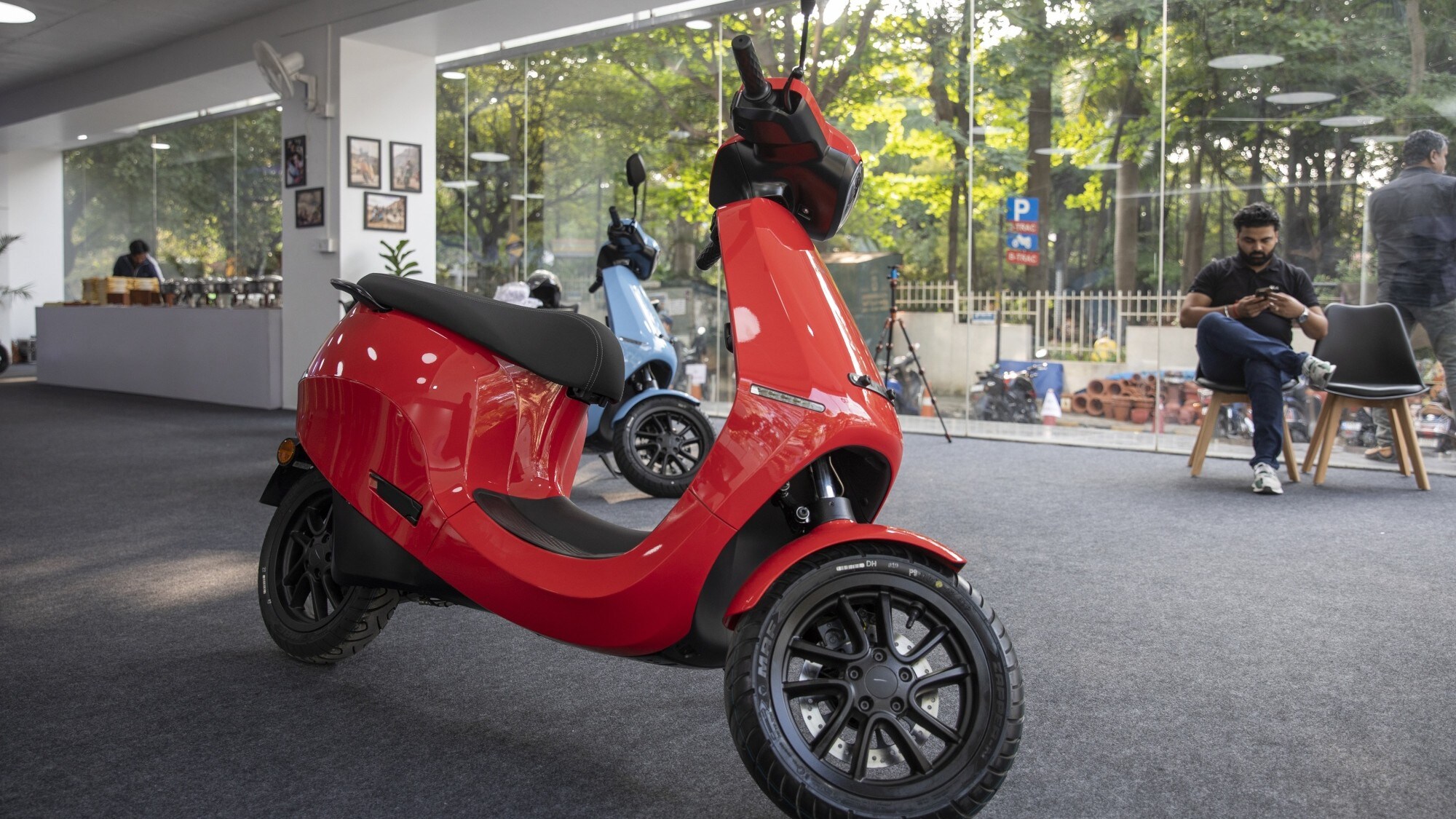
Ola Electric Mobility Ltd. aims to raise Rs 6,146 crore—or about $730 million—from an initial public offering that will test investor appetite for electric mobility in the world's largest two-wheeler market.
The Ola Electric IPO includes a fresh issue of stock—72.37 crore shares, worth Rs 5,500 crore—and an offer-for-sale by existing shareholders—8.49 crore shares, aggregating to Rs 645.56 crore, according to the red herring prospectus.
Founder and promoter Bhavish Aggarwal is offloading 3.8 crore shares—the biggest chunk—while investors SoftBank Group Corp. and Tiger Global are selling 2.4 crore and 65 lakh shares, respectively.
The price band for the offering is set at Rs 72-76 per share, which pegs the valuation of the company at Rs 33,522 crore, or about $4 billion—a steep discount from $5.4 billion at its last funding round in December 2023 and $7 billion anticipated by Aggarwal.
Axis Capital, BofA Securities, BoB Capital Markets, Citigroup India Global Markets, Goldman Sachs (India) Securities, ICICI Securities, Kotak Mahindra Capital and SBI Capital Markets are the book-running lead managers.
The issue is open for subscription from Aug. 2-6.
Listing will take place on Aug. 9.
The yet-unprofitable EV startup aims to use the IPO proceeds to fuel expansion, innovation and retire some of the debt, according to the red herring prospectus.
Aggarwal aims to capture the mass market as well as premium segments of India's two-wheeler market by retailing electric scooters and motorcycles.
The company's path to profitability remains unclear, despite improving financials, but is heavily dependent on how its battery manufacturing facility scales up. The Gigafactory is expected to go onstream in early 2025.
Ola Electric, which accounts for one out of every three electric two-wheelers sold in India today, is the first Indian automaker in more than two decades to tap the primary markets.
Hyundai Motor India Ltd. and Ather Energy Ltd. will be closely watching the proceeds as they are next in line to launch their IPOs later this year.
Issue Details
IPO Dates: Aug. 2-6.
Price Band: Rs 72-76/share.
Issue Size: Rs 6,146 crore.
Lot Size: 195 or multiples thereof.
Listing: Aug. 9 on BSE and NSE.
Use Of Proceeds
Capital expenditure: Rs 1,227.64 crore.
Repayment of borrowing: Rs 800 crore.
R&D investments: Rs 1,600 crore.
For organic growth: Rs 350 crore.
Business
Ola Electric is a pure-play electric vehicle maker, which has adopted vertically integrated technology and manufacturing capabilities for EVs and EV components—including battery packs, motors and chassis at the Ola Futurefactory in Krishnagiri, Tamil Nadu. It is the only automaker in India that has won both production-linked incentive schemes for EVs in India.
In nearly four years of operations, the company has launched seven electric scooters. Ola has announced its range of electric motorcycles, which will go on sale in the first half of 2025. The Gigafactory for localised battery manufacturing will also go onstream around the same time.
The company, at present, has an annual production capacity of 1 million units, but current capacity utilisation stands at 49%.
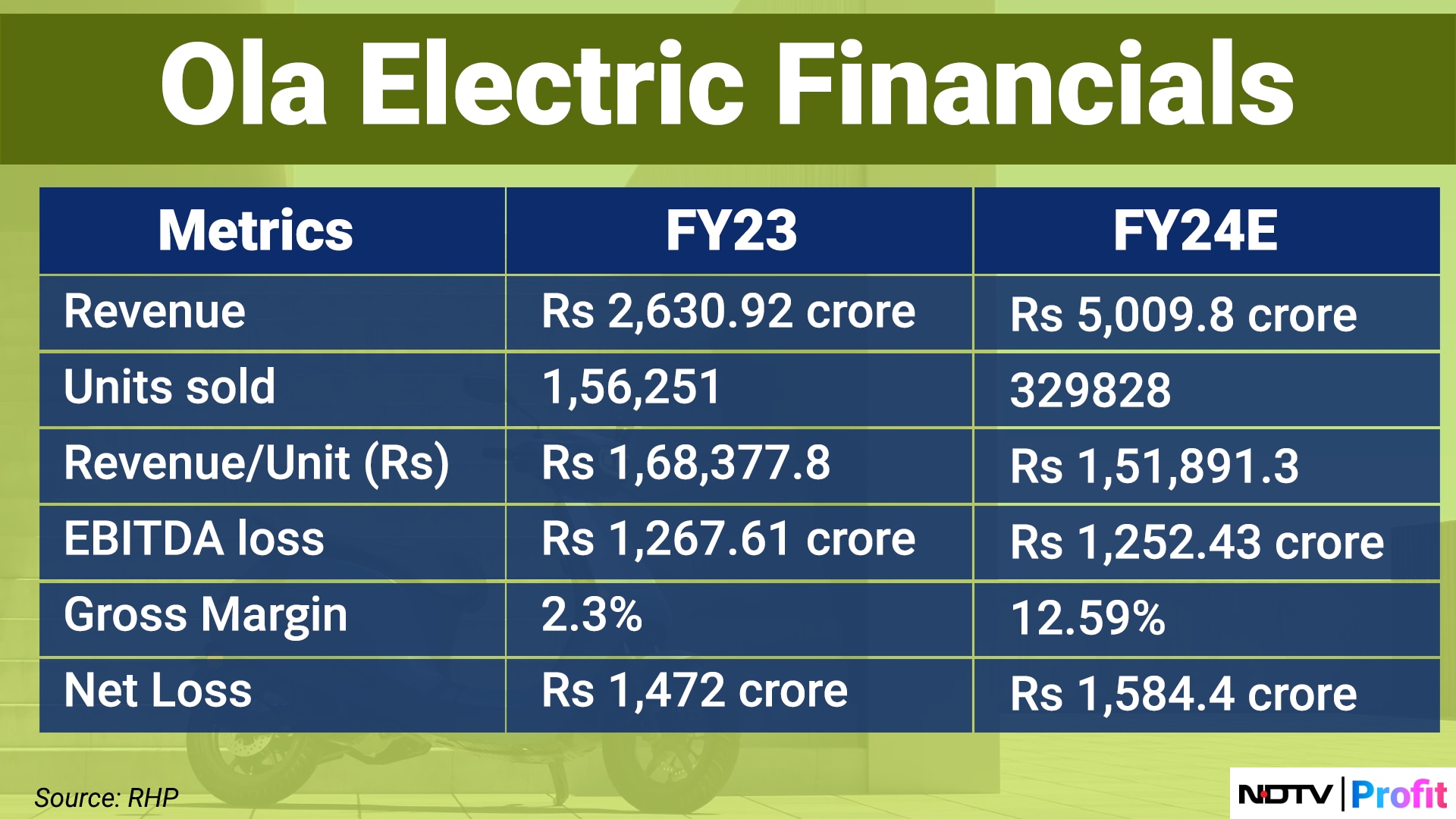
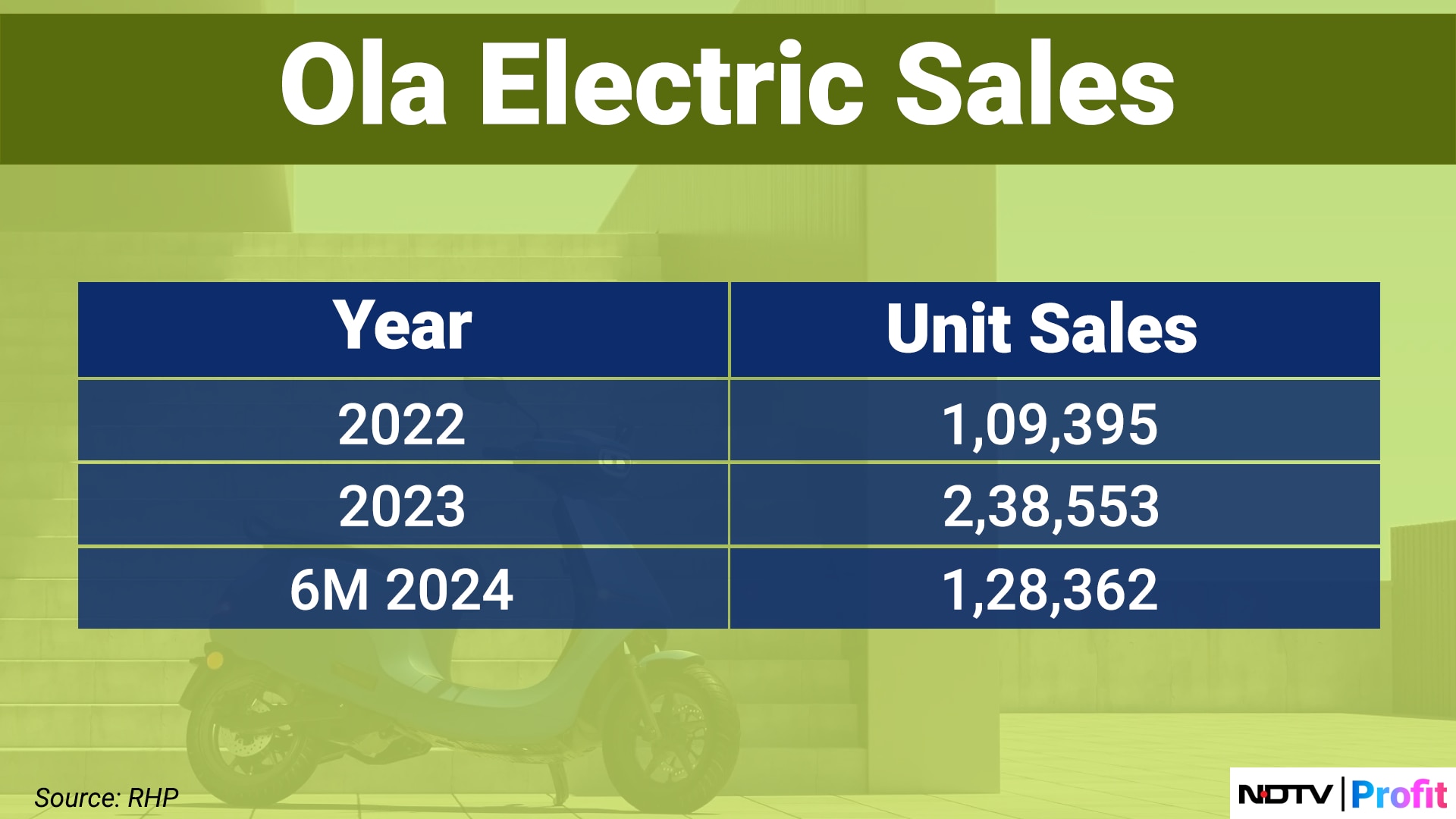
Financials
Key Risks
Any disruptions in the supply chain—local or global—can increase product costs and impact delivery timelines.
Any reduction in or elimination of EV subsidy schemes can increase the retail price of Ola's electric scooters which, in turn, will affect the ability to achieve profitability.
Ola Electric is exposed to China, by way of raw material for cell manufacturing. Any disruptions, by way of government policy or otherwise, would adversely affect this supply chain.
Cost overruns and changes in government policy, etc., can result in significant delays in completion of the remaining phases of the Ola Gigafactory.
Ola Electric's outsized investment in R&D and technology doesn't come with the assurance of desired returns on such investments.

-
Leadership As Mission: Why The Age Of AI Demands More Human Leadership

Debjani Ghosh examines how AI is changing leadership, arguing that its success must be measured by its impact on people and the accountability of those guiding its use.
-
We May Need Another Tukaram Mundhe To Fight Air Pollution | The Reason Why
Developers may install basic measures such as sprinklers and green nets, resume work, and continue violating rules when this equipment stops working.
-
Extracting Value From Battery Scrap Could Be Challenging For India | The Reason Why
A discarded lithium-ion battery still contains valuable materials such as lithium, nickel and cobalt. These can be recovered and reused. When such batteries are crushed and shredded, they produce a dark powder called black mass.
-
One El Nino, India Can Handle. Two Could Break The Granary
India's grain stocks can absorb one bad year, but a second El Nino could drain the buffer in two to three years, economists say.
-
India's Troika Of Good Luck | Joining The Dots
As Jensen Huang's exit drags Nvidia down, a cooling AI trade and resilient earnings have revived investor interest in India. A likely RBI rate hike looms.
-
Talking Points This Week: Leadership Shock At Nvidia, Earnings Strength, And The Fog Over Hormuz
The Anthropic IPO pricing and first trading day, Nvidia's upcoming earnings, and any fresh signals from Iran will set the tone for the following week.
-
Signature Play: The Classic Cocktail Is Dead. Or Is It?
Classic cocktails are disappearing from India's cocktail menus. But they're still being ordered, taught to bartenders and borrowed from. So, who's really having the last drink?
-
A New Samvat Wishlist: Inclusive Prosperity And Human Development
India has strengthened its economic foundations through infrastructure, digital access and enterprise. Its next growth chapter must deepen productivity, create better livelihoods and widen participation in prosperity.
-
Love, Sex Aur Dhokha: The Audacious Plot To Spy On Jensen Huang
A Taipei dinner, a Singapore chip buyer and a suspected Chinese asset: inside the alleged spy operation that got close to NVIDIA's Jensen Huang.
-
Ten Things I Learnt This Samvat
Patience can be a trap. Cheap stocks can stay cheap. Leverage can wipe you out. What did Samvat 2082 teach us? Niraj Shah writes on 10 lessons from the year gone by.









