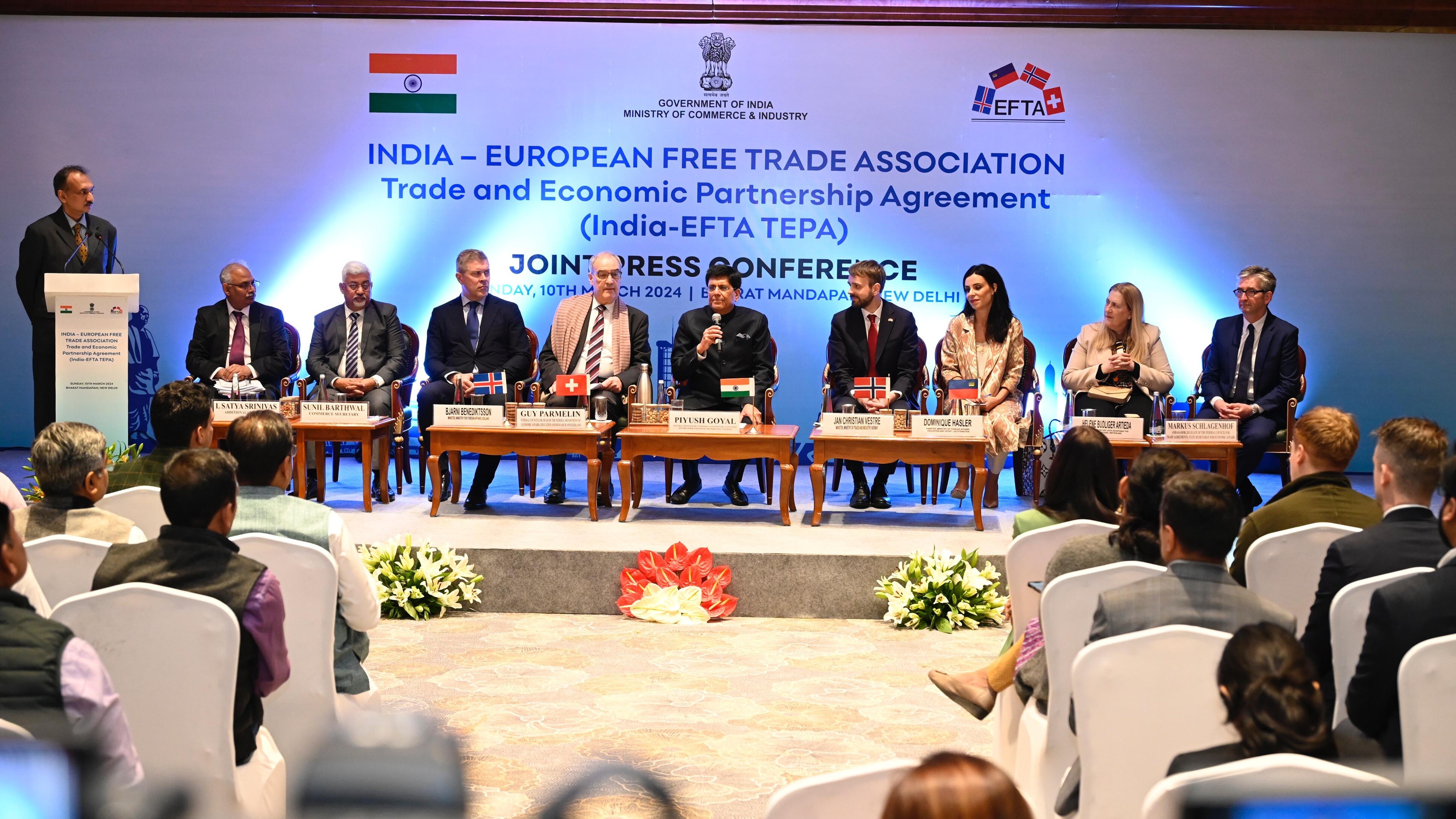
The trade pact with the European Free Trade Association will benefit from joint-venture partnerships between Indian and Swiss businesses, resulting in estimates over and above $100 billion, according to an official with knowledge of the matter.
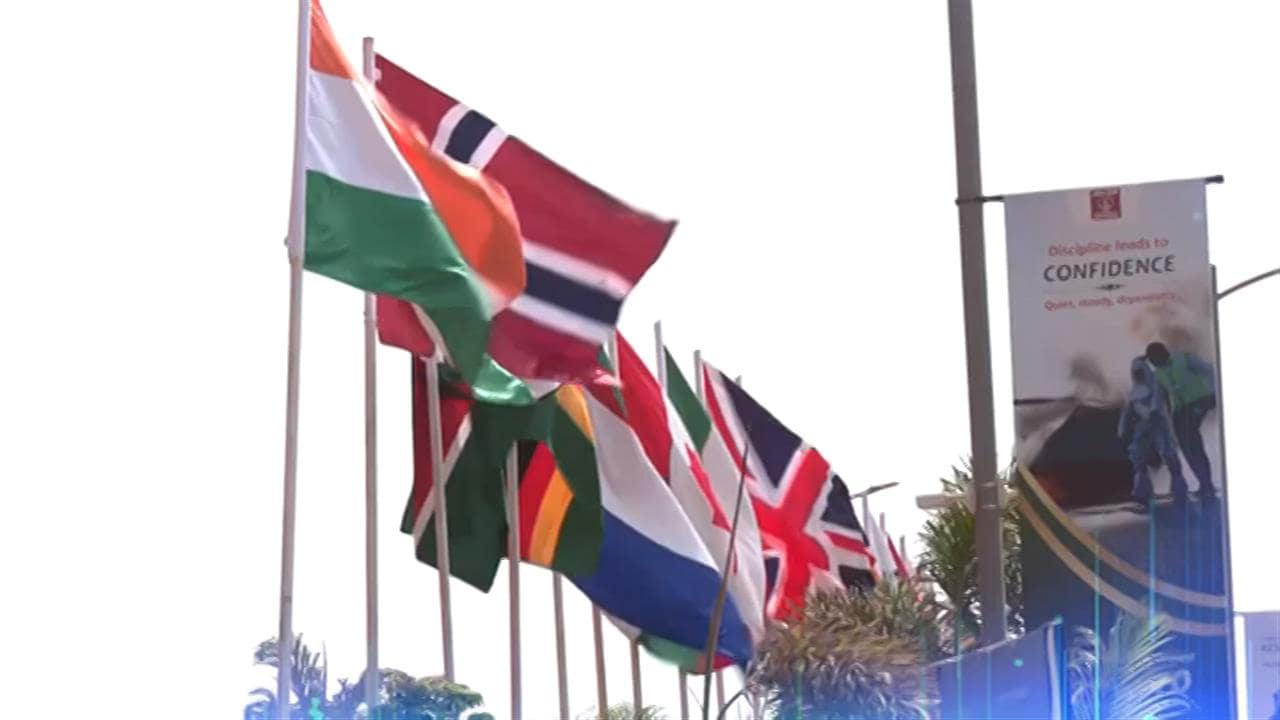
The India-EFTA trade deal was signed on Sunday with Switzerland, Norway, Iceland and Liechtenstein, targeting $100 billion in investments from the four-bloc nation over the next 15 years along with 1 million direct jobs. As part of the deal, the five nations have agreed to form an investment sub-committee with EFTA desks to promote EFTA investor interest in India.
The government mechanisms will first set up offices — including Invest India, the Union government's investment promotion initiative under the Department for Promotion of Industry and Internal Trade — which will have an EFTA desk soon, the official said on the condition of anonymity.
The current EFTA foreign direct investment in India over the last two decades has seen around 13% annual growth, resulting in a stock of $10.7 billion in 2022, according to the trade agreement.
The top sectors that have received the maximum FDI from Switzerland, the largest trading partner of the four countries, are automobiles, services sector, rubber goods and chemicals.
There is huge interest in renewable energy, green hydrogen, biotech, pharma, precision machinery, ports and connectivity. Efforts are underway by government-to-government mechanisms towards building relations between industries and encouraging sector cooperation, the official said.
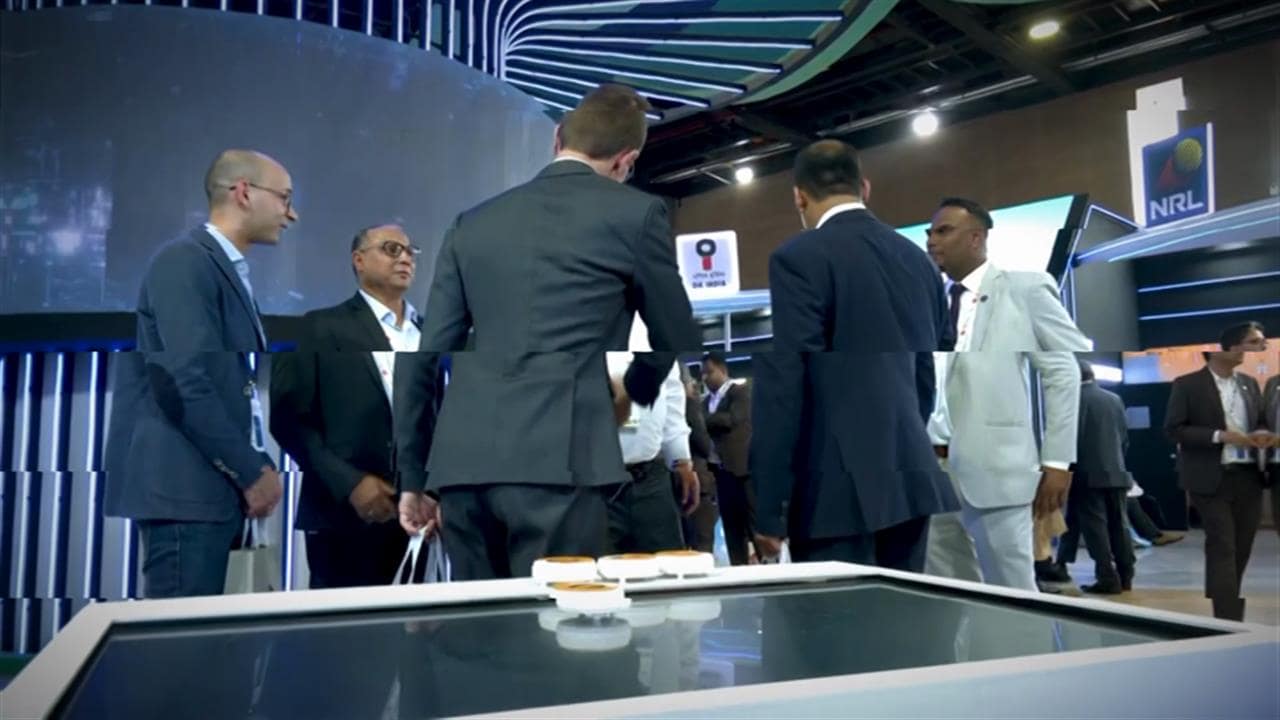
The government is expecting investment figures to be even higher because it does have Swiss-India joint ventures in the country and it sees good partnerships where they could combine and invest, according to the official.
However, there remains some skepticism from Indian trade analysts, who say that the deal has touted an ambitious investment promise, which also hinges on an estimated nominal GDP growth rate of 9.5% in dollar terms over the next 15 years. Also, notwithstanding any unforeseen circumstances like a pandemic, war, geopolitical disruptions, financial crisis or sustained economic underperformance, which would also allow the parties to rebalance the commitments. The sub-committee formed from this deal will monitor the progress of the pact and is expected to hold reviews in five-year increments.
Here's What The Swiss Stands To Gain
"The Swiss industry reaction to the deal has also been quite gung-ho," Sangeeta Godbole, a former IRS officer and trade negotiator with the Ministry of Commerce, said. "Amidst European and indeed global de-risking efforts, India is coming up as the top investment destination."
While the deal offers India a gateway to a larger European market, it also satisfies the western objective of de-risking from China.
Swissmem, an umbrella association of the Swiss technology industry, sees the free trade agreement with India as a "glimmer of hope for export companies in a difficult phase".
The Swiss technology industry exports almost 80% of its goods and services. It relies on access to global sales markets, considering that its domestic market is too small to guarantee perpetuity.
The FTA opens up new market opportunities, in particular for SMEs, via exports, but in the medium term also, by establishing their own production sites, Swissmem Director Stefan Brupbacher had said in a release.
The deal with India is one among key pacts with developing countries, as the EFTA now eyes a trade deal with Mercosur nations next. Mercosur is an association of South American countries, with Argentina, Brazil, Paraguay and Uruguay as full members. Associate countries include Bolivia, Chile, Colombia, Ecuador, Guyana, Peru and Suriname.
As far as India is concerned, the Swiss are serious about their commitments, according to Godbole.
"The trade-off of investment commitment for tariff concessions is an experiment, and we will have to see how it pans out," Godbole said. "Now, the Indian industry has to step up, take the necessary risks and come up with necessary projects where Swiss and Norwegians want to invest."
Essential Business Intelligence, Continuous LIVE TV, Sharp Market Insights, Practical Personal Finance Advice and Latest Stories — On NDTV Profit.