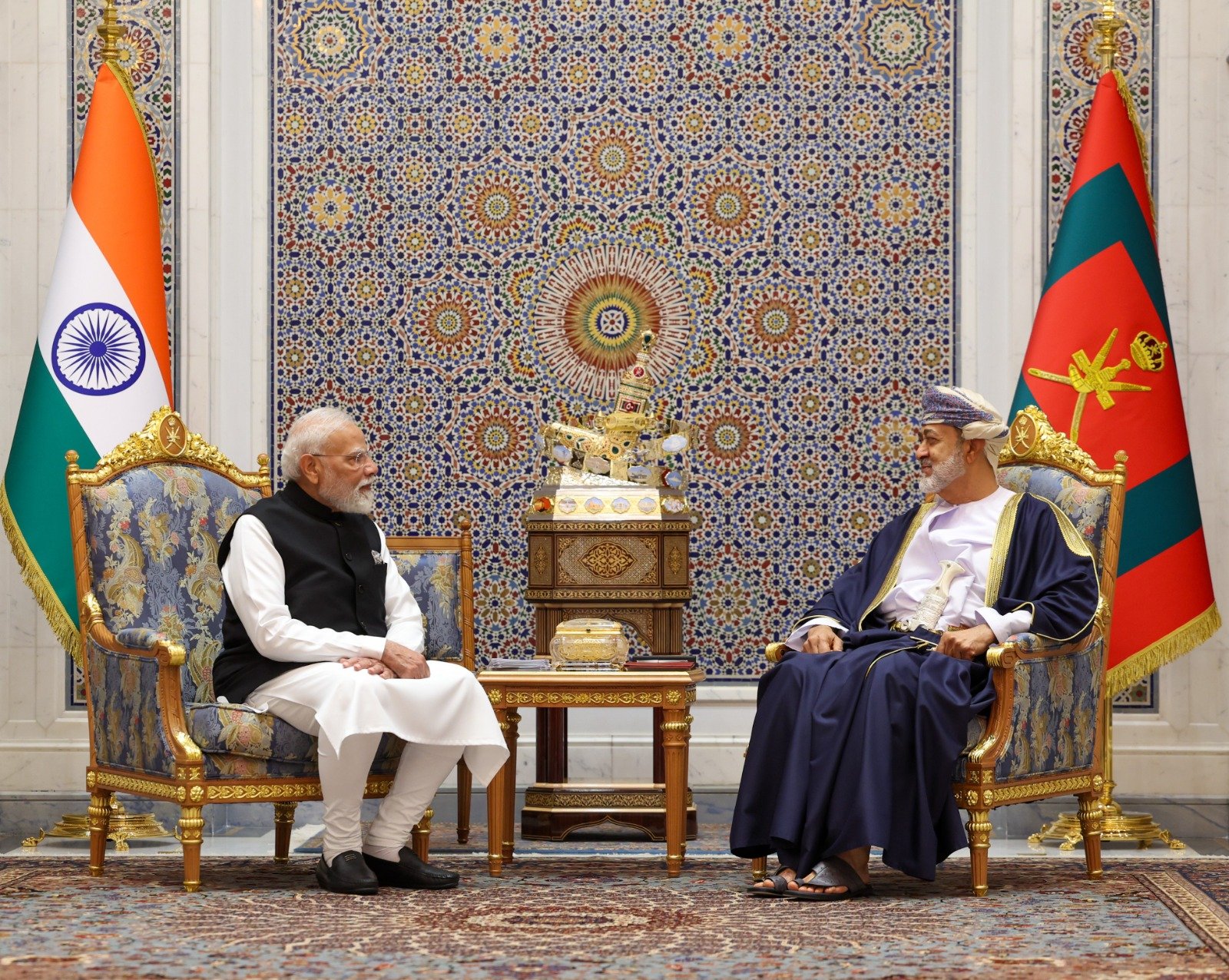
India and Oman are set to operationalise their Comprehensive Economic Partnership Agreement (CEPA) by March 2026, with New Delhi eyeing a sharp jump in exports to $6 billion within two years of the pact coming into force, according to official sources.
The India–Oman FTA, signed in Muscat today, is expected to provide a significant boost to bilateral trade by lowering tariffs on a wide range of goods, easing market access for services, and creating a more predictable investment environment. Officials said preparatory work on notifications and implementation schedules will begin immediately to ensure a smooth rollout by the March 2026 timeline.
India currently exports around $4 billion worth of goods to Oman annually. With the FTA in place, exporters expect stronger demand for Indian products such as engineering goods, chemicals, food items, textiles, electrical machinery, and consumer goods. Oman is already India's third-largest export destination within the Gulf Cooperation Council (GCC), and the agreement is seen as a gateway to deeper trade integration with the Gulf region.
On the import side, India sources petroleum products, urea and other fertilisers, and industrial raw materials from Oman, making energy security and supply-chain stability an important pillar of the agreement.
The trade deal also includes fast tracking of marketing authorisations for India's pharmaceutical products approved by international regulators such as the US FDA, European Medicines Agency, UK Medicines and Healthcare Products Regulatory Agency, etc. and wider acceptance of GMP inspection documents, reducing time and cost for Indian pharma exporters.
The pact also facilitates mutual recognition arrangements for Halal certification, acceptance of India's NPOP certification for organic products, and enhanced cooperation in standards and conformity assessment.
Sources said the CEPA includes a built-in review mechanism to ensure flexibility and course correction. The first formal review of the agreement will take place after three years, allowing both sides to assess trade flows, utilisation rates, and sectoral outcomes, and to fine-tune tariff concessions or rules where necessary.
The India–Oman pact follows India's CEPA with the UAE and reflects New Delhi's broader strategy of deepening trade ties with key West Asian partners. Officials believe the agreement will not only lift trade volumes but also strengthen investment flows, services linkages and supply-chain resilience between the two economies.
India-Oman Free Trade Pact To Give New Energy To Bilateral Relations: PM ModiEssential Business Intelligence, Continuous LIVE TV, Sharp Market Insights, Practical Personal Finance Advice and Latest Stories — On NDTV Profit.