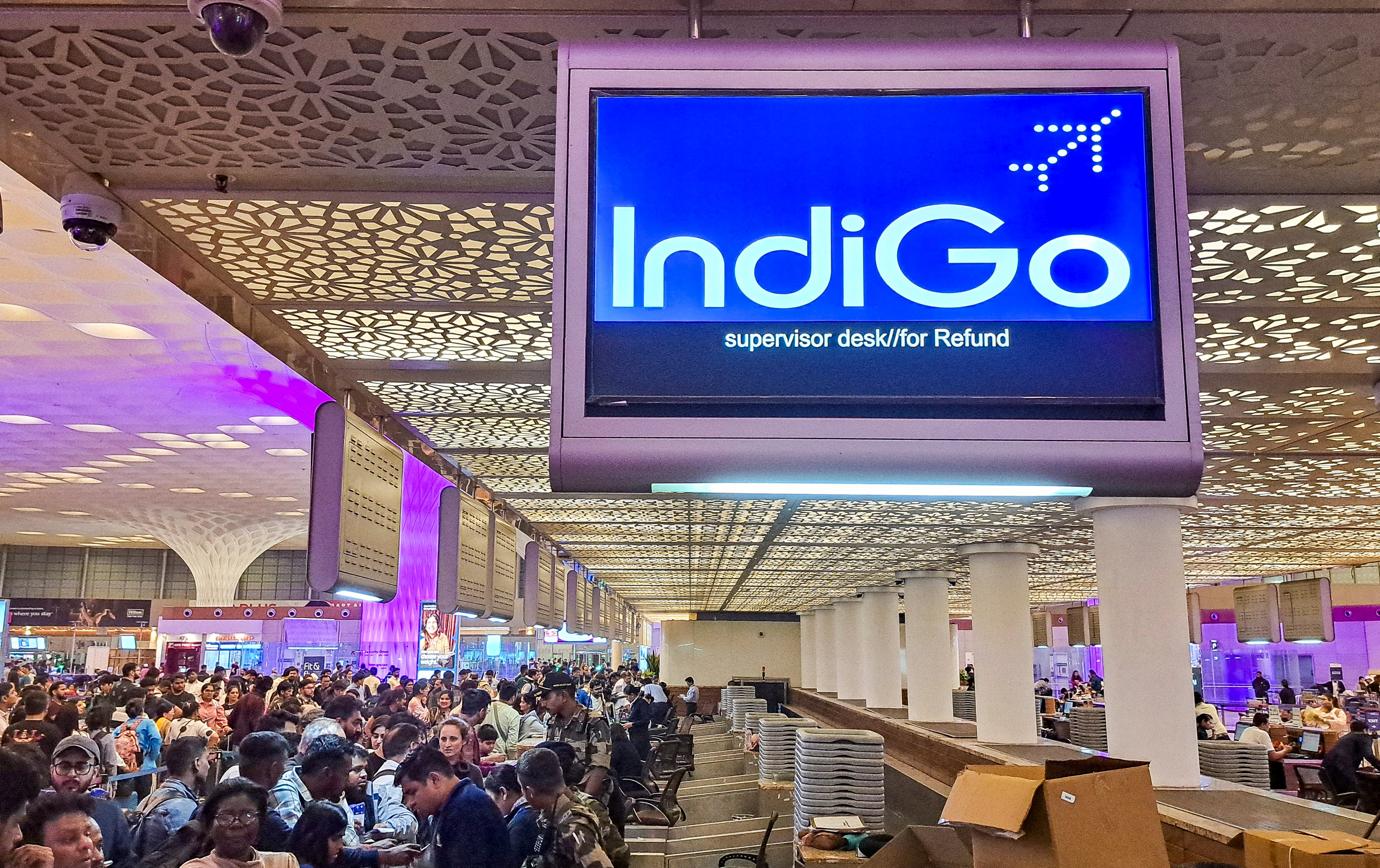
IndiGo on Friday said it has estimated a cumulative compensation cost of more than Rs 500 crore for passengers affected by the flight chaos last week.
This compensation will be rolled out for passengers whose flights were cancelled within 24 hours of departure time, according to a note issued by the airline.
The statement came a day after IndiGo announced Rs 10,000 travel vouchers for passengers who were “severely impacted” during the operational meltdown between Dec. 5 and 7.
Also Read | Layoffs Are Rising In Tech, But These Skills Are Helping People Unlock Better Pay
In its latest statement, the airline said it is currently in the process of identifying flights where customers were severely impacted and stranded at the airports on Dec. 3, 4 and 5. "We will be reaching out to all such customers in January so that compensation can be extended smoothly," it said.
"At this stage, our primary focus through December 2025 is ensuring that all refunds for affected customers are processed efficiently, expeditiously, and with the utmost urgency. Most of them have already been completed, and the remaining ones will reflect shortly," the embattled carrier added.
IndiGo Operating Over 2,000 Flights Under 'Scaled Down' ScheduleThe airline, which is India's largest in terms of market share, plunged into a chaos last week that led to the cancellation of around 5,000 flights within a span of seven days.
IndiGo has attributed a "combination of factors", including the implementation of new Flight Duty Time Limit (FTDL) norms, for the crisis that unfolded. The airline was granted a one-time exemption from the pilot fatigue norms till Feb. 10 by the government, but its operational capacity has been trimmed by 10%.
The InterGlobe Aviation-operated carrier has dismissed the allegation of intentionally planning the chaos to bypass the FDTL rules.
"The disruptions of last week did not happen because of any deliberate action," IndiGo Chairman Vikram Singh Mehta said on Wednesday. They happened because a combination of internal and unanticipated external events, which "pushed our systems beyond their limits", he stressed.
Essential Business Intelligence, Sharp Market Insights, Practical Personal Finance Advice, Daily Fuel, Gold and Silver Prices and Latest Stories — On NDTV Profit.