Festive Sales Set To Soar As Centre Pushes For Early GST Rate Cut Rollout
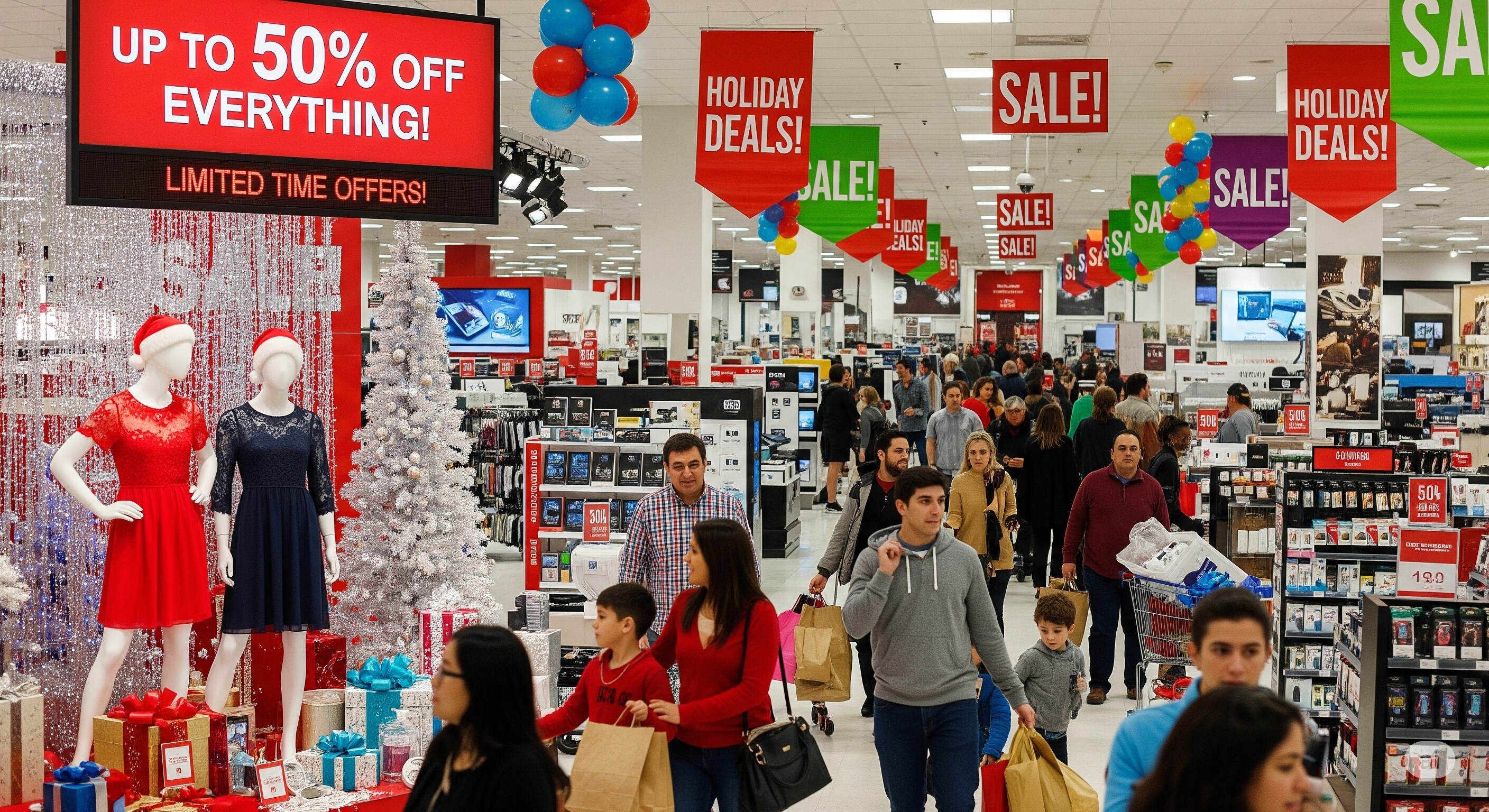
The festive season is here, and retailers irrespective of platform and size are pulling out all the stops to lure buyers and boost sales. The anticipation of an early rollout of GST rates — now coinciding with the Navratri festival in September rather than October — is further prompting brands to frontload stocks and tailor their offers and schemes as they gear up to capitalise on increased consumer spending during this peak sales period.
Industry executives project a 20-30% sales growth this festive season, with early signs suggesting strong consumer sentiment across both brick-and-mortar stores and e-commerce channels. The proposed GST cut, which would lead prices to fall at least 8-9%, coupled with easy financing schemes and other offers would lift retailers out of a demand slump this year.
"Early indicators of festive sales suggest strong consumer sentiment," said Nilesh Gupta, MD at electronic retail chain, Vijay Sales. "Further, a lower tax rate will definitely push festival demand much higher than expected."
Shoppers Stop is currently running a Grand Festive Sale offering up to 50% off across various brands including Biba, Allen Solly, Versace, and more.
Online-focussed brands are also expecting a surge, with the annual flagship sales of Amazon and Flipkart scheduled around Navratri. Flipkart's Big Billion Days and Amazon's Great Indian Festival will start from Sept. 16-20 coinciding with the GST rate cuts taking effect, said industry executives.
"If the GST cut materialises early, it will act as a multiplier for demand, enabling more households to access smart TVs and connected appliances," said Avneet Singh Marwah, CEO of Super Plastronics Pvt. The company is licensed to sell brands such as Kodak, Thomson, and Blaupunkt in India.
Singh expects 20% year-on-year growth in sales this festive season. "This will be a great comeback for AC and smart TVs above 32 inches, both of which may come under 18% tax slab from current 28%."
The festive season is the largest consumption period for India, accounting for 30-40% of annual sales for categories such as apparel and electronics. For online platforms, particularly, the flagship sales contribute 40-50% of the total festive sales, making it their largest and busiest business period.
"We're expecting a robust 25–30% growth in festive e-commerce sales this year compared to 2024 when sales touched over Rs 1 lakh crore," said Satish Meena, founder at Datum Intelligence, a consulting firm focused on e-commerce and consumer trends. "The anticipated GST rate cuts on big-ticket items such as TVs, appliances, and furniture are expected to play a catalytic role as these are among the largest online retail categories and are highly price sensitive. We believe this tax relief will unlock meaningful volume growth."
Myntra has been expanding quick deliveries under its MNow service ahead of the festive season to handle high-volume orders. On Monday, the company rolled out M-Now in Hyderabad. This expansion is backed by Myntra's growing network of over 60 dark stores across the country.
The all-powerful GST Council will meet on Sept 3–4 in the national capital to deliberate on the simplified two-structure GST tax slab of 5% and 18% proposed by the Centre. Sources told NDTV Profit that the new GST tax slabs is now expected around Sept. 22 to boost India's festive demand.

-
Where You Live Shapes How You Get To Work | The Reason Why

Two-wheelers are the most popular way to get to work in India, accounting for nearly 43% of workplace commutes.
-
High US Salaries, No Green Card Certainty: The Financial Calculation Facing Indian H-1B Families
The suspension of PERM processing at eight technology employers does not cancel existing H-1B visas. What it does is force a question many Indian families have been avoiding: is the US salary worth tying your career and family plans to one employer?
-
Unhedged Position: Can India See An Indonesia-Style Time Correction?
The Nifty is trading below levels it first clocked in 2024. Is there, then, as I have suggested in the headline, potential that the current time correction drags on painfully for the next three-five, even ten years?
-
Navigating Friction And Energy Realities: An Analysis Of Marco Rubio's October Visit To India
Occurring at a critical juncture marked by stalled trade negotiations and escalating geopolitical pressures over global energy supplies, the visit offers a profound window into modern US-India relations.
-
India Exports Capital. Why Not Export Trusteeship?
The big question, then, is whether India can build an institution that global borrowers, investors, banks, and lawyers can trust, even without an Indian connection.
-
France's Economy & Politics Are In Crisis | The Reason Why
Let's look at how the French economy and politics evolved under Nicolas Sarkozy, Franois Hollande and Emmanuel Macron.
-
You May Inherit The Business. You Must Earn Its Credibility.
Succession tests the founder's ability to share authority as much as it tests the next generation's readiness to assume it.
-
Signing Deals Is One Thing; Making Them Work Is Another | The Week In Whys
Sometimes, things don't turn out as planned. Indian companies have lost some bids to rivals, some projects won't produce until 2030.
-
FOMC Wall, PERM Suspension, Hospital Stocks | Talking Points This Week
A PERM suspension would directly affect green-card sponsorship rather than H-1B visas, so the near-term earnings impact could remain relatively limited. The key question is whether this marks a new phase in US scrutiny of Indian IT.
-
Everything, Everywhere, All At Once: Dalal Street's Week To Forget | Joining The Dots
Visa curbs, a Starlink spat and cancer drug caps: what connects this week's shocks for Indian markets









