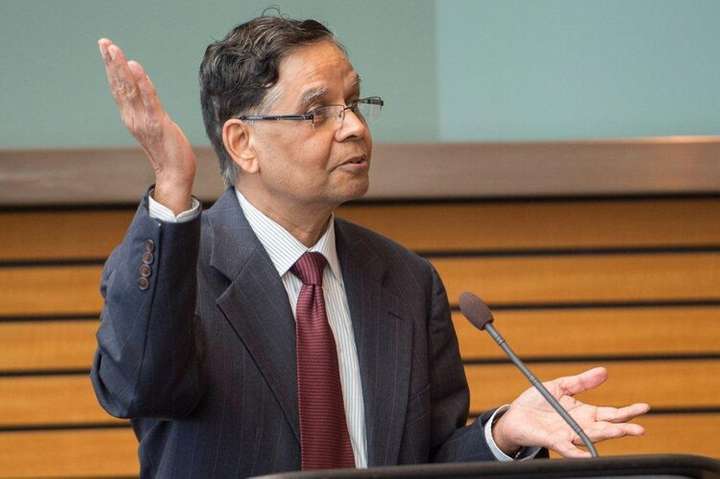
Arvind Panagariya said he prefers the now-scrapped electoral bonds for keeping black money away from election donations.
The Sixteenth Finance Commission Chairperson invoked former Finance Minister Arun Jaitley in a conversation with NDTV Profit's Tamanna Inamdar to state that the bonds were an improvement over cash. This was his first interview since his appointment to the office in December.
"I found his (Jaitley's) argument reasonably persuasive that, absent the (electoral) bonds, we go back to cash. The bonds were an attempt to solve the problem that this would encourage corporations to report what they are donating," the eminent economist said.
Even though the electoral bonds were only "half transparent," they reduced the role of black money, he said. Donations can be traced back to corporations, Panagariya highlighted, adding that cash does not offer this benefit.
"Can this lead to a situation where we get transparency on both sides—who donated to whom and how much? That still looks like a distant possibility," the former Niti Aayog vice chairman said.
In a Feb. 15 ruling, a Supreme Court bench unanimously struck down the electoral bond scheme as unconstitutional. The court ordered the State Bank of India to stop issuing these instruments. Bonds not encashed have to be returned to the purchasers.
The apex court has asked the state-run bank to disclose the unique identification codes of the bonds to identify the purchasers and the receiving political parties.
'Expect Fed Rate Cut Later This Year'
Stating that CPI inflation around 5% is "well within my tolerance limit," Panagariya said he was happy with what the Reserve Bank of India has done.
India's retail inflation remained steady at 5.09% in February as an uptick in food prices countered record lows in core inflation. The price rise has been around 5%, close to the RBI's tolerance level of 4-6%, for the past six months now.
Inflation levels of this kind are generally helpful in an economy like India by giving some space for relative prices to adjust, said Panagariya.
While the Bank of Japan's policy decision does not hold much sway over the Indian economy, key rate decisions by the Federal Open Market Committee affect the world, he said.
Panagariya said he expects the U.S. Federal Reserve to cut rates sometime later this year.
Fed Chair Jerome Powell is scheduled to announce the decision on March 20.
Watch the full interview here | Exclusive
Essential Business Intelligence, Sharp Market Insights, Practical Personal Finance Advice, Daily Fuel, Gold and Silver Prices and Latest Stories — On NDTV Profit.