Meet Zohran Mamdani — First Indian-American Muslim Mayor Of New York
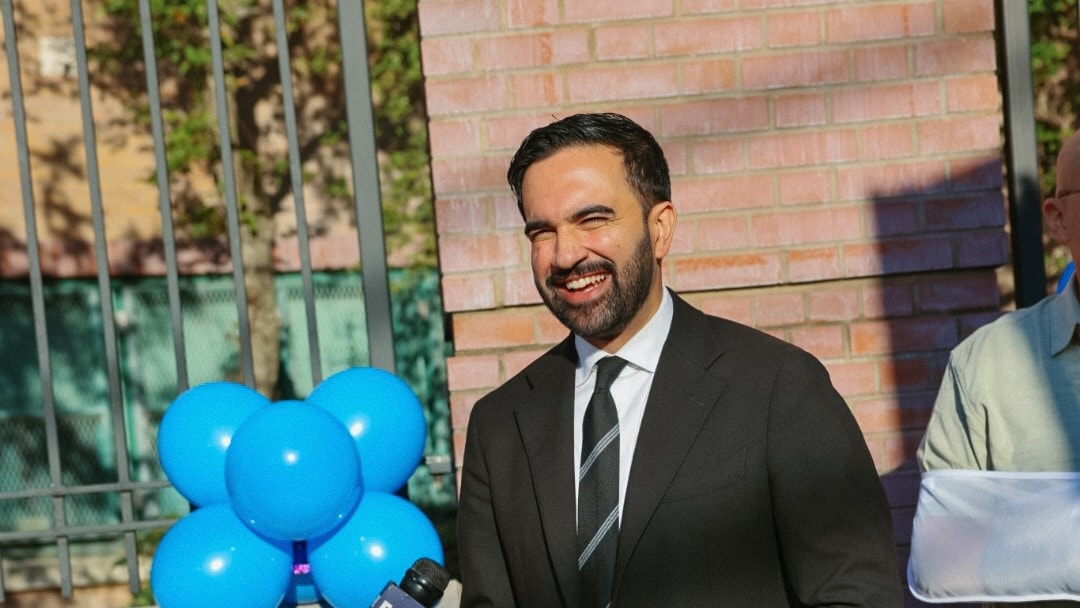
Zohran Mamdani has won the New York City mayor's race after a historic voter turnout on Tuesday. He is New York City's first Muslim mayor, the first of South Asian heritage and the first born in Africa.
The 34-year-old will also become the city's youngest mayor in more than a century when he takes office on January 1.
More than two million voters cast their ballots, the highest participation seen in the mayoral polls of New York in over three decades.
Democratic nominee, Mamdani, trounced former Governor Andrew M. Cuomo and Republican Curtis Sliwa. He secured more than 50% of the vote and was seen leading in the Bronx, parts of Queens, Brooklyn and Manhattan as soon as counting started. Cuomo performed better in Staten Island, southern Brooklyn, and some neighborhoods of Queens.
Mamdani's campaign deeply resonated with youngsters in the state as he focussed on affordability, housing and progressive change. He won the Democratic nomination after defeating Cuomo in the primary. Cuomo later decided to run as an independent and secured 40% of the overall vote.
Who Is Zohran Mamdani?
The newly elected New York mayor was earlier state assemblyman representing part of Queens. The Democratic socialist has become one of the city's most talked-about politicians. His strong social media presence and campaign focused on affordability was a key factor that drew support from younger voters.
Mamdani has pledged to make city buses free, provide free child care for children up to age five and freeze rent in rent-stabilized apartments.
He is the son of acclaimed filmmaker Mira Nair and academic Mahmood Mamdani. Mamdani was born and raised in Kampala, Uganda. He moved to New York City with his family at age seven. A graduate of the city's public schools, he later earned a degree in Africana Studies from Bowdoin College.
In 2018, Mamdani became a naturalised American citizen. Before joining the State Assembly, he worked as a foreclosure prevention housing counsellor, helping low-income homeowners in Queens avoid eviction.
He now represents the 36th Assembly District, which includes Astoria, Ditmars-Steinway and Astoria Heights. Mamdani is the first South Asian man to serve in the New York State Assembly. He is also the first Ugandan and only the third Muslim in its history to achieve this feat.

-
Indians Stay With Family, Not In Hotels | The Reason Why

India still lacks enough clean, reliable and affordable hotels for budget-conscious travellers.
-
The Economic Imperative: Analysing The Material Driving Force Behind India-Canada Strategic Reset
This economic complementarity is further reinforced by deep institutional investment ties and talent mobility, which form the bedrock of the bilateral framework.
-
Medicine Pricing: Where Must Profit Stop?
India must confront excessive margins, hidden incentives and regulatory gaps that threaten the integrity of medicine.
-
Why Amazon And Flipkart Are Struggling To Beat Meesho In India's Smaller Cities
With 274 million users and lowest-cost logistics, Meesho is defending its value commerce crown against giants like Amazon and Flipkart.
-
High US Salaries, No Green Card Certainty: The Financial Calculation Facing Indian H-1B Families
The suspension of PERM processing at eight technology employers does not cancel existing H-1B visas. What it does is force a question many Indian families have been avoiding: is the US salary worth tying your career and family plans to one employer?
-
Swiggy vs Eternal: Food Delivery's Two Rivals Are No Longer In The Same Race
Eternal is building a private AI assistant, dark.ai. Swiggy is still working out how to make Instamart pay, with an operating loss of Rs 895 crore in the July-September quarter while Blinkit stayed profitable.
-
Where You Live Shapes How You Get To Work | The Reason Why
Two-wheelers are the most popular way to get to work in India, accounting for nearly 43% of workplace commutes.
-
Unhedged Position: Can India See An Indonesia-Style Time Correction?
The Nifty is trading below levels it first clocked in 2024. Is there, then, as I have suggested in the headline, potential that the current time correction drags on painfully for the next three-five, even ten years?
-
Navigating Friction And Energy Realities: An Analysis Of Marco Rubio's October Visit To India
Occurring at a critical juncture marked by stalled trade negotiations and escalating geopolitical pressures over global energy supplies, the visit offers a profound window into modern US-India relations.
-
India Exports Capital. Why Not Export Trusteeship?
The big question, then, is whether India can build an institution that global borrowers, investors, banks, and lawyers can trust, even without an Indian connection.










