

Who Is Delcy Rodríguez? — From Socialist Radical To Capitalist Fixer-In-Chief
Rodríguez, 56, was not business-minded when she entered politics. She is the daughter of Jorge Antonio Rodríguez, a Marxist guerrilla leader and founder of the Liga Socialista in the 1970s.



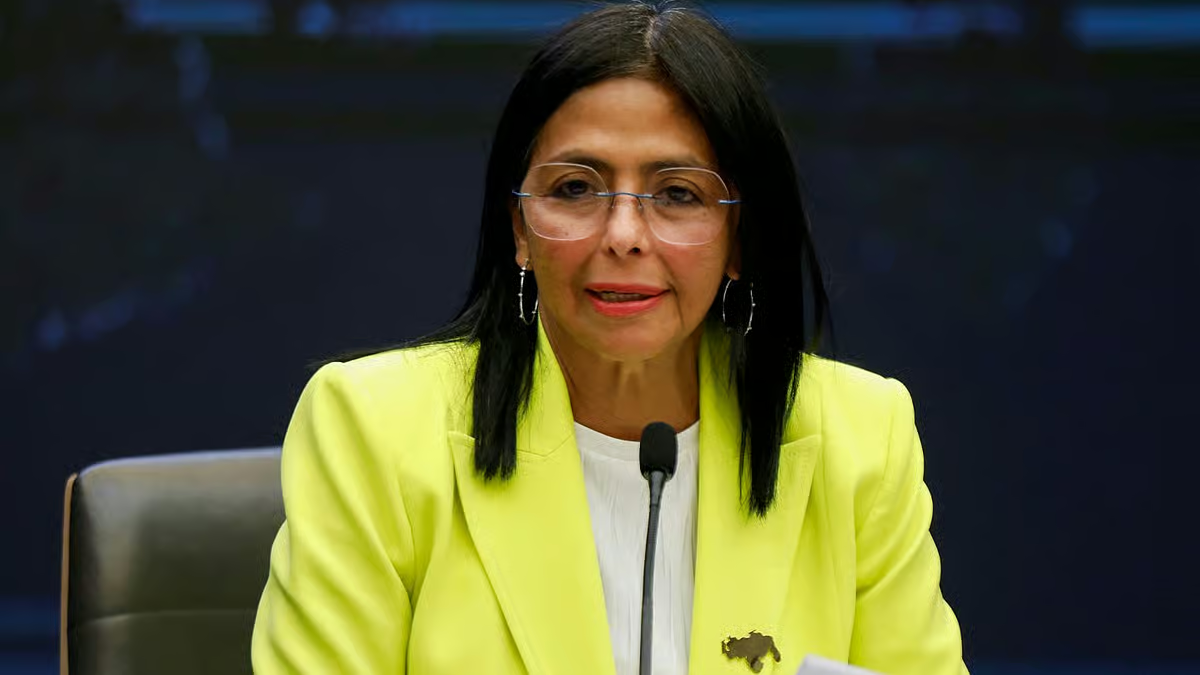
When Venezuela’s Supreme Court named Delcy Rodríguez acting president on Saturday, after Nicolás Maduro and his wife were detained by the US army, it capped one of the most striking political evolutions in modern Venezuelan power circles — that of a lifelong socialist who ultimately became the steward of capitalist survival.
Rodríguez, 56, was not business-minded when she entered politics. Born in Caracas to a fiercely ideological family, she is the daughter of Jorge Antonio Rodríguez, a Marxist guerrilla leader and founder of the Liga Socialista in the 1970s. The language of revolution shaped her early worldview, reinforced by a law degree from the Central University of Venezuela and formative years in left-wing activism.
Enforcer Of The Chávez–Maduro Order
Her ascent accelerated after the death of Hugo Chávez in 2013. Under Nicolás Maduro, Rodríguez became minister of communication and later foreign minister, emerging as one of the government’s most aggressive defenders.
On international stages, including the United Nations, she rejected accusations of democratic erosion and human rights abuses, framing Venezuela’s crisis as the product of foreign interference.
In 2017, she was appointed president of the Constituent National Assembly, a body that neutralised the opposition-controlled legislature and dramatically expanded executive power. A year later, Maduro elevated her to vice president — cementing her role as a core loyalist and political operator.
A Quiet Pivot To Capitalism
By the late 2010s, Venezuela’s economic crisis had reached a breaking point. Oil prices had collapsed, US sanctions tightened, and years of mismanagement hollowed out the state. Rodríguez, who took on expanding economic responsibilities in 2020 and later the oil portfolio, confronted a reality ideology could not fix.
What followed was a pragmatic turn few would have predicted. Rodríguez eased price controls, allowed partial dollarisation, privatised select state assets, and adopted more conservative fiscal policies. She opened channels to business elites once vilified by the regime and focused on restoring oil output despite sanctions.
The shift was less about reform than survival. Inflation cooled, oil production stabilised, and a fragile private sector re-emerged. Even some US officials acknowledged her reputation as a technocrat capable of executing policy.
That transformation now defines Rodríguez’s leadership as she steps into the role of acting president following Maduro’s detention. Publicly, she continues to insist that Maduro remains Venezuela’s legitimate leader, underscoring her loyalty to the system that elevated her.