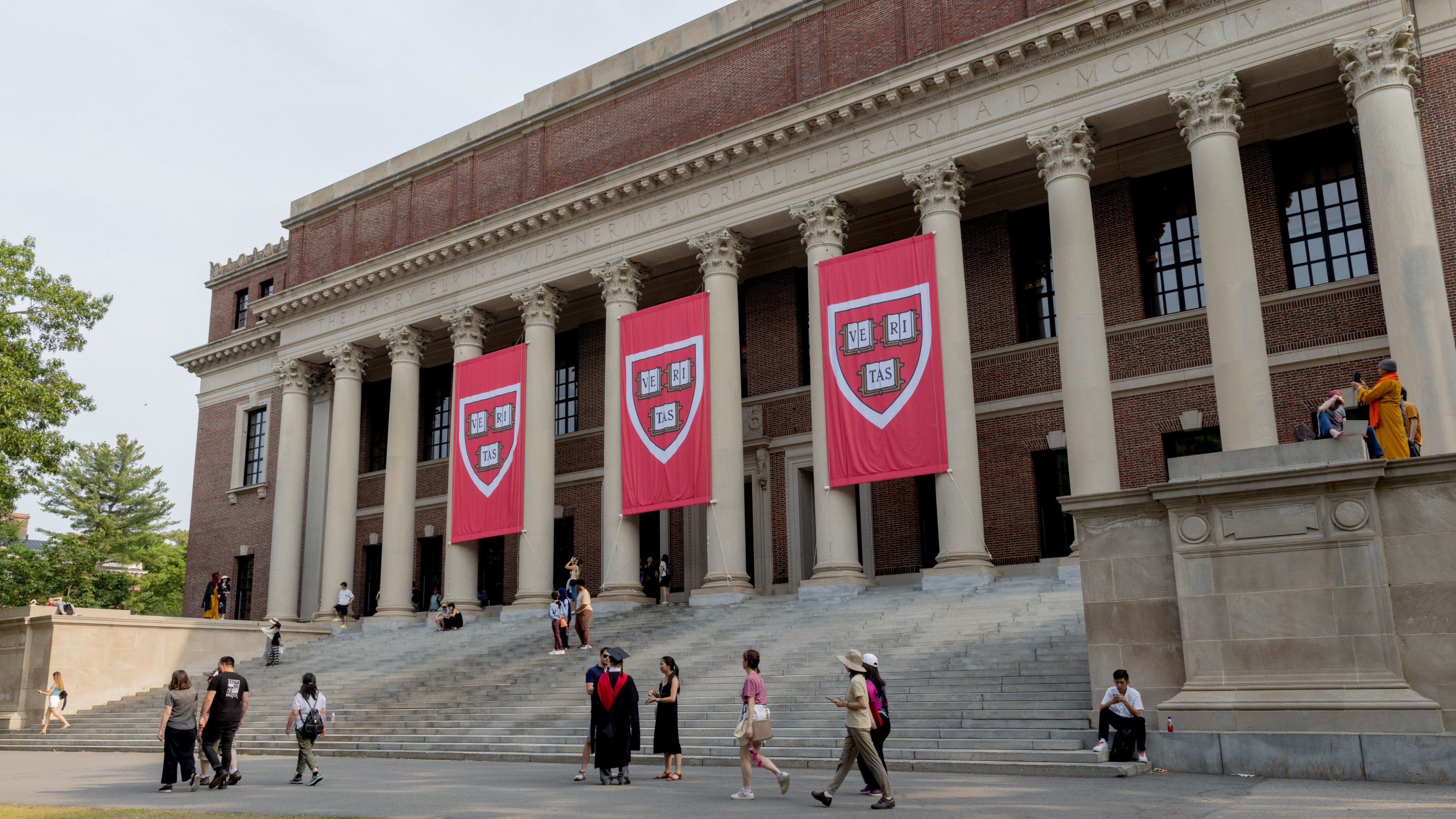
The Trump administration appealed a judge's ruling that it illegally froze more than $2 billion in research funding to punish Harvard University for refusing to comply with a host of demands from the federal government.
US lawyers filed a notice of appeal on Thursday, more than three months after US District Judge Allison Burroughs ruled that the Trump administration had violated Harvard's free-speech and due-process rights.
Harvard has been the main target of President Donald Trump's efforts to reshape elite higher education, a campaign that first focused on allegations of campus antisemitism and later grew into a much broader attack on diversity programs and perceived political bias.
Since her Sept. 3 ruling, the government has released the majority of Harvard funding that it had frozen. Trump said on Sept. 30 he was close to a $500 million deal with Harvard, which would operate trade schools. But no agreement has emerged, and the appeal suggests the two sides may be far from a settlement.
The US couldn't appeal until Burroughs issued a final judgment of her order, which came on Oct. 20. She permanently barred the US from enacting funding freezes in retaliation for Harvard exercising its First Amendment rights or its purported violations of the Civil Rights Act of 1964.
Harvard Says US To Restore Some Research Funds After FreezeWhile Trump initially accused Harvard of failing to tackle antisemitism on campus following Hamas' October 2023 attack on Israel, the fight broadened to include allegations of political bias, scrutiny of its ties to China and opposition to diversity efforts.
In her ruling, Burroughs said the administration has used antisemitism as a “smokescreen” to attack universities, and its focus on antisemitism at Harvard was at best “arbitrary and, at worst, pretextual.”
The Trump administration froze research funding to Harvard in April after the school refused to comply with a series of government demands over governance, admissions and hiring practices. When Harvard sued on April 21, Alan Garber, the university's president, said the consequences of the government's overreach would be “severe and long-lasting.”
Harvard Wins Ruling In Lawsuit Over $2 Billion Funding Freeze By TrumpHarvard, the oldest and richest US university, revealed the extent of that financial strain in a financial report. The school recorded a $113 million deficit for the fiscal year ended June 30, its first operating loss since 2020. Its endowment rose to $56.9 billion, but it faces a larger tax on college endowments.
“Even by the standards of our centuries-long history, fiscal year 2025 was extraordinarily challenging, with political and economic disruption affecting many sectors, including higher education,” Garber wrote in a letter with the report, released Oct. 16.
Harvard has announced a hiring freeze and job cuts, limited pay raises and scaled back projects and expenditures. Harvard's engineering school announced layoffs, citing the higher endowment tax and shifts in federal funding.
The White House has engaged in an aggressive campaign to upend higher education, which has seen billions of dollars in research grants frozen along with dozens of civil rights investigations related to accusations of antisemitism on campuses and alleged discrimination in admissions and hiring.
Penn, Brown, Northwestern, Cornell and Columbia all agreed to settle with the administration to restore crucial funding.
Trump Predicts ‘Many More' University Settlements Despite Harvard RulingEssential Business Intelligence, Continuous LIVE TV, Sharp Market Insights, Practical Personal Finance Advice and Latest Stories — On NDTV Profit.