

Myanmar Votes In Second Phase As Military Party Claims Lead
Myanmar is holding its first polls since the junta seized power in a bloody 2021 coup that ousted Aung San Suu Kyi and kicked off a civil war.



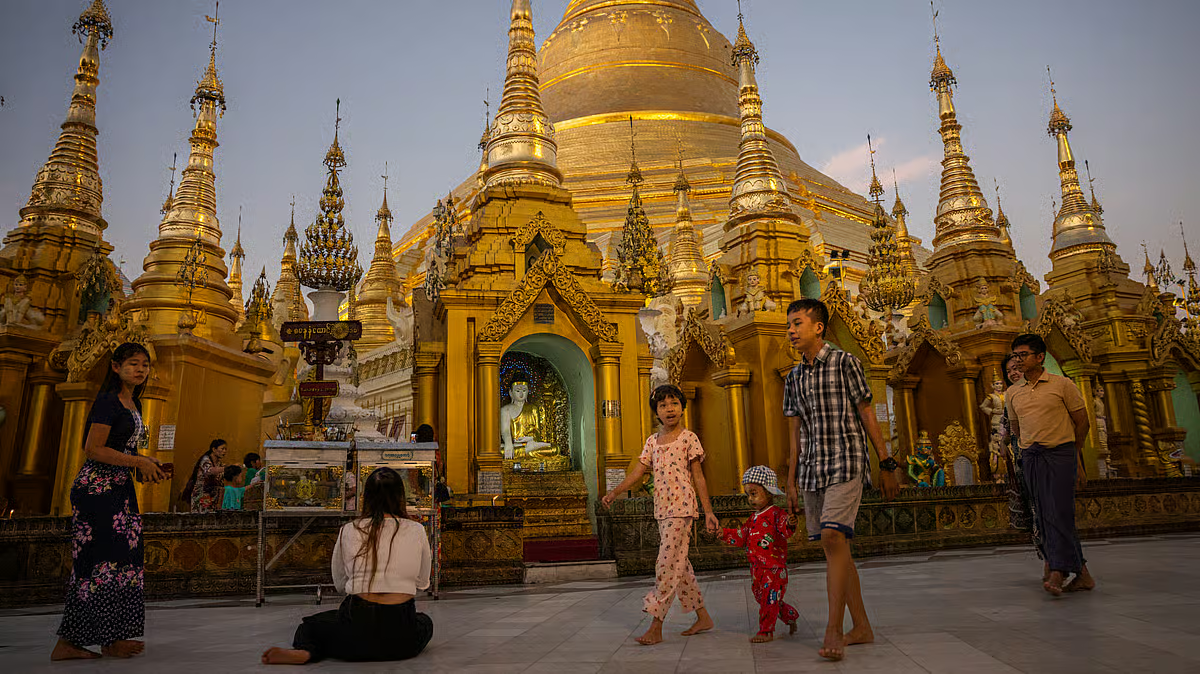
(Photo: Lauren DeCicca/ Bloomberg)
Myanmar voters returned to the polls in military-controlled areas on Sunday for the second phase of an election organized by the ruling junta, a process rejected by several western governments and rights groups as lacking legitimacy.
Voting is taking place in 100 of Myanmar’s 330 townships in this round, according to the junta-run Union Election Commission. But even within those areas, polls aren’t open in hundreds of wards and village tracts because of security concerns amid nationwide civil conflict since the regime took power in a coup nearly five years ago.
The vote follows a first phase held last month in 102 mostly urban townships. Results from that phase indicate the military-backed Union Solidarity and Development Party, or USDP, is positioned to dominate national and regional legislatures. The third and final phase of the general election will be held on Jan. 25.
Myanmar is holding its first polls since the junta seized power in a bloody 2021 coup that ousted Aung San Suu Kyi and kicked off a civil war. It hopes the phased elections will give it a veneer of legitimacy and help it return to the global stage.
At stake for the junta is a chance to end its broad isolation and renew investments, making the case that it’s following the constitution and holding elections under leader Min Aung Hlaing. Myanmar’s generals have access to vast rare-earth reserves and a strategic maritime corridor linking India and Southeast Asia.
USDP spokesman Hla Thein said the party has won 89% of the seats in results announced so far by the election commission. As of Jan. 10, the USDP has secured 102 seats in the Lower House, 21 seats in the Upper House and 108 seats in state and region parliaments. Several ethnic-centric parties won a small number of seats, mainly at the regional level.
“We are best-prepared this time so we aim to win the best results in all the three phases,” Hla Thein said by phone. “We have yet to choose who will be nominated as vice presidents and cabinet members but we expect to see a clear picture of which party will win the election when the results of Phase 2 are out.”
Junta spokesman, Major General Zaw Min Tun, said the turnout in the first phase was 52.1%, with more than six million people voting. Myanmar has a population of over 51 million.
At a polling station in Yangon’s Bahan township, only a quarter of the some 2,000 eligible voters had turned up by 11:30 a.m. local time. Many were reluctant to speak to the media in a country with a history of cracking down on dissent through violence or prison.
Those who did say they didn’t expect the result to change much the situation on the ground, and were only voting to avoid retaliation later.
“We are just worried that we may face some difficulties in communicating with authorities in the future if we don’t come to the polls today,” said Nu Nu, 30, a shopkeeper. “We want to see a brighter future for Myanmar post-election, but honestly don’t see it coming.”
The United Nations and Western governments have rejected this election, citing the detention of opposition figures and their exclusion from the polls. Civilian leader Aung San Suu Kyi remains in prison, and her National League for Democracy, which won the 2015 and 2020 elections by a landslide, has been dissolved and barred from contesting.
Notably absent from that condemnation is the US, which previously led international sanctions against the regime before President Donald Trump returned to office. Secretary of State Marco Rubio said earlier this month only that Washington remained “deeply concerned” over the Myanmar crisis.
China on the other hand has continued to engage with the junta. State media last month quoted Chinese envoy Deng Xijun as saying “the successful conduct of these elections” reflected cooperation between Min Aung Hlaing and President Xi Jinping.
Criticism of the vote has been much louder elsewhere. The Special Advisory Council for Myanmar, an independent group of human rights experts, said the election had been “engineered to ensure victory for the junta’s proxy party.” The group said voting was canceled at thousands of polling stations during the first phase, in some cases hours before polls were due to open.
“Governments, including Asean members, must put an end to this farce now by outright rejecting this fraud and engaging with Myanmar’s legitimate pro-democracy actors,” said council member and former UN Special Rapporteur Yanghee Lee.
Opposition parties participating in the vote have raised concerns over irregularities, particularly involving advance voting, while others filed complaints with the election commission. Kyaw Lin, secretary of the People’s Party, told Bloomberg that advance ballots were “contradictory in many constituencies.”
Union Election Commission Chairman Than Soe has said advance voting was conducted “accurately and transparently.”
“Even though the UEC chairman said they acted in accordance with the procedures, there were some irregularities on the ground in Phase 1, particularly when it comes to advance votes,” Kyaw Lin said. His party has won one seat in a regional assembly so far.