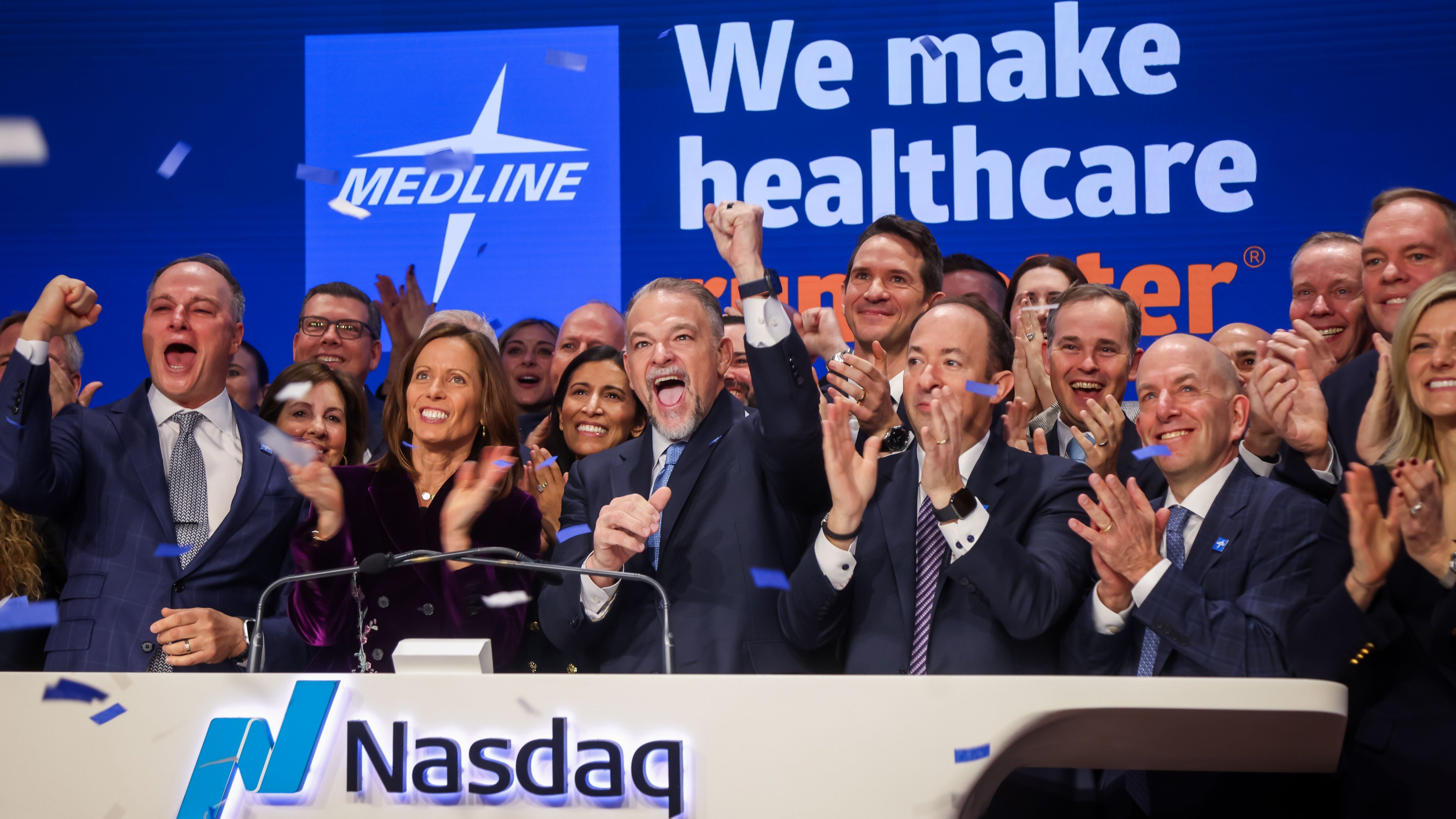
Medline Inc. shares surged 41% in their trading debut, after the medical supplier raised $6.26 billion in the year's biggest initial public offering.
The shares closed at $41 each on Wednesday in New York, versus the IPO price of $29. Medline, which counts Blackstone Inc., Carlyle Group Inc. and Hellman & Friedman among its backers, sold 216 million shares in an upsized offering that priced near the top of the marketed range.
The trading gives the company a market value of about $55 billion, based on the shares listed in its regulatory filings.
Also Read | Layoffs Are Rising In Tech, But These Skills Are Helping People Unlock Better Pay
Medline manufactures and distributes medical supplies such as gloves, gowns and exam tables used by hospitals and doctors. The three private equity firms sealed a $34 billion deal to acquire a majority stake in the company in 2021, in one of the largest leveraged buyouts of all time.
The IPO surpassed the previous largest listing this year, Chinese battery maker Contemporary Amperex Technology Co. Ltd.'s $5.26 billion Hong Kong offering. In the US, it's the biggest IPO since Rivian Automotive Inc.'s $13.7 billion deal in 2021.
The IPO pricing gave the company a market value of about $39 billion, based on the shares listed in its regulatory filings.
Medline's debut ends the US IPO calendar with a bang, after market disruptions that delayed several long-awaited listings, and sets the stage for a banner 2026 led by a potential blockbuster SpaceX debut that's set to be the largest on record.
First-time share sales in the US this year pulled in more than $46 billion, excluding blank-check firms, data compiled by Bloomberg show. Even with Medline, the total is expected to remain just below the nearly $50 billion raised per year on average in the decade before Covid.
(Image: Bloomberg)
At $6.26 billion, Medline is just the fifth US-listed firm to raise more than $5 billion in an IPO over the past decade, data compiled by Bloomberg show. The other four are Rivian, Uber Technologies Inc., Lineage Inc. and Arm Holdings Plc.
The company had lined up as much as $2.35 billion in commitments from so-called cornerstone investors including Baillie Gifford, Capital Group, Morgan Stanley's Counterpoint Global, Durable Capital Partners, Singaporean sovereign wealth fund GIC Pte, Janus Henderson Investors, Viking Global Investors and WCM Investment Management.
As part of the upsized deal, Medline earmarked proceeds from the sale of more than 37 million shares to buy stock from pre-IPO shareholders, according to a statement. Such so-called synthetic secondary deals allow private equity firms and long-term backers to generate returns without selling shares outright in a deal.
Costco Of Health Care
Medline offers a broad portfolio of about 335,000 medical-surgical products and has a supply chain that enables next-day delivery to 95% of US customers, the filings show.
“My aspiration is to be the Costco of health care,” said Jim Boyle, the company's chief executive officer, before listing similarities to the retailer including fees paid by customers, a robust supply chain, private brands and loyal customer bases.
Along with Medline-brand medical and surgical products, the company distributes items for third parties. A key differentiator is how Medline seeks to replace many of those items with its own products over time.
Medline was founded by brothers Jon and Jim Mills in 1966. The Mills family remained Medline's largest individual shareholder after the buyout, and members of the family and their affiliates had indicated an interest in buying up to $250 million in shares at the IPO, the filings show. Boyle is the first CEO not related to the Mills family.
The US health care sector was riding a wave of optimism around potential deregulation in President Donald Trump's second administration. The high hopes dissipated amid tariffs, cuts to Medicaid benefits and continued shake ups at government health agencies. Managed care firms continue to face uncertainty as the open enrollment deadline nears and expiring Affordable Care Act subsidies remain in jeopardy.
Boyle cited challenges facing health care including complexity, cuts to reimbursement and increasing costs, and said the business has the ability to manage those aspects.
“We tend to do better in times of crisis because we are the value player in the marketplace,” he said.
Medline had net income of $977 million on revenue of $20.6 billion for the nine months ending Sept. 27, compared with net income of $911 million on revenue of $18.7 billion a year earlier, according to the filings.
Path To IPO
The path from buyout to IPO wasn't a straight one. Medline had filed confidentially for the listing with the US SEC late last year, but tariff uncertainty delayed its plans to go public in the first half of 2025. The US government shutdown in the second half further disrupted IPO preparations, with the company finally filing publicly during the dispute, which ended Nov. 12.
The IPO finished with orders for more than 10 times the number of shares available, according to people familiar with the matter.
“It was oversubscribed pretty substantially and it allowed us to choose the right investors for our business on the front end and the right blend that we think will yield the best outcome,” said Boyle.
The upsized listing bolsters the case that next year will see private equity firms taking more of their portfolio companies public. Medline's IPO is the biggest majority private equity-backed listing, topping the $5.1 billion debut last year of Lineage, which counts Bay Grove Capital as its main investor.
Blackstone-backed Copeland and EQT AB's Reworld are among the candidates expected to pursue US IPOs in 2026.
“This was an important step for the whole private equity industry as it relates to IPOs,” said Steve Wise, partner and co-head of Americas corporate private equity at Carlyle Group. “It starts with where are we in the economy, and we feel along with others that it's in good shape.”
“A lot of the major headwinds are behind us and people feel the backdrop is constructive heading into 2026,” Wise said.
New AI Darling? Chinese Chipmaker MetaX In Focus As Shares Skyrocket Nearly 700% On IPO Listing DayEssential Business Intelligence, Sharp Market Insights, Practical Personal Finance Advice, Daily Fuel, Gold and Silver Prices and Latest Stories — On NDTV Profit.