

How Trump Zeroed In On Maduro Insider Delcy Rodríguez To Lead Venezuela
The choice effectively sidelined María Corina Machado, the opposition leader who organised a winning, but ultimately invalidated, presidential campaign in 2024, later received the Nobel Peace Prize.



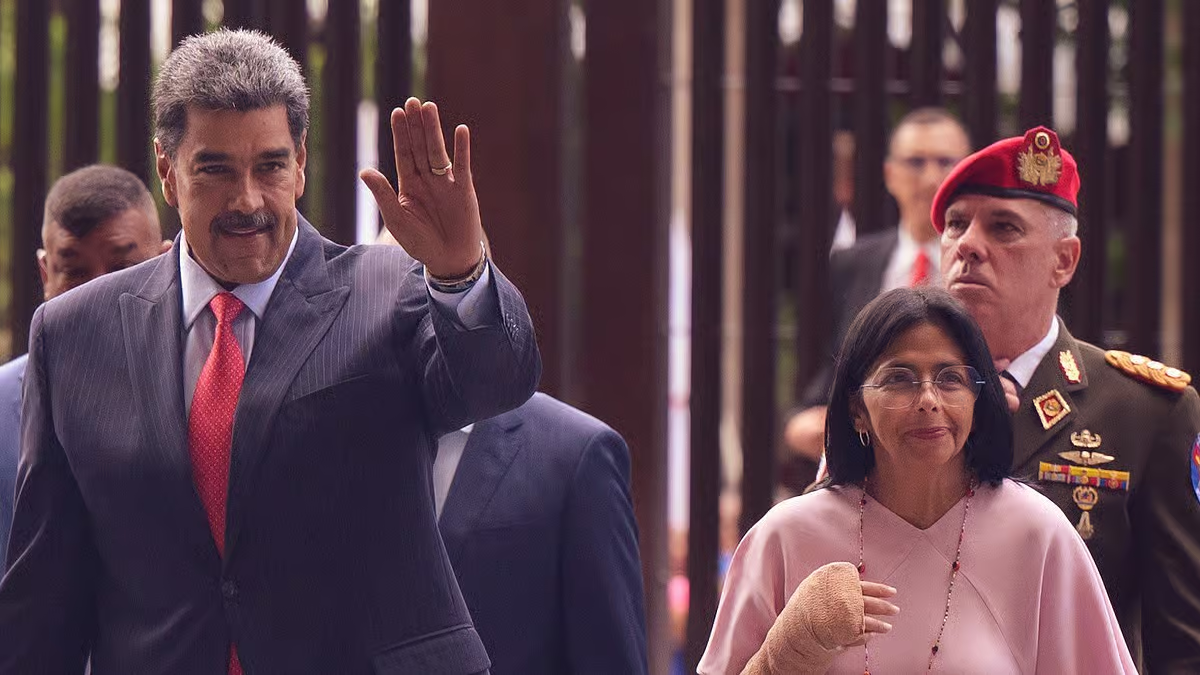
For weeks, US officials believed Venezuela’s long-running political crisis might end quietly, with President Nicolás Maduro stepping aside for a comfortable exile. Instead, it ended abruptly, with U.S. forces airlifting him out of Caracas on Saturday morning. As per reports from The New York Times, Maduro rejected an ultimatum from United States President Donald Trump to leave office and relocate abroad, including a proposed exit to Turkey, late last year.
His defiance, punctuated by public displays of bravado — including televised dancing even as U.S. threats escalated — hardened the administration’s resolve. U.S. officials allegedly interpreted the performances as a calculated taunt, an attempt to call Washington’s bluff.
Within days of the rejections, an elite U.S. military unit carried out a rapid raid in Caracas, detaining Maduro and his wife, Cilia Flores, and transporting them to New York to face long-standing drug trafficking charges.
But even before the operation, the Trump administration had settled on a successor it believed it could work with: Vice President Delcy Rodríguez.
The Successor Washington Was Watching
Rodríguez, aged 56, did not appeal to Washington as a democratic reformer. Instead, she was seen as pragmatic, disciplined, and capable of keeping Venezuela’s oil economy running. According to the same report, intermediaries convinced the Trump administration that she would safeguard future US energy investments and offer a more professional working relationship than Maduro.
A senior US official told the newspaper that Rodríguez was not viewed as a permanent solution, but as someone Washington could 'work with' during a volatile transition.
Why The Opposition Was Skipped
The choice effectively sidelined María Corina Machado, the opposition leader who organised a winning, but ultimately invalidated, presidential campaign in 2024 and later received the Nobel Peace Prize.
Despite openly courting Trump and aligning herself with his rhetoric on election fraud, she failed to gain his backing. Trump publicly dismissed her over the weekend, saying she lacked the authority and support to govern Venezuela.
Rodríguez now arrives at the centre of power with a reputation as an economic fixer. Educated partly in France and trained in labour law, she rose through Venezuela’s political system under Hugo Chávez and later Maduro, aided by her brother Jorge Rodríguez, a key strategist within the ruling elite.
As vice president, she helped oversee Venezuela’s gradual shift away from rigid socialist controls toward a looser, market-driven model. That pivot stabilised inflation and lifted oil production despite tightening US sanctions — an achievement that earned her reluctant respect from some American officials, as per media reports.
Despite Trump declaring that Rodríguez had been sworn in as Venezuela’s new leader, she herself publicly denounced the US operation as an illegal invasion and insisted that Maduro remained the legitimate president — highlighting the contradictions now facing Washington.
US officials say oil sanctions will remain in place to retain leverage, though some advisers argue easing restrictions could help stabilise the economy and strengthen Rodríguez’s hand.