- US Rep Sydney Kamlager-Dove criticized Trump's foreign policy after Putin's India visit
- Putin and Modi aim to boost trade to $100 billion by 2030 and collaborate on nuclear energy
- Kamlager-Dove blamed US tariffs on Indian goods for pushing India closer to Russia
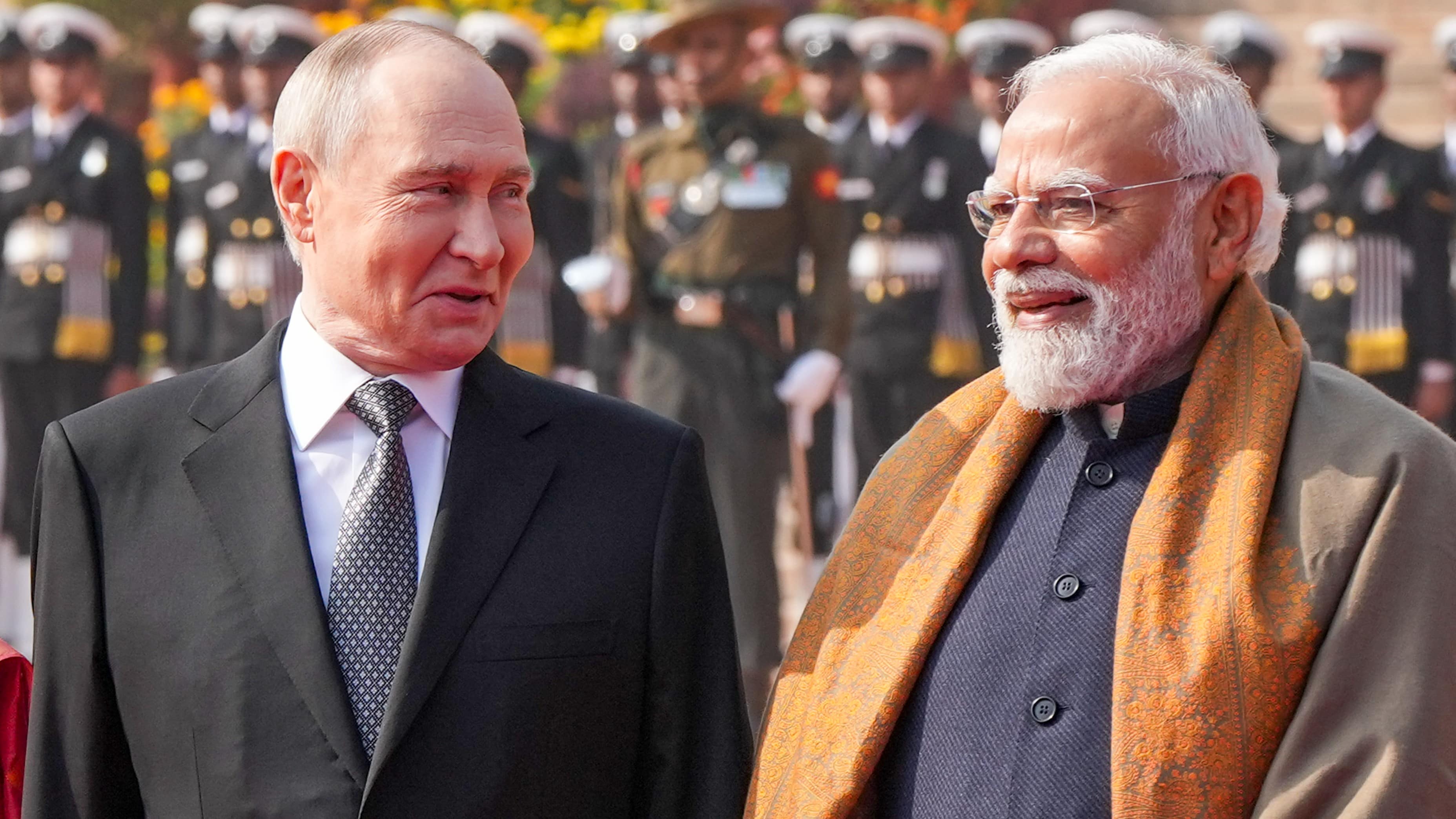
US Representative Sydney Kamlager-Dove put US President Donald Trump's foreign policy under acute scrutiny after Russian President Vladimir Putin's visit to India.
Highlights of Putin's visit included a joint goal to increase trade between the two countries to $100 billion by 2030, agreements for Russia to import India's agricultural products and shrimp affected by US tariffs, as well as collaboration on India's nuclear energy programme.
Kamlager-Dove credited Russia and India's increased diplomacy with one another to Trump's approach to US foreign policy with regards to India.
"Trump's policies towards India can only be described as cutting our nose to spite our face… Being a coercive partner has a cost. And this poster is worth a thousand words. You do not get a Nobel Peace Prize by driving US strategic partners into the arms of our adversaries,” she said.
She referred to the US's levy of 50% tariffs on India's goods and services due to Trump Administration's dissatisfaction with India's "trade barriers" and the country accusing India of supporting Russia's war on Ukraine via purchase of its crude oil.
She also advocated for the the US Congress to “move with incredible urgency to mitigate the damage that this administration has done to the US-India partnership”.
Speaking to the he House Foreign Affairs South and Central Asia Subcommittee, Kamlager-Dove said that it was vital that the US improve its diplomatic ties with India, calling cooperation between the two nations “essential to American prosperity, security, and global leadership”.
US Representative Bill Huizenga also highlighted the significance of the US and India relationship in the hearing on Wednesday stating that Putin's recent visit had “raised some understandable concerns.”
He further said that "authoritarian powers" like China and Russia were “redrawing borders by force, undermining democratic norms and coercing their neighbours.”
"The US-India relationship is no longer just important. It is a defining relationship of the 21st century. If America wants a free Indo-Pacific, resilient supply chains and a world where democracy, not authoritarianism, sets the rules, then our partnership with India is critical…American companies are eager to enter the Indian market on a level playing field," Huizenga said.
"A new trade deal with India under President Trump and Prime Minister Modi would further realise this goal and enhance the relationship,” he added.
Huizenga stated that the preceding US administrations had “strengthened ties, or certainly at least attempted to, making clear that the United States does not see India as a temporary or transactional partner”, irrespective of their political convictions.
Essential Business Intelligence, Continuous LIVE TV, Sharp Market Insights, Practical Personal Finance Advice and Latest Stories — On NDTV Profit.