

Warren Buffett To Retire On Dec. 31: 10 Timeless Equity Lessons For Every Investor
As Warren Buffett prepares to retire, his investment rules and advice over the decades remain a blueprint for building long-term wealth.



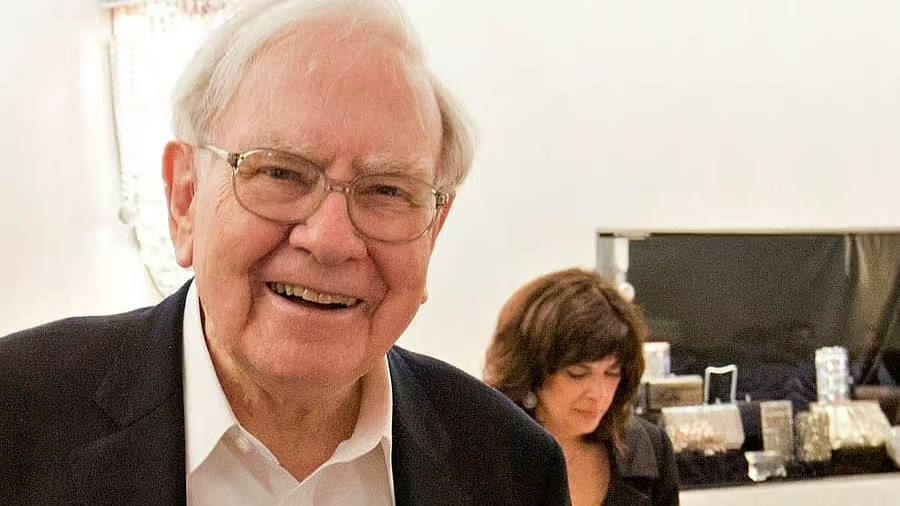
The world's most famous investor Warren Buffett will step down as CEO of Berkshire Hathaway, passing the baton to vice chairman Greg Abel, on Dec. 31, and bringing the curtains down on a historic chapter that spanned over six decades.
What makes Buffett remarkable is not just his track record, but the fact that he never hid his playbook. Through interviews, speeches and his annual letters to shareholders, he has consistently broken down what guides his decisions, what matters, what doesn’t and how he evaluates a business.
His journey began astonishingly early. According to Fortune, Buffett bought his first stock, which was Cities Service Preferred, the company now known as Citgo, when he was just 11. That means, now, at 95, he leaves behind 84 years of wisdom that investors across generations continue to learn from.
Here are 10 equity investing principles from Buffett that have stood the test of time:
1) Go Against The Crowd
Warren Buffett follows a simple principle: buy when others are fearful, and be cautious when others are greedy.
In a 2008 op-ed for the New York Times, during the height of the global financial crisis, Buffett explained why he was still buying US stocks even as panic swept the markets. For Buffett, investing is a long-term game.
If your goals are decades away, his approach is straightforward: when fear drives stock prices down, keep investing in a broadly diversified portfolio and take advantage of bargains.
2) Only Invest In What You Truly Understand
Buffett has a rule - he only invests in businesses he understands, and he encourages others to do the same. The number of companies doesn’t matter, what matters is sticking to the above rule. If you can’t evaluate the business or clearly explain how it makes money, don’t invest.
3) Buy The Market, Skip Stock Picking
Buffett believes regular investors are better off with an S&P 500 index fund and a small cushion in short-term Treasuries. About 90% in the index, 10% in Treasuries. It’s simple, low effort, and historically beats most actively managed funds.
4) If You Insist On Stock Picking, Keep It Focused
Buffett’s portfolio is concentrated for a reason. Owning too many stocks just turns your portfolio into the market itself. A few well-researched picks can outperform. But that means choosing carefully, not constantly.
5) Choose Businesses With Real Advantages
Look for companies with a “moat,” something that gives them an edge, like a trusted brand, pricing power, scale, or any advantage competitors can’t copy easily. Industries that shift too quickly can wipe these moats out, which is why Buffett usually avoids sectors that are constantly changing.
6) Keep Investing Simple And Low-Cost
Buffett constantly recommends low-cost funds for most investors. High fees eat returns, simple strategies don’t. Automate contributions, avoid unnecessary complexity and focus on long-term growth instead of fancy products.
7) Patience Pays More Than Speed
Buffett believes the market rewards patience, not constant trading. Emotional reactions and quick exits often hurt returns, while holding strong companies through ups and downs lets compounding do the work. Long-term positions prove that time in the market beats timing the market.
8) Only Buy Companies You’re Comfortable Holding For Years
Imagine the market shuts down for a decade. Would you still be happy owning that stock? If not, think twice. Buffett’s biggest wins came from staying invested through bad quarters, crashes, and recoveries, reported Fortune.
9) Think In Decades, Not Days
If you wouldn’t hold a stock for at least 10 years, don’t bother buying it. Real wealth comes from owning businesses built to grow over time, not from chasing trends or quick profits. Companies with real staying power lift your portfolio as they compound in value.
10) Discipline Beats Intelligence
Buffett says investing success isn’t about high IQ, it’s about controlling your emotions. Fear, greed and panic selling destroy portfolios. Long-term investing requires a steady temperament. Stay invested and follow a plan that prevents impulsive decisions.