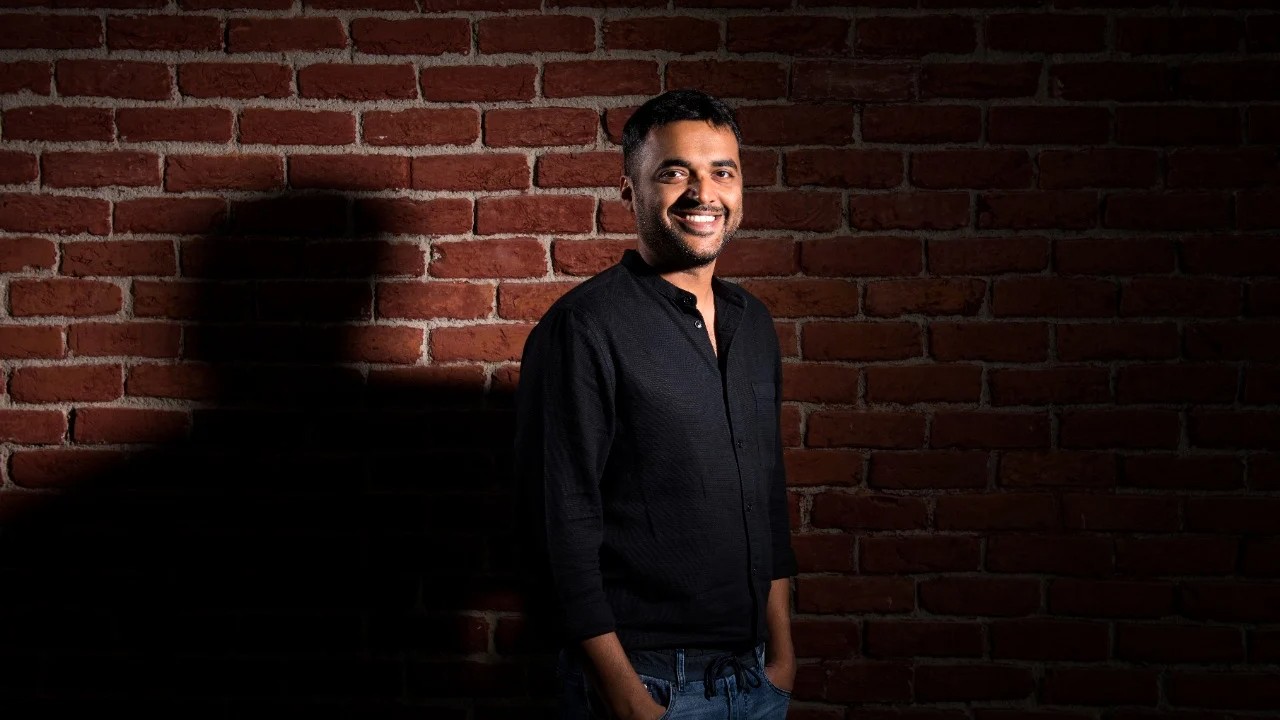
- Deepinder Goyal announced the upcoming launch of his brain blood flow tracking device Temple
- Temple was developed as part of Goyal's Gravity Ageing Hypothesis research funded by Continue Research
- The device measures brain activity and has been tested by Goyal for over a year with real-time data
Zomato founder and CEO Deepinder Goyal has shared a fresh update on his new device, Temple. He posted a “Coming Soon” message on Sunday along with an image of the gadget. The announcement comes weeks after he first hinted at the product and was spotted wearing it.
Goyal earlier said Temple is an experimental tool that tracks brain blood flow in real time. The device is linked to his research 'Gravity Ageing Hypothesis', conducted by Goyal-funded Continue Research. Deepinder Goyal's theory suggests that ageing may begin in the brain rather than the body.
Coming soon.
Follow @temple for more updates. pic.twitter.com/E7S8NeUDP4What Is The Temple Device?
According to Goyal, he developed it while working on his Gravity Ageing Hypothesis. The device aims to measure brain activity with consistent accuracy.
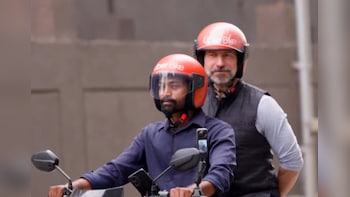
He was also seen wearing the golden device near his right eye during a Children's Day event in November, when he spent the day with students at Vidya School in Gurugram, which is supported by Zomato Feeding India.
Was so wonderful and fulfilling to spread joy and happiness to children in a school supported by @FeedingIndia.
Thank you to the @letsblinkit Toys team and our partners at @Mattel, @Barbie, Skillmatics, @Imagimake, @smartivitylabs, and Mirada for making this possible 💛 pic.twitter.com/5cuoNDOgeVAccording to a report in Hindustan Times, a day before he publicly explained the hypothesis, Goyal had been photographed wearing a compact device placed above his right eyebrow.
LinkedIn user Shubham Mishra shared the photograph and suggested the inversion idea might actually be linked to a new health wearable that measures brain blood flow. Mishra also floated the idea that the device or the company making it be called Temple since it sits near the temple of the head.
Goyal later confirmed that the device indeed measures brain flow and said he had been using it for a year, the reported added.
What Is The Gravity Ageing Hypothesis
Goyal's inversion concept is based on the idea that ageing is linked to reduced brain blood flow from gravity. In his reply, the Zomato founder asserted that the device is useful even if the Gravity Ageing hypothesis turns out to be wrong.
"While conducting research on the Gravity Aging Hypothesis, we had to make an experimental device to calculate Brain Flow accurately, real-time, and continuously. Been using it for a year, and I've been feeling that this could shape into an important wearable the world needs. Brain Flow is already well accepted as a biomarker for aging, longevity as well as cognition. So this device is useful and relevant even if the Gravity Ageing Hypothesis turns out to be wrong," Goyal's comment read.
“We didn't “cook up” the Gravity Ageing Hypothesis to sell Temple. Not my game to lose the trust our customers have in me over a marketing gimmick,” the CEO added.
https://www.linkedin.com/posts/shubham-mishra-914948bb_i-strongly-believe-this-the-entire-inversion-activity-7395735201949249536-ciZK
Goyal's Theory
Deepinder Goyal's theory suggests that ageing may begin in the brain rather than the body. His theory suggests that standing upright slightly reduces blood flow to the brain and this deficit compounds over decades.
I'm not sharing this as the CEO of Eternal, but as a fellow human, curious enough to follow a strange thread. A thread I can't keep with myself any longer.
It's open-source, backed by science, and shared with you as part of our common quest for scientific progress on human… pic.twitter.com/q2q3tRj3JdAccording to the theory, Goyal proposed that gradual, gravity-driven reductions in brain blood supply may be a factor in triggering ageing, potentially making ageing a brain-first process.
Essential Business Intelligence, Continuous LIVE TV, Sharp Market Insights, Practical Personal Finance Advice and Latest Stories — On NDTV Profit.