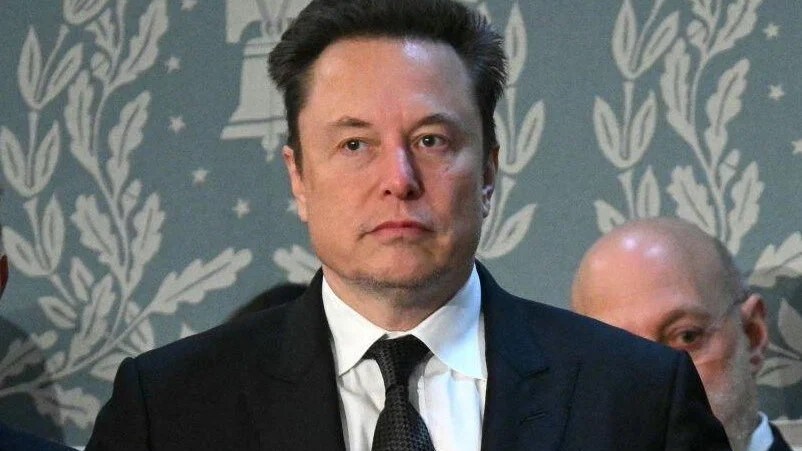
- Elon Musk plans projects merging SpaceX, Tesla, and xAI technologies
- Starlink satellites provide best internet in sparsely populated rural areas
- Starlink cannot serve dense cities due to physical and technical limitations
Billionaire Elon Musk has said that the future projects he would focus on would involve a convergence between the technologies of his three ventures — SpaceX, Tesla and xAI.
Musk told Nikhil Kamath on the WTF podcast that his ventures might be a "confluence of Tesla expertise, SpaceX expertise and xAI on the AI front".
"If the future is solar powered AI satellites, that need to harness a non-trivial amount of energy to the sun, you have to move to solar AI satellites in deep space," he told the co-founder of Zerodha. "All the companies are doing great things, very proud of the teams, they do great work."
Also Read | Layoffs Are Rising In Tech, But These Skills Are Helping People Unlock Better Pay
Starlink
According to Musk, the firm "didn't want to put a paywall up when somebody is trying to get help".
When asked about its effectiveness, Musk said that the satellites work best in sparsely populated areas.
"Because you've got a satellite beam, which is a pretty big beam and you have a fixed number of users per beam. It has to be very complementary to the ground-based cellular systems, those are very good," Musk said.
He said that internet connectivity in cities was easier to have because they have "cell towers that are only a kilometre apart". Whereas in rural areas, they tend to have "the worst internet" as it is inefficient to have fibre optic cables, or have high bandwidth cellular towers.
"It (Starlink) basically tends to sort of be the least served, which I think it's good," he added.
When asked about whether Starlink could one day work in densely populated areas, he said that "physics won't allow for that".
"Think of it as a flashlight, the cone is coming down to 550 km but not 1 km away. It's not physically possible for us to have Starlink to serve dense cities. It can serve 1% or 2% of a densely populated city," Musk stated.
When asked by Kamath to explain how Starlink works, he described it as "thousands of satellites providing low latency high speed internet around the world".
"There are several thousand satellites in low orbit, and they're moving around 25 times the speed of sound, zipping around the earth basically, at the altitude of 550 km, at lower orbit, because of that, the latency is low," Musk elaborated.
He further said that these laser links between satellites form a laser mesh, as opposed to traditional technology that relies on fibre optic cables and cellular towers.
According to Musk, if the fibre cables are damaged or cut, Starlink will still provide connectivity. "For example when the Red Sea cables were cut a few months ago, the sonic satellite network continued to function without a hitch," he said.
He also stated that Starlink would be "particularly helpful" for disaster areas. "If an area has been hit with a natural disaster, floods or fire or earthquakes, that tends to damage the ground infrastructure but the Starlink satellites still work," Musk stated. "Generally, whenever there's some sort of natural disaster somewhere, we give free Starlink internet connectivity."
Watch
Essential Business Intelligence, Sharp Market Insights, Practical Personal Finance Advice, Daily Fuel, Gold and Silver Prices and Latest Stories — On NDTV Profit.