Want To Build Brain For The World: Sam Altman Tells Staff As OpenAI Reshapes Funding Structure
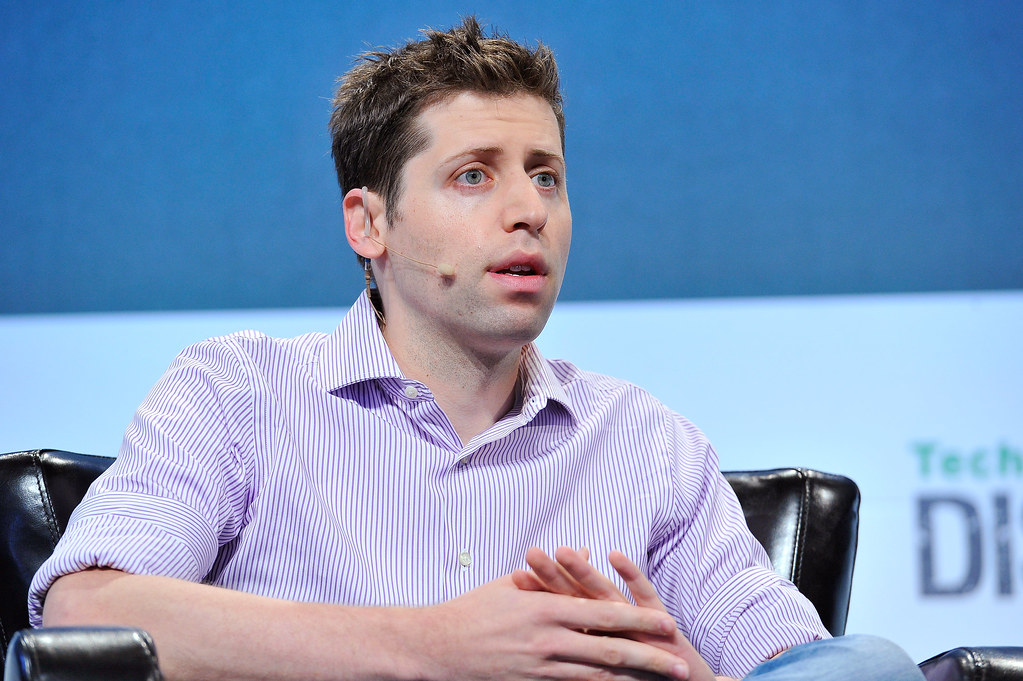
OpenAI announced a major update to its organisational structure on May 5, revealing that its for-profit arm will become a Public Benefit Corporation. Originally founded as a non-profit, OpenAI remains under the control of the parent entity.
However, moving forward, its for-profit arm, which has operated as an LLC since 2019, will transition into a PBC, the US artificial intelligence giant said in a blog post. This means that OpenAI is shifting from its “complex” capped-profit model to a standard capital structure with shared stock.
“This is not a sale, but a change of structure to something simpler,” CEO Sam Altman explained the development. According to OpenAI, the non-profit will retain control and become a significant shareholder in the PBC, enabling it to access greater resources.
4 facts about our structure:
May 5, 2025
-OpenAI will continue to be controlled by the current nonprofit
-Our existing for-profit will become a Public Benefit Corporation
-Nonprofit will control & be a significant owner of the PBC
-Nonprofit & PBC will continue to have the same mission“The non-profit will control and also be a large shareholder of the PBC, giving the non-profit better resources to support many benefits. Our mission remains the same, and the PBC will have the same mission,” the company said.
Altman also penned an open letter to its employees, highlighting that “OpenAI is not a normal company and never will be.” He emphasised that the firm has a broader mission of building “a brain for the world and making it super easy for people to use.
In its early days, there were concerns that AI should be controlled by a select few who could "handle it" responsibly, Altman said. “A lot of people could imagine an oracle that could tell scientists and presidents what to do, and although it could be incredibly dangerous, maybe those few people could be trusted with it,” he noted.
However, he outlined that OpenAI is committed to building democratic AI. “It will of course not be all used for good, but we trust humanity and think the good will outweigh the bad by orders of magnitude,” he added.
Acknowledging the rampant use of ChatGPT models for various purposes, Altman highlighted that the system has its limitations at the moment. “We currently cannot supply nearly as much AI as the world wants,” he said, adding that as a result, the company has decided to evolve its structure.
According to Altman, to make AI resources more accessible, the company may need an influx of “hundreds of billions of dollars and may eventually require trillions of dollars”. As a result, the company has organised its model on how it operates and raises money.

-
High US Salaries, No Green Card Certainty: The Financial Calculation Facing Indian H-1B Families

The suspension of PERM processing at eight technology employers does not cancel existing H-1B visas. What it does is force a question many Indian families have been avoiding: is the US salary worth tying your career and family plans to one employer?
-
Swiggy vs Eternal: Food Delivery's Two Rivals Are No Longer In The Same Race
Eternal is building a private AI assistant, dark.ai. Swiggy is still working out how to make Instamart pay, with an operating loss of Rs 895 crore in the July-September quarter while Blinkit stayed profitable.
-
Where You Live Shapes How You Get To Work | The Reason Why
Two-wheelers are the most popular way to get to work in India, accounting for nearly 43% of workplace commutes.
-
Unhedged Position: Can India See An Indonesia-Style Time Correction?
The Nifty is trading below levels it first clocked in 2024. Is there, then, as I have suggested in the headline, potential that the current time correction drags on painfully for the next three-five, even ten years?
-
Navigating Friction And Energy Realities: An Analysis Of Marco Rubio's October Visit To India
Occurring at a critical juncture marked by stalled trade negotiations and escalating geopolitical pressures over global energy supplies, the visit offers a profound window into modern US-India relations.
-
India Exports Capital. Why Not Export Trusteeship?
The big question, then, is whether India can build an institution that global borrowers, investors, banks, and lawyers can trust, even without an Indian connection.
-
France's Economy & Politics Are In Crisis | The Reason Why
Let's look at how the French economy and politics evolved under Nicolas Sarkozy, Franois Hollande and Emmanuel Macron.
-
You May Inherit The Business. You Must Earn Its Credibility.
Succession tests the founder's ability to share authority as much as it tests the next generation's readiness to assume it.
-
Signing Deals Is One Thing; Making Them Work Is Another | The Week In Whys
Sometimes, things don't turn out as planned. Indian companies have lost some bids to rivals, some projects won't produce until 2030.
-
FOMC Wall, PERM Suspension, Hospital Stocks | Talking Points This Week
A PERM suspension would directly affect green-card sponsorship rather than H-1B visas, so the near-term earnings impact could remain relatively limited. The key question is whether this marks a new phase in US scrutiny of Indian IT.









