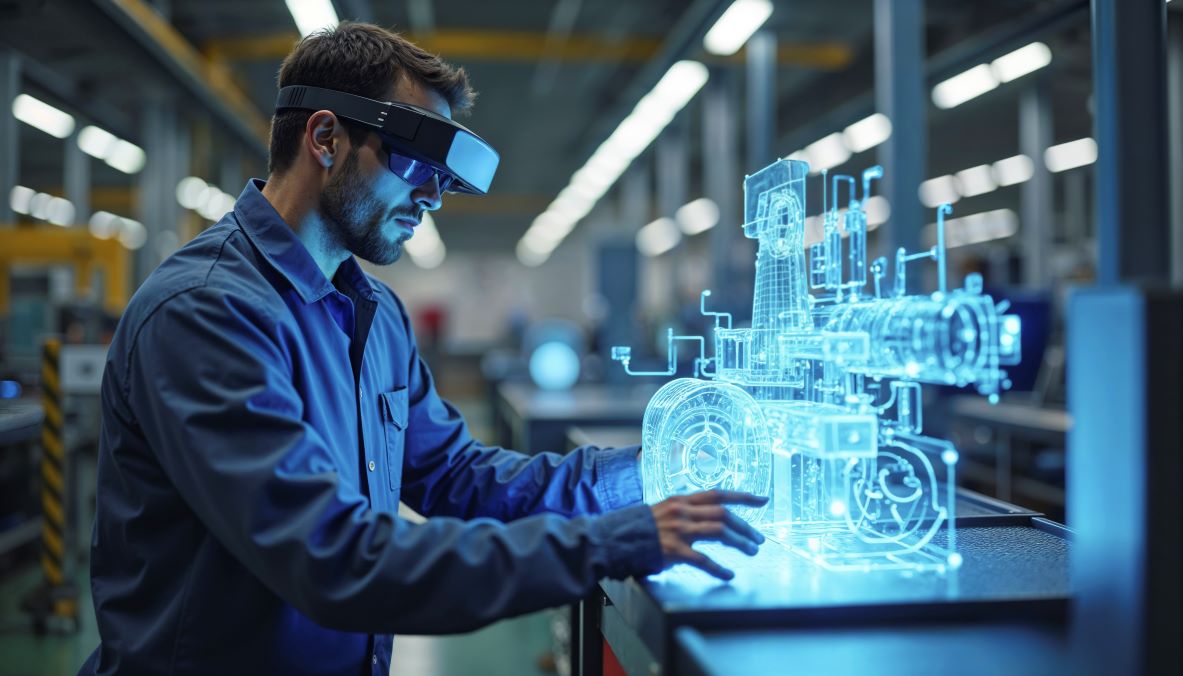
- Global manufacturers are advancing towards AI-driven and autonomous operations by 2025
- 75% expect AI to be a top three contributor to operating margins by 2026
- Only 21% of manufacturers say they are fully AI-ready due to data and integration gaps
Global manufacturers are rapidly advancing towards intelligence-driven operations and higher levels of autonomy in manufacturing processes, according to a study released by Tata Consultancy Services in collaboration with Amazon Web Services.
The Future-Ready Manufacturing Study 2025 provides a data-backed view of how manufacturers are strengthening digital and data foundations to support autonomy, decision intelligence, and future-ready operations. While 75% expect AI to become one of the top three contributors to operating margins by 2026, only 21% say they are fully AI-ready, highlighting foundational gaps in data, integration, and system readiness across plants and supply chains.
Some key findings from the study include:
75% of manufacturers expect AI to be a top three margin driver by 2026.
Only 21% say they are fully AI-ready, exposing significant data and integration challenges.
Agentic AI emerges as a priority capability, accelerating autonomous decision-making across plants.
74% expect AI agents to manage 11–50% of routine production decisions by 2028.
67% report improved real-time supply-chain visibility, strengthening resilience and responsiveness.
More than 30% forecast meaningful productivity gains from AI-led modernisation.
Anupam Singhal, president - manufacturing, TCS, said, “Manufacturing is an industry defined by precision, reliability, and the relentless pursuit of performance. Today, that strength of foundation becomes multifold with AI in orchestrating decisions — delivering transformational business outcomes through greater predictability, stability, and control.”
As manufacturers deepen investments in foundational capabilities, a clearer pathway is emerging towards real-time decision intelligence and greater operational transparency across plants and supply networks. At the factory level, organisations are beginning to embed AI-driven quality and planning use cases, with nearly 40% reporting early measurable gains.
Momentum is accelerating around next-generation autonomy, with agentic AI expected to play a central role in how decisions flow across manufacturing environments. Nearly three-fourths of leaders anticipate AI agents managing up to half of routine production decisions within the next three years, signalling a shift towards self-optimising workflows. At the same time, more than 30% of manufacturers forecast meaningful productivity improvements from AI-led modernisation. Together, these shifts indicate a sector preparing not only to modernise, but to operate with greater intelligence, resilience, and agility across the entire manufacturing value chain.
Ozgur Tohumcu, general manager - automotive and manufacturing, AWS, said “Manufacturers today are facing unprecedented pressure — from tight margins to volatile supply chains and workforce gaps. By embedding artificial intelligence into every layer of the operation and leveraging cloud-native architecture, manufacturers can move beyond simple automation to true autonomous decision-making — where systems predict, adapt, and act independently with minimal human intervention. This enables not just faster response times, but fundamentally transforms operations with AI-driven predictability, resilience, and agility. This study makes it clear: the future of manufacturing is not just digital, it is autonomous — powered by AI that learns, evolves, and operates continuously.”
Essential Business Intelligence, Continuous LIVE TV, Sharp Market Insights, Practical Personal Finance Advice and Latest Stories — On NDTV Profit.