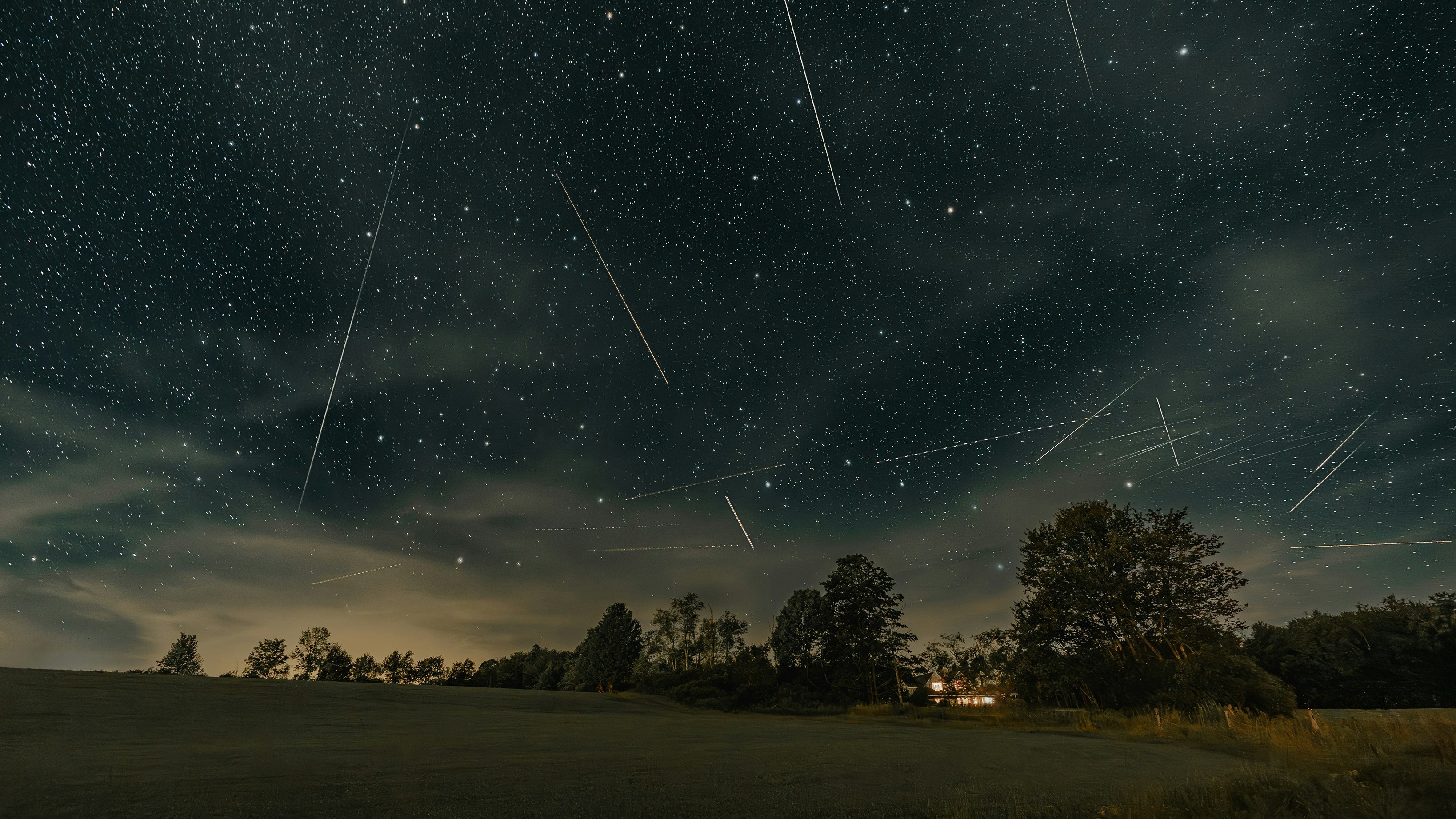
India braces for the spectacular Geminids meteor shower, one of the year's brightest celestial events, tonight, from the evening of Dec. 13 into early Sunday, Dec. 14, 2025.
The Geminids promise up to 100 shooting stars per hour under ideal conditions.
Geminids Meteor Shower 2025: Date And Time
The Geminids ramp up from late evening on December 13, with prime viewing between 1 a.m. and 4 a.m. on December 14, when the radiant in Gemini rises high in the eastern sky, according to a report in The Economic Times.
Meteors streak from any direction, so no need to pinpoint the constellation precisely, though activity bursts demand at least an hour of observation for eyes to dark-adapt. A waning crescent moon minimises interference after 3 a.m., enhancing visibility.
Geminids Meteor Shower 2025: Prime Viewing Spots
Dark-sky sites away from city lights yield the best shows, including Uttarakhand's Mukteshwar and Kausani hill stations, Rajasthan's Sambhar Lake, Corbett National Park, Coorg in Karnataka, and Maharashtra's Bhandardara or Lonar Crater.
Western Ghats locales also shine for unobstructed horizons. Rural fields or lakesides nationwide work well with clear weather.
Geminids Meteor Shower 2025: How to Watch
No telescope required. Just lie back in a recliner, let eyes adjust 20-30 minutes, and scan the dome of sky. Dress warmly for predawn chill, avoid lights or screens, and track hourly rates exceeding 100 in pristine conditions from asteroid 3200 Phaethon's debris. Families and astro-enthusiasts can join guided sessions at observatories for added insights.
First observed in 1862 and believed to be strengthening year after year, the Geminids are among the best and most dependable annual meteor showers. Unlike many other showers, they are caused by an asteroid rather than a comet.
In theory, you could see up to 150 meteors an hour at peak activity, but the real number is usually lower because of limits in human peripheral vision and the impact of light pollution and not-quite-dark skies.
What is the Geminids Meteor Shower: Here's What Stargazers Would Love To KnowEssential Business Intelligence, Continuous LIVE TV, Sharp Market Insights, Practical Personal Finance Advice and Latest Stories — On NDTV Profit.