Big Developers To Add Over 42.5 Million Sq Ft Of New Mall Space in India: Anarock Report
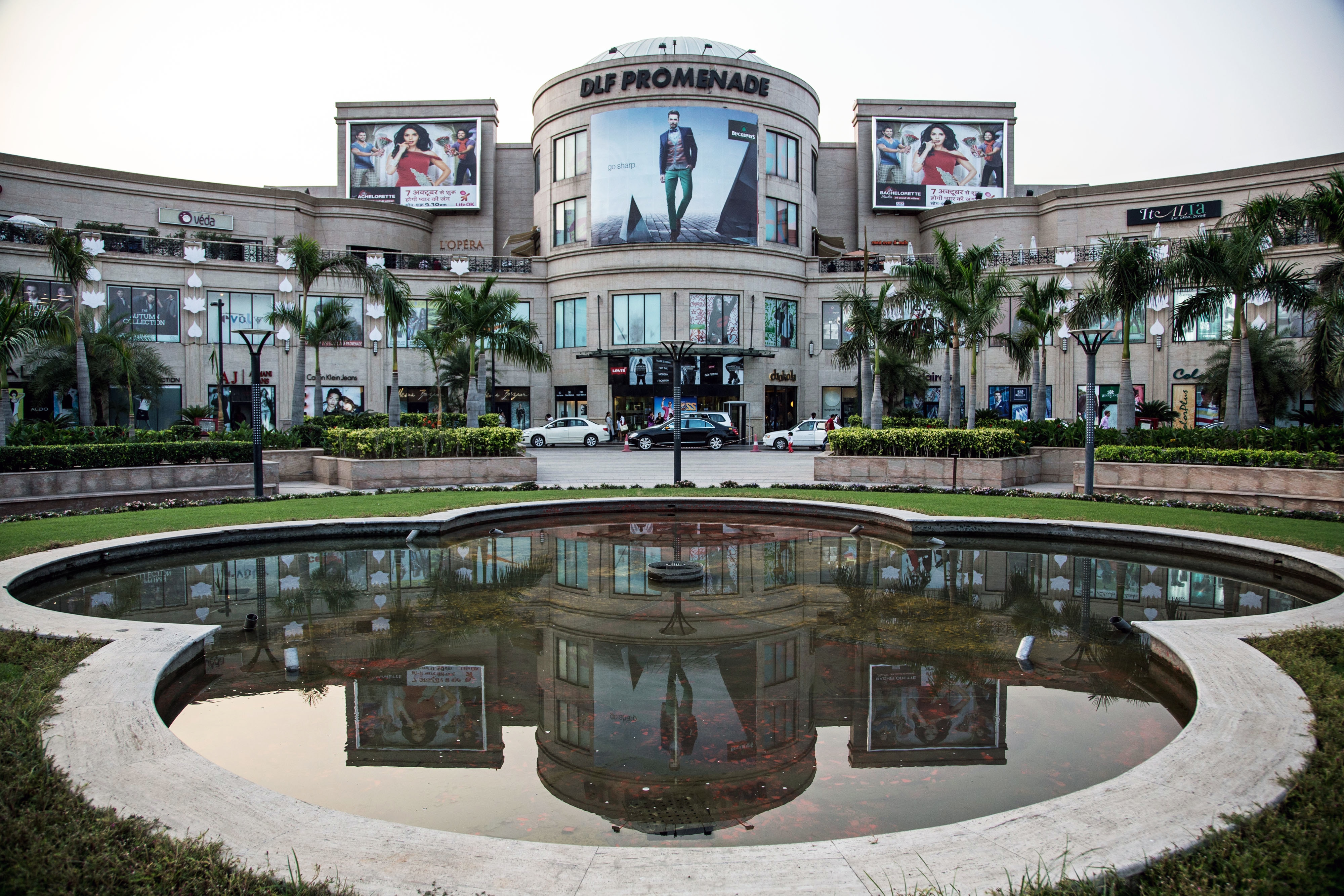
India's retail real estate market is consolidating at a rapid pace, with institutional developers now accounting for a growing share of operational malls and new supply. Latest data from Anarock Research shows that of the country's 650 functional malls, nearly one-third are institutional grade, a significant shift in a sector that was once dominated by fragmented, standalone projects. Over the next 3-5 years, more than 42.5 million sq. ft. of additional mall space is expected to come onstream through large-format, investor-backed projects.
Seven developers — Nexus Malls (Blackstone), Phoenix Mills, DLF, Prestige Estates, Lakeshore, Raheja Group and Pacific Malls — are at the centre of this shift. Together, they already own 58 malls spanning 34 million sq. ft., and have over 45 new malls covering more than 42.5 million sq. ft. in the pipeline for the next three-to-five fiscals.
Tier 2 Cities In Focus
The expansion is not limited to metros. Institutional investors are increasingly targeting Chandigarh, Indore, Surat, Bhubaneshwar and Coimbatore — markets once considered peripheral to organised retail.
Anuj Kejriwal, CEO & MD – Anarock Retail says, “It is notable how quickly institutional investment is spreading beyond the metros into Tier 2 hubs. Chandigarh, Indore, Surat, Bhubaneshwar, and Coimbatore, with highly aspirational populations and increasing purchase power, are the new growth centres for organised retail. The Indian retail industry is driven by changing consumer expectations, global brands' preference for standardized, and experiential spaces. However, growth also hinges on institutional investments, which means that mall assets must also appeal to private equity and REIT investors.”
The retail real estate sector has undergone multiple cycles. Between 2005 and 2015, more than 250 malls were launched, riding the early wave of organised retail. But many of these were smaller or poorly planned. By 2020, nearly 20–22% had shut down, been repositioned, or converted into other uses. Vacancies in inferior malls touched 30–35%, forcing landlords into financial distress, according to the Anarock report.
In contrast, Grade A malls have steadily strengthened. Their share of inventory in the top seven cities has risen from 22% in 2015 to a projected 60% by 2027. Vacancy levels have fallen from 19% to around 9%.
The report also suggests that the average annual rental growth in Grade A properties currently stands at 5–8% CAGR, far outpacing Grade B and C peers. Underperforming malls must either face closure, repositioning, or conversion to mixed-use developments.
India Lags Global Peers
Even with this momentum, India trails developed markets. The country has over 110 million sq. ft. of quality retail stock, compared with 700-plus million sq. ft. in the US and 400-plus million sq. ft. in China, where most mall assets are institutionally owned. However, India's malls have one advantage: strong productivity. Grade A properties generate Rs 1,200–1,600 per sq. ft. per month in retail sales, consistently exceeding expectations and strengthening the investment case.
Bigger, Branded, More Experiential
New projects are also growing in scale. Upcoming malls are averaging 1–1.2 million sq. ft. each, designed to serve as destination hubs. Analysts expect that 30–40% of smaller malls could be repurposed into mixed-use developments combining retail with office, residential or hospitality.
With institutional developers dominating new launches, at least two to three new retail-focused REITs are expected in the near term.
GST Reforms To Accelerate Consolidation
The GST reforms rolled out in September 2025 are seen as another catalyst for consolidation. The changes simplify the tax structure for real estate, lower compliance costs and improve predictability for developers and investors.
Kejriwal said: “The GST reforms, with their streamlining effect on taxation, make pricing of retail goods more transparent, and reduce tax cascading. The result significantly improved shopper confidence and purchasing power taht will boost spending on premium and branded products. With uniform taxes across states, shoppers will benefit from more consistent pricing. With this rejuvenating effect, the new GST regime will also drive demand for experience-driven retail formats and thereby further accelerate the growth of institutional malls in India.”
Outlook
According to report, India's retail real estate trajectory will have fewer, larger, and better-quality malls. The consolidation is being reinforced by institutional capital, shifting consumer expectations, and a supportive tax regime. Key data points underline this shift:
250+ malls launched between 2005–2015; 20–22% later shut or repurposed
Vacancy in Grade A malls down to 9%; weaker properties saw vacancies above 30%
5–8% CAGR rental growth in Grade A versus stagnant rents in B & C grades
42.5+ million sq. ft. of new supply from institutional developers in 3–5 years
2–3 new REITs likely in the pipeline

-
Ten Things I Learnt This Samvat

Patience can be a trap. Cheap stocks can stay cheap. Leverage can wipe you out. What did Samvat 2082 teach us? Niraj Shah writes on 10 lessons from the year gone by.
-
Talking Points This Week: Tech Nerves, FII Buying, And A Faraway Banking Shock
The global markets are not shining this Diwali. The exception in the large markets is, India.
-
Midterm Rally Lasted A Day. The Hard Reality Of A Divided US May Last Two Years | Opinion
Between a contested AI boom, a debt ceiling that arrives in 2027 and a president with every incentive to act alone, the next two years may prove more volatile than the first day's rally suggests.
-
Blue Wave Will Derail the AI Trade but Won't Dismantle the AI Era | Unhedged Position
The Democrats' sweep of the US Congress will see politics collide with economic forces both over the long and short term.
-
It's Time To Take The GST Council's Bet On Trust Global
Payment records can prove India's services exports, and clear, proportionate rules can bring foreign digital sellers into the tax net.
-
Opinion | India at 38: From Innovation Overperformer to Innovation Powerhouse
India now has 453 VC-backed deep science startups, 18 of them late-stage, after 117 percent growth since 2020. Laurus Labs, at USD 9.3 billion, is the most valuable deep science company in any middle-income economy outside China.
-
Navigating Energy Crossroads: S Jaishankar's Call For Diversified Supply Chains At G20 Ministerial Meeting
As geopolitical fault lines continue to test maritime trade routes and commodity flows, Jaishankar's message remains pertinent: true economic resilience requires open markets, protected transit lines, and a genuine commitment to multilateral cooperation rather than coercion.
-
Indians Are Travelling, But Not Every Journey Is A Holiday | The Week In Whys
Pilgrims, patients and working women are the real travellers, and the system hasn't quite caught up with them.
-
Getting To Work Costs Women More | The Reason Why
It is not just about women paying more than men. It is about women paying much more in cities than in villages.









