IndusInd Bank Q4 Results: Loss Widens As Lender Fights Additional Discrepancies
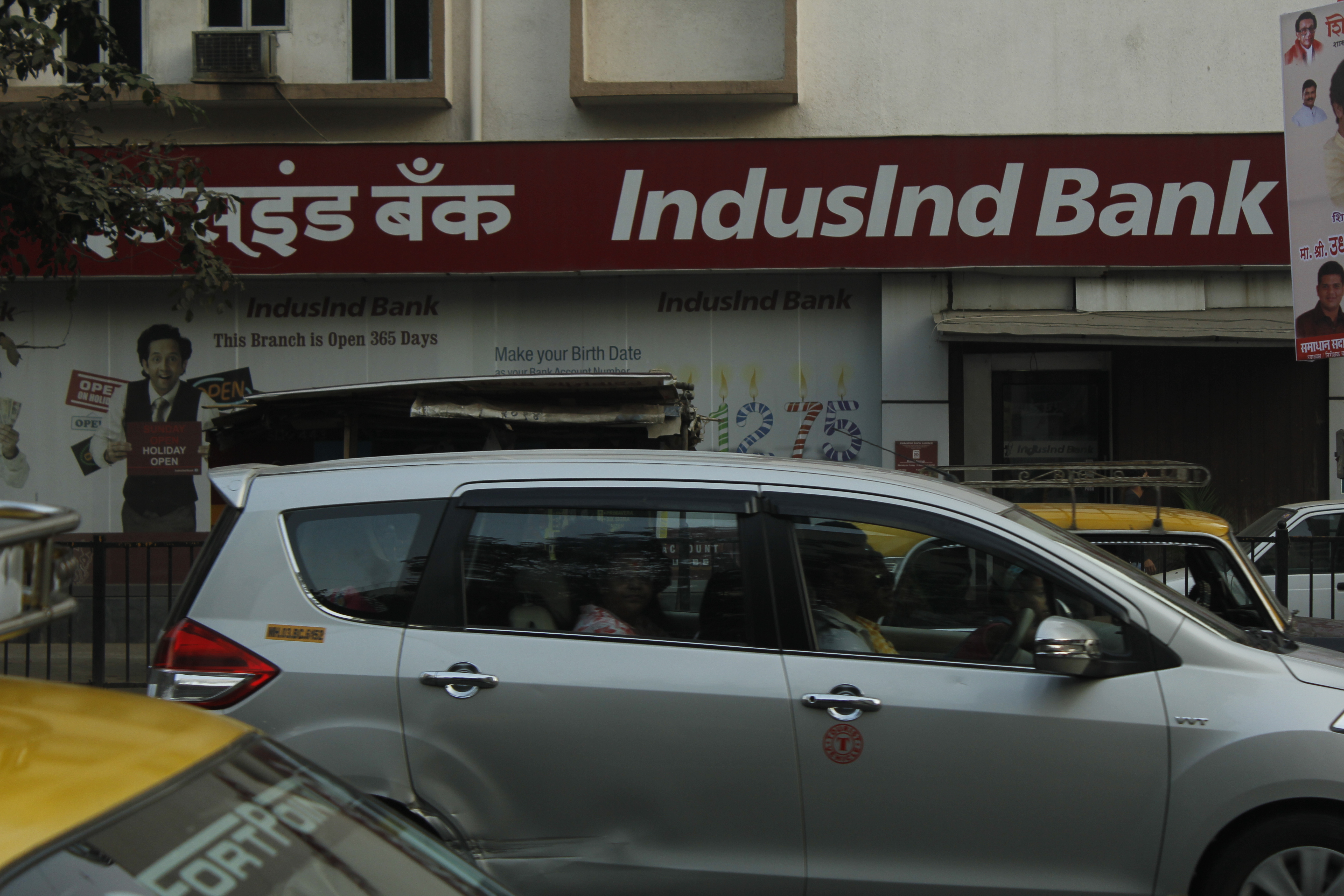
IndusInd Bank's net loss widened more than estimated in the January-March quarter, as the private lender disclosed that it is dealing with additional accounting discrepancies.
The bank posted a consolidated net loss of Rs 2,329 crore for the quarter under review, as against a net profit of Rs 2,349 crore a year ago.
Analysts polled by Bloomberg had estimated the bank to report a net loss of Rs 410.85 crore. For the quarter ended December, the bottomline had stood at Rs 1,402 crore.
In the post-earnings analysts call, the bank disclosed that it is dealing with more accounting discrepancies, other than the ones that came to the fore earlier. This includes Rs 173 crore incorrectly recorded in the microfinance portfolio.
"...the Board suspects the occurrence of fraud against the Bank and the involvement therein of certain employees having a significant role in the accounting and financial reporting of the Bank," it said in an exchange filing.
The accounting issues in the bank's derivatives portfolio, which were disclosed in March, were expected to have an impact of Rs 1,960 crore on its balance sheet for fiscal 2025. Also, the two more accounting discrepancies in interest income—discovered in the internal audits last week—worth Rs 674 crore and Rs 595 crore also reflected in the March quarter results.
According to the bank's note of accounts, the investigation into derivatives portfolio indicated that the bank entered several internal trades between financial years 2015-16 and 2023-24. Accounting followed in these transactions were improper and was not in consonance with accounting guidelines.
It also said that there were unsubstantiated balances in other assets that do not have any impact on fiscal 2025 results. Further, the review found out incorrect interest and fee income in MFI portfolio to have Rs 422.56-crore financial impact.
This has come as the bank found misclassification of certain microfinance loans as standard and corrected classification resulted in additional NPA of Rs 1,885.19 crore.
The bank said that it has made 95% provisions against these loans and this resulted in an adverse impact of Rs 1,969.2 crore.
The investigations and reviews found involvement of senior officials and former managerial persons in overriding key internal controls.
The bank has also found concealment from board and statutory auditors and has reason to believe that suspected offences involving frauds may have been committed.
As a direct result of these various investigations and accounting issues, IndusInd Bank Managing Director and Chief Executive Officer Sumanth Kathpalia and Deputy CEO Arun Khuranna announced their immediate resignations in April.
The lender's Chief Financial Officer Gobind Jain had resigned in January, just days before reporting the December quarter results.
Post the earnings call, Chairman Sunil Mehta said that the bank has taken several measures to understand the root cause of the identified irregularities and has taken corrective actions as well as fixed accountability.
Statutory auditors have done substantive checks with wider sample sizes to analyse any anomalies in financial reporting and given an unqualified opinion. Mehta also said that a conservative approach has been adopted in financial reporting to ensure the accuracy and robustness of the financial statements.
Furthermore, the board is also in the process of taking necessary steps to assess roles and responsibilities and fixing staff accountability as per the extant laws and internal code of conduct in all the identified irregularities.
In the March quarter, provisions of the bank rose to Rs 2,522 crore from Rs 950 crore a year ago. Amid continuous stress in the microfinance portfolio, asset quality of the bank worsened.
The gross non-performing assets ratio of the bank rose to 3.13% at the end of March as against 2.25% a quarter ago. Net NPA ratio also increased to 0.95% from 0.68% in the prior quarter.
The bank's net interest income fell 43% on-year to Rs 3,048 crore, lower than Rs 5,030 crore polled by Bloomberg. Consequently, the bank's net interest margin narrowed to 2.25% from 3.96% a quarter ago.
The bank's loan book grew 1% on-year to Rs 3.45 lakh crore during the quarter under review. The MFI segment continued to contribute 9% to the bank's overall loan book at Rs 30,909 crore. Deposits grew nearly 7% on-year to Rs 4.10 lakh crore.
Before the quarterly results were declared, shares of IndusInd Bank settled 1.39% lower at Rs 771.1 apiece on the BSE, compared to 0.51% rise in the benchmark Sensex.

-
Unhedged Position: Can India See An Indonesia-Style Time Correction?

The Nifty is trading below levels it first clocked in 2024. Is there, then, as I have suggested in the headline, potential that the current time correction drags on painfully for the next three-five, even ten years?
-
Navigating Friction And Energy Realities: An Analysis Of Marco Rubio's October Visit To India
Occurring at a critical juncture marked by stalled trade negotiations and escalating geopolitical pressures over global energy supplies, the visit offers a profound window into modern US-India relations.
-
India Exports Capital. Why Not Export Trusteeship?
The big question, then, is whether India can build an institution that global borrowers, investors, banks, and lawyers can trust, even without an Indian connection.
-
France's Economy & Politics Are In Crisis | The Reason Why
Let's look at how the French economy and politics evolved under Nicolas Sarkozy, Franois Hollande and Emmanuel Macron.
-
You May Inherit The Business. You Must Earn Its Credibility.
Succession tests the founder's ability to share authority as much as it tests the next generation's readiness to assume it.
-
Signing Deals Is One Thing; Making Them Work Is Another | The Week In Whys
Sometimes, things don't turn out as planned. Indian companies have lost some bids to rivals, some projects won't produce until 2030.
-
FOMC Wall, PERM Suspension, Hospital Stocks | Talking Points This Week
A PERM suspension would directly affect green-card sponsorship rather than H-1B visas, so the near-term earnings impact could remain relatively limited. The key question is whether this marks a new phase in US scrutiny of Indian IT.
-
Everything, Everywhere, All At Once: Dalal Street's Week To Forget | Joining The Dots
Visa curbs, a Starlink spat and cancer drug caps: what connects this week's shocks for Indian markets
-
India Is Going Abroad For Critical Minerals. But It May Take Years To Pay Off | The Reason Why
Although India's steps are in the right direction, they remain modest compared with India's growing dependence.
-
When Everyone Has AI, What Gives You An Edge?
India's young workforce is entering an uncertain world of work where powerful AI tools are becoming widely accessible. The advantage will belong to those who combine deep expertise with digital fluency, and the distinctly human capabilities that technology cannot manufacture.









